The global demand for specialized packaging in pharmaceuticals, cosmetics, and food industries is surging. This trend places a critical decision at the forefront of every production line: choosing between plastic and aluminum tubes. This choice is far more than a simple container preference; it's a strategic decision that shapes capital expenditure, operational efficiency, and product integrity. At the heart of this dilemma lies the machinery itself. The right automaitc tube filling and sealing machine acts as the pivot point, directly influencing production speed, product shelf-life, and overall profitability. Understanding the technical and commercial differences between systems designed for plastic versus those for aluminum is essential for making a future-proof investment. This guide explores those critical differences, from machine architecture to total cost of ownership, to help you make the right choice.
Key Takeaways
Sealing Logic: Aluminum requires mechanical folding (crimping), while plastic/laminated tubes require thermal energy (hot air, ultrasonic, or impulse).
Barrier Requirements: Aluminum remains the gold standard for 100% oxygen/light barrier; plastic (especially multi-layer with EVOH) offers flexibility and "bounce-back" memory.
Operational Speed: Plastic tube lines generally achieve higher throughput (up to 150+ bpm) compared to the precision-heavy mechanical folding of aluminum.
Sustainability: Aluminum is infinitely recyclable but energy-intensive; plastic is moving toward mono-material (PBL) for better circularity.
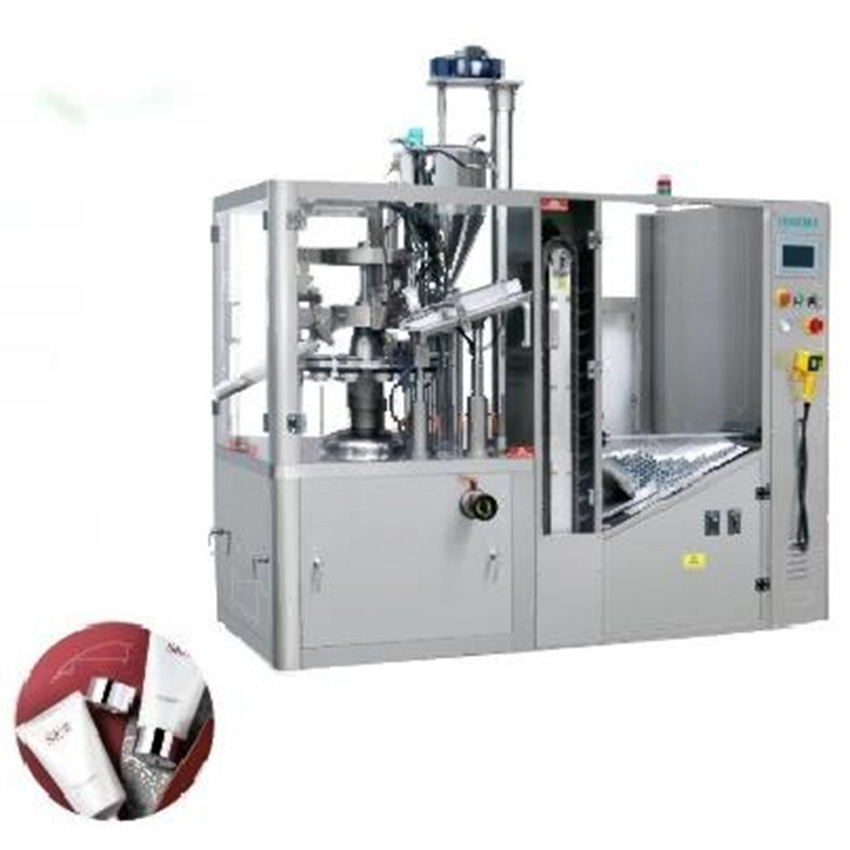
Material-Driven Machine Architecture: Mechanical Folding vs. Thermal Sealing
The fundamental difference between aluminum and plastic tube packaging lies in how they are sealed. This single factor dictates the entire mechanical design and operational logic of the tube filling machines. One relies on precise mechanical force, while the other depends on controlled thermal energy.
Aluminum Tube Filling Realities
Sealing an aluminum tube is a purely mechanical process. The machine uses a set of crimping jaws to physically fold the open end of the tube over itself multiple times. This process ensures a hermetic seal without any heat.
Fold Integrity: To guarantee a leak-proof seal, machines must perform specific fold patterns. These include "double," "triple," or sometimes "saddle" folds, where each fold adds a layer of security against product leakage and contamination. The complexity of the fold often correlates with the value and sensitivity of the product inside.
Integrated Embossing: A major advantage of this mechanical process is the ability to integrate batch and lot code embossing directly into the crimping station. As the jaws press the final fold, they can simultaneously stamp codes into the metal, creating a permanent, tamper-evident mark.
Risk Management: Handling aluminum requires precision. The material is prone to denting and deformation. Machine grippers, tube holders, and transport systems must be perfectly aligned to prevent cosmetic damage. Advanced systems use sensors to check for tube orientation and detect dents before filling, rejecting flawed tubes to prevent waste.
Plastic Tube Filling Machines & Sealing Tech
Plastic and laminated tubes cannot be folded; they must be sealed using heat to melt and fuse the material. The technology chosen depends on the product, tube material, and desired production speed.
Hot Air Sealing
This is the industry standard for high-speed cosmetic and food production. A specialized nozzle blows a precise jet of hot air (typically 160-220°C) onto the inner surface of the tube's open end. This method heats the tube from the inside out, protecting the external printing and decoration. After heating, cooled sealing jaws press the molten ends together to form a strong, clean seal.
Ultrasonic Sealing
Ultrasonic technology uses high-frequency vibrations to generate frictional heat exactly at the point of contact between the sealing jaws. This method is incredibly fast and efficient. Its key advantage is the ability to seal through product contamination. If a small amount of an oily or viscous product is present in the seal area, ultrasonic energy can vibrate it out of the way, ensuring a clean weld. This makes it ideal for heat-sensitive formulations or messy, high-viscosity pastes.
IML (In-Mold Labeling) Considerations
IML tubes, which feature a pre-printed label fused directly to the tube during molding, offer superior aesthetics but present a sealing challenge. The polypropylene (PP) material used in IML tubes has a different melting point and can be sensitive to heat. Hot air sealing nozzles must be carefully designed and positioned to avoid melting or distorting the high-end decorative finish near the seal.
Barrier Integrity and Product Compatibility Framework
The primary function of a tube is to protect its contents. The choice between aluminum and plastic directly impacts the product's shelf life, stability, and safety, especially in regulated industries like pharmaceuticals.
Pharmaceutical Grade Protection
For many pharmaceutical products, barrier properties are non-negotiable. Active pharmaceutical ingredients (APIs) can be highly sensitive to oxygen, light, and moisture, which can degrade their efficacy.
Aluminum offers a perfect, or "hermetic," barrier. It is impermeable to gases, light, and contaminants. This is why it remains the mandatory choice for many ointments, creams, and gels containing sensitive APIs. Furthermore, aluminum is chemically inert, minimizing the risk of a reaction between the packaging and the product. There is virtually no risk of leaching, where chemicals from the container migrate into the formulation.
Advanced Plastic Laminates (ABL vs. PBL)
Plastic tubes have evolved significantly to improve their barrier properties. Modern tubes are often multi-layered structures combining different polymers to achieve specific performance characteristics.
| Feature | ABL (Aluminum Barrier Laminate) | PBL (Plastic Barrier Laminate) |
| Core Barrier Layer | A thin layer of aluminum foil (typically 12-20 microns). | A layer of EVOH (Ethylene Vinyl Alcohol). |
| Barrier Performance | Excellent. Near-hermetic barrier similar to pure aluminum. | Very good. Achieves low Oxygen Transmission Rates (OTR) of 0.2–1.2 units. |
| Aesthetics | Combines the premium feel of plastic with the protection of aluminum. Has a visible side seam. | Offers seamless, 360-degree printing and a softer feel. Superior "bounce-back" memory. |
| Recyclability | Challenging due to mixed materials (plastic and metal). | More recyclable, especially newer mono-material versions designed for circularity. |
PBL tubes with an EVOH layer offer a strong balance of protection and aesthetics, making them suitable for many cosmetic and food products that require a good oxygen barrier but not the absolute protection of aluminum.
Viscosity Impact on Filling Head Selection
The product's viscosity is a critical factor in selecting the right filling system. The wrong pump can lead to inaccurate doses, messy seals, and product waste.
For high-viscosity pastes like toothpaste, thick ointments, or silicone sealants, positive displacement piston pumps or rotary valve pumps are necessary. They provide the force needed to move the thick product accurately. For lower-viscosity liquids, other filling machines might use different pump technologies. In plastic tube filling machines, ensuring a clean fill is paramount for a good seal. Advanced nozzles often feature blow-off or suck-back mechanisms to prevent dripping after a fill. A string cut-off mechanism, a thin wire that slices through the product tail, ensures no residue gets into the seal area.
Total Cost of Ownership (TCO) and ROI Drivers
Choosing a tube filler based on its initial purchase price alone is a common mistake. A comprehensive TCO analysis, considering maintenance, changeover efficiency, and waste rates, provides a much clearer picture of long-term profitability.
Initial CAPEX vs. Long-term Maintenance
There's a distinct trade-off between the two machine types. Aluminum tube fillers often have a higher initial capital expenditure (CAPEX) due to their mechanical complexity. The precision-engineered folding and crimping stations are intricate. However, their long-term consumable costs are lower because they don't require the high energy consumption of thermal sealing elements.
Plastic tube fillers may have a lower initial cost, but their ongoing operational expenses include higher energy consumption for the hot air or ultrasonic systems. Over high-volume runs, tooling wear on plastic sealing jaws can be lower than on the high-impact metal crimpers of aluminum machines.
Changeover Efficiency
In today's market of frequent product variations and smaller batch sizes, minimizing downtime is crucial. Modern machine design incorporates principles from "Single Minute Exchange of Die" (SMED) to accelerate changeovers. Key features include:
Tool-less Adjustments: Using hand-wheels and quick-release clamps instead of wrenches and bolts.
Modular Design: Pre-calibrated, interchangeable sealing heads or filling stations that can be swapped out quickly.
Standardized Parts: Using the same size tube holders (pucks) and nozzles across multiple tube formats to reduce the number of change parts needed.
A well-designed machine can reduce changeover times from over two hours to as little as 20 minutes, dramatically increasing overall equipment effectiveness (OEE).
Waste and Reject Rates
Waste reduction directly impacts the bottom line. Modern tube fillers incorporate multiple systems to minimize rejects and ingredient loss.
Detection Systems: Sensors for detecting empty tube stations, upside-down tubes, or incorrect orientation of the print mark are standard. Rejecting an empty tube before filling saves valuable product.
Servo-Driven Accuracy: Replacing pneumatic or mechanical drives with servo motors for the filling pump provides exceptional dosing accuracy, often within ±0.5%. Over millions of cycles, this precision saves a significant amount of costly ingredients.
Operational Risks and Implementation Realities
Beyond the spec sheet, day-to-day operational challenges can significantly affect production output and product quality. Understanding these real-world risks is key to selecting a robust and reliable machine.
The "Dent" Factor in Aluminum
Aluminum's biggest weakness is its susceptibility to cosmetic damage. Improper handling during loading, a misaligned tube feeding system, or low-quality grippers can easily cause dents. For premium cosmetic or pharmaceutical products where appearance is critical, this can lead to reject rates as high as 2-5%. Investing in a machine with a gentle, precise tube transport system is essential to mitigate this risk.
Thermal Management in Plastic Sealing
Achieving a perfect seal on a plastic tube involves more than just heat. The cooling phase is equally important. After the molten plastic is pressed together, it must be held under pressure for a specific duration to solidify properly. If the cooling is too short or the pressure is incorrect, the seal can "spring" back slightly or develop unsightly "ears" (excess material at the edges). An advanced automaitc tube filling and sealing machine offers precise control over heating time, sealing pressure, and cooling time to ensure a consistently strong and aesthetically pleasing seal.
Compliance and Cleaning
For pharmaceutical and some food applications, machinery must meet stringent regulatory standards. This goes beyond performance to include material and design for cleanability.
CIP/SIP Systems: Clean-in-Place (CIP) and Steam-in-Place (SIP) capabilities are often required for sterile environments. This means the machine's fluid path can be cleaned and sanitized without disassembly, saving time and reducing contamination risk.
GMP-Compliant Materials: All contact parts—the hopper, pump, nozzle, and any surface the product touches—must be made from FDA/GMP-compliant materials, typically 316L stainless steel. This grade offers superior corrosion resistance and is easily cleaned.
Future-Proofing: Industry 4.0 and Sustainability Trends
The manufacturing landscape is evolving rapidly. Selecting a machine today requires looking ahead to the trends that will shape production tomorrow, including digitalization and sustainability.
Smart Sensors and AI
The shift from reactive to predictive maintenance is a core component of Industry 4.0. Instead of fixing parts when they break, smart sensors monitor machine health in real-time. For example, sensors can track the temperature and pressure of a sealing station. If they detect a deviation from the optimal range, the system can alert an operator or even adjust itself automatically, preventing an entire batch from being lost due to faulty seals. This data-driven approach maximizes uptime and ensures consistent quality.
The Mono-Material Shift
Sustainability is a powerful driver in packaging. The industry is moving away from complex multi-layer laminates toward mono-material tubes (like all-PE or all-PP structures) that are more easily recycled. These new eco-friendly resins often have different melting points and processing characteristics than traditional plastics. A future-proof machine must have a flexible sealing system that can be easily adjusted or adapted to handle these new materials without a complete re-tooling.
Robotic Integration
As businesses strive for "lights-out" manufacturing, automation is key. Modern tube fillers are designed for seamless integration with upstream and downstream equipment. This includes robotic systems for automatically loading empty tubes into the machine and collaborative robots (cobots) for packing filled tubes into cartons. This level of automation reduces labor costs, eliminates human error, and increases overall line throughput.
Selection Logic: Which Machine Fits Your Production Goal?
The final decision comes down to aligning machine capabilities with your specific product, market, and operational strategy. There is no single "best" machine—only the best fit for your goals.
High-Volume Consumer Goods
For products like toothpaste, lotions, and shampoos, speed, efficiency, and aesthetics are paramount. A high-speed rotary plastic or laminated tube filler with hot-air sealing is typically the best choice. These systems can reach speeds of 150+ tubes per minute and produce visually appealing, durable seals that stand up to consumer handling.
Specialty Pharma & Industrial Adhesives
When product protection is the absolute priority, aluminum is the answer. For sensitive pharmaceuticals, reactive industrial adhesives, or high-value chemical compounds, a mechanical folding aluminum tube filling machine is the safer, more compliant investment. The hermetic seal and chemical inertness of aluminum provide unmatched product integrity and shelf life.
The Hybrid Approach
For contract manufacturers or brands with diverse product portfolios, market agility is crucial. "Combi" machines offer the ultimate flexibility. These systems are designed with interchangeable sealing heads, allowing an operator to swap between a mechanical crimping station for aluminum tubes and a thermal sealing station for plastic tubes. While the initial investment is higher, a combi machine provides the versatility to serve multiple markets from a single production line.
Conclusion
The choice between plastic and aluminum tube filling technology is a complex balance of trade-offs. Plastic offers aesthetic flexibility, higher speeds, and a better consumer feel, while aluminum delivers the ultimate in product protection and barrier integrity. Your decision should be guided by your product's specific needs, your target market's expectations, and your long-term business goals.
Ultimately, the wisest investment is not always the one with the lowest initial price tag. Prioritize machine modularity to adapt to future materials and formats. Ensure you have access to reliable, local technical support to minimize downtime. By focusing on total cost of ownership and future-proofing, you can select a tube filler that will be a productive and profitable asset for years to come.
FAQ
Q: Can one machine fill both plastic and aluminum tubes?
A: Yes, these are known as "Combi" or combination machines. They feature interchangeable sealing heads that can be swapped out. One head is for mechanical crimping of aluminum tubes, and the other is for thermal sealing (e.g., hot air) of plastic or laminate tubes. This requires a more significant changeover process but provides maximum production flexibility.
Q: What is the typical speed of an automatic tube filling and sealing machine?
A: Speeds vary widely based on machine design, tube size, and product viscosity. Entry-level or semi-automatic machines may run at 30-50 tubes per minute (bpm). High-speed rotary machines, especially for plastic tubes, can achieve speeds of 150 bpm or even higher for specific applications.
Q: How does tube diameter affect machine selection?
A: The range of tube diameters a machine can handle is determined by its turret and the size of its tube holders (often called "pucks"). Each machine has a minimum and maximum diameter limit. Running multiple tube sizes will require purchasing corresponding sets of change parts (holders). A machine with a larger turret is generally more stable at high speeds.
Q: Which sealing method is best for oily products?
A: Ultrasonic sealing is the superior choice for oily or greasy products. The high-frequency vibrations effectively push product contamination out of the seal area before fusing the plastic. This prevents weak spots or leaks that can occur with hot-air sealing if the seal area is not perfectly clean.
Q: What is the expected lifespan of a high-quality tube filler?
A: With proper preventative maintenance and regular servicing, a well-built, high-quality tube filling machine is a long-term investment. You can expect a lifespan of 10 to 15 years, and often much longer. The mechanical frame and core components are built to last; electronics and software may require upgrades over time.


