Process engineers and plant managers face a constant dilemma when scaling up production. You must carefully balance upfront capital expenditure against long-term process efficiency. Standard models look appealing on paper, but complex fluid dynamics often demand a more nuanced approach. We must frame the choice between standard and custom equipment as a Total Cost of Ownership (TCO) and risk mitigation decision, rather than a simple price comparison. Standard models solve for immediate scale and tight budgets. Custom designs solve for process bottlenecks, strict compliance, and complex rheology across a wide range of applications, including cream, lotion, gel, shampoo, liquid soap, sauce, syrup, ointment, and oral liquid production.
In this article, you will learn how to define the equipment baseline for your specific operations. We will explore the hidden costs of off-the-shelf models and evaluate critical dimensions for custom engineering. Finally, you will discover how to calculate true TCO and shortlist the right manufacturing partner for processes handling cosmetic, food, pharmaceutical, and daily chemical products.
Key Takeaways
Standard mixing tanks offer rapid deployment (typically 2-8 weeks) and lower CapEx, making them ideal for low-viscosity, single-product lines such as shampoo, liquid soap, oral liquid, syrup, and simple sauce blending.
Custom tanks command a 1.5x to 3x CapEx premium but drastically reduce OpEx through optimized Clean-In-Place (CIP) performance, reduced batch times, and lower energy consumption, especially for cream, lotion, gel, and ointment manufacturing where viscosity and shear sensitivity are more demanding.
Evaluating fluid rheology, precise thermal control needs, and facility spatial constraints dictates whether off-the-shelf equipment will cause hidden downtime in applications ranging from pharmaceutical oral liquids to cosmetic emulsions and food syrups.
Choosing a vendor requires assessing in-house engineering capabilities, material certification standards, and comprehensive system integration logic.
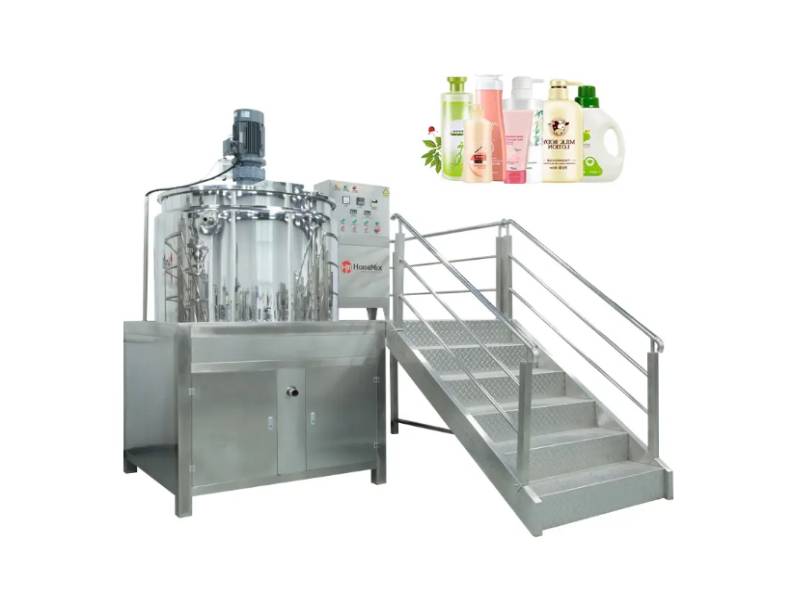
Standard vs. Custom Mixing Tanks: Defining the Baseline
You need to know exactly what you are buying before requesting a quote. Standard equipment relies on pre-engineered geometries and fixed aspect ratios. Manufacturers equip them using generic impeller configurations designed for broad use. These off-the-shelf mixing tanks offer highly attractive, shorter lead times. You can typically deploy them in two to eight weeks. They work best for straightforward applications, such as low-viscosity syrup preparation, oral liquid blending, basic sauce mixing, shampoo production, and simple liquid soap batching where fluid behavior remains highly predictable.
Custom engineering takes a completely different path. Manufacturers build these systems using purpose-built dimensions. They feature application-specific agitation systems and advanced thermal jackets. You also receive tailored compliance documentation required by regulatory bodies. Lead times run much longer here, usually spanning 8 to 20 weeks or more. Rigorous testing and bespoke engineering drive this extended schedule. This route is often necessary for products such as cream, lotion, gel, and ointment, where viscosity, heat transfer, shear force, and hygienic design directly affect product stability and quality.
We must view this equipment through a system-level mindset. A tank never operates as an isolated component. It has to function seamlessly inside an existing matrix of pumps and valves. Automated control systems, like Programmable Logic Controllers (PLCs) and Variable Frequency Drives (VFDs), must communicate clearly. When you ignore this integration, you risk significant workflow disruptions and operational delays, especially in multi-product facilities producing both low-viscosity liquids and high-viscosity emulsions.
The Hidden Costs of Standard Off-the-Shelf Models
Buying a cheaper unit often triggers expensive consequences later. Cleaning turnaround drives massive daily operational costs. Standard geometries frequently harbor dead zones where material accumulates. Poor Clean-In-Place (CIP) integration forces operators into labor-intensive manual scrubbing. You lose valuable production hours every time a batch ends. This problem becomes even more serious when handling sticky or residue-prone products such as cream, gel, syrup, sauce, ointment, or concentrated liquid soap.
Next, look at batch inconsistency and yield loss. Generic agitators struggle when viscosity changes during a chemical reaction or thermal process. Mismatched geometries fail to create proper fluid turnover. Product separation or agglomeration quickly ruins an entire batch. Yield loss destroys profitability far faster than a high initial purchase price. Shear-sensitive fluids, like certain lotions, creams, emulsified gels, oral liquids, or delicate pharmaceutical suspensions, break down easily under incorrect agitation.
Finally, consider retrofitting and integration penalties. Attempting to modify standard equipment on-site drains your budget rapidly. You might try welding new ports to fit specific process piping. You might struggle to install automated sensing equipment. These field modifications void manufacturer warranties and compromise internal sanitary finishes. For regulated sectors such as oral liquid and ointment manufacturing, these compromises create even higher compliance risks.
Common Mistake: Ignoring headspace. Buyers purchase a 500-gallon standard unit for a 500-gallon batch, leaving zero room for vortex formation, thermal expansion, or foaming, which is especially dangerous for shampoo, liquid soap, gel, and syrup processing.
Best Practice: Always map your required CIP spray ball coverage before approving a generic dome design to ensure zero blind spots during automated wash cycles, particularly for cream, sauce, ointment, and other high-residue formulations.
Critical Evaluation Dimensions for Custom Engineering
Your fluid's unique properties dictate functional design. Process rheology and agitation matching must guide every choice. You must align the impeller type directly to specific power and speed requirements. High-shear impellers excel for tight emulsions, such as lotion, cream, ointment, and cosmetic gel. Anchor agitators scrape the walls for high-viscosity materials. HE-3 hydrofoils handle low-energy blending efficiently for lower-viscosity products like oral liquid, syrup, shampoo, and liquid soap.
Impeller Type | Fluid Viscosity | Primary Application | Flow Pattern |
High-Shear | Low to Medium | Emulsions, particle size reduction, lotion, cream, gel | Radial |
Anchor | High | Heavy pastes, wall scraping, ointment, sauce, dense cream | Tangential |
HE-3 Hydrofoil | Low | Low-energy blending, suspension, syrup, oral liquid, shampoo | Axial |
Pitched Blade Turbine | Medium | Rapid blending, heat transfer, liquid soap, sauce, gel | Axial/Radial |
Plant floors rarely offer limitless space. Spatial constraints require facility flexibility. Engineers design tailored height-to-diameter ratios, typically aiming between 1:1 and 1.2:1, to fit constrained rooms. Sometimes, static units restrict agile workflows. Specifying a mobile stainless steel mixing tank solves this completely. They maximize cleanroom utilization and provide essential cross-line flexibility for multi-product facilities producing lotion, shampoo, liquid soap, syrup, oral liquid, and similar products in smaller or changing batches.
Thermal control precision ensures chemical safety and product viability. Sensitive chemical, cosmetic, food, or pharmaceutical reactions demand strict temperature boundaries. Custom heating and cooling jackets prevent localized burning. They also stop unwanted freezing near the vessel walls. Engineers often select between dimple jackets for standard heating and half-pipe coils for high-pressure cooling fluids. This is particularly important for heat-sensitive products such as cream, gel, ointment, syrup, oral liquid, and sauce.
Regulatory and hygienic compliance is non-negotiable in critical industries. Custom builds implement flush-mounted valves and superior surface finishes. Sterile environments frequently utilize magnetic mixers to eliminate mechanical seal contamination risks entirely. Manufacturers deliver rigorous validation protocols, including FDA, GMP, ASME standards, and full DQ/OQ/PQ documentation. These features are especially valuable for oral liquid, ointment, pharmaceutical gel, and other hygiene-sensitive formulations.
Calculating Total Cost of Ownership (TCO) and ROI
CapEx reality often scares buyers away from custom solutions. We acknowledge the higher initial purchase and engineering costs of custom units. However, we must map these against measurable reductions in daily operating expenses. Over a five-year lifecycle, these daily savings compound dramatically to outpace the initial premium, especially in demanding applications such as cream, lotion, gel, ointment, and syrup processing.
Let us evaluate the true cost of downtime. Shaving just two hours off manual cleaning translates to hundreds of additional production hours annually. Faster product changeovers directly increase revenue generation. Standard equipment forces longer, harder cleaning cycles, tying up costly labor and consuming excessive utilities. In facilities switching between shampoo, liquid soap, sauce, syrup, and oral liquid batches, this efficiency gain becomes even more valuable.
Energy and maintenance efficiency further separate custom units from standard ones. Custom-matched motors ensure you only consume necessary power. Optimized fluid dynamics reduce shear energy waste across long blending cycles. Tailored designs also minimize mechanical wear on vital seals and bearings, reducing expensive parts replacements. This matters significantly when processing thick cream, gel, or ointment as well as continuous-run liquid soap and shampoo batches.
Finally, weigh the opportunity cost of lead times. Fast-ship units allow immediate production revenue. Long-term efficiency losses, however, often negate this early lead. A custom build takes longer to arrive but operates significantly cheaper over its entire lifecycle.
Cost Factor | Standard Model | Custom Engineered Model |
Initial CapEx | $25,000 | $65,000 |
Annual CIP Labor & Utilities | $15,000 | $4,000 |
Annual Energy Consumption | $8,000 | $5,500 |
Annual Maintenance & Yield Loss | $12,000 | $3,000 |
5-Year Total Estimate | $200,000 | $127,500 |
How to Evaluate and Shortlist Manufacturers
Selecting the right manufacturing partner prevents costly engineering failures. Do not just look for cheap metal fabricators. Use a structured, evidence-based approach to qualify your vendors properly, especially if your production line handles multiple formulations such as lotion, cream, shampoo, liquid soap, syrup, sauce, ointment, or oral liquid.
Assess In-House Engineering and Simulation: Prioritize vendors capable of detailed fluid dynamic modeling. They should provide precise scale-up calculations. A true partner proves their design computationally before cutting steel.
Demand Evidence-Based Material Selection: Avoid suppliers offering a guesswork approach to metallurgy. Some vendors arbitrarily suggest 316 over 304 stainless steel. They must analyze chloride exposure and chemical compatibility first.
Verify Quality Assurance and Testing: Look for rigorous Factory Acceptance Testing (FAT). Demand certified welding standards, dye penetrant testing, and highly transparent surface roughness (Ra) documentation.
Examine Lifecycle Support: Assess the vendor’s capacity for rapid spare parts delivery. Check their installation supervision capabilities. Long-term maintenance partnerships define a highly reliable supplier.
Conclusion
Choosing the correct equipment shapes your facility's long-term profitability. You must navigate this decision carefully to avoid operational bottlenecks and creeping maintenance costs.
Buy standard equipment for straightforward utilities, simple processes, and immediate deployment speed, especially for predictable low-viscosity products like shampoo, liquid soap, syrup, oral liquid, and basic sauce mixing.
Invest in custom engineering when product quality, viscosity control, thermal precision, and strict regulatory compliance dominate your production requirements, as is often the case with cream, lotion, gel, ointment, and specialized pharmaceutical formulations.
Recognize how reduced daily operating costs quickly offset higher initial CapEx investments over a standard lifecycle.
Evaluate potential vendors based on engineering rigor, lifecycle support, and verifiable quality assurance.
Before requesting vendor quotes, initiate a clear internal audit. Document your fluid properties, facility constraints, and cleaning requirements. Taking these actionable steps ensures your equipment investment yields maximum operational efficiency across cream, lotion, gel, shampoo, liquid soap, sauce, syrup, ointment, and oral liquid manufacturing.
FAQ
Q: How much more expensive are custom mixing tanks compared to standard models?
A: Custom mixing units typically command a 1.5x to 3x CapEx premium over standard off-the-shelf models. While standard tanks might start at lower baseline prices, customized engineering, specialized agitation components, and advanced thermal jackets drive the initial cost higher. However, this premium is often recouped through lower long-term operating costs, especially for cream, lotion, gel, ointment, and other demanding formulations.
Q: What is the typical lead time difference between standard and custom tanks?
A: Standard models are pre-engineered and often kept in stock or built from existing templates, resulting in rapid lead times of 2 to 8 weeks. Custom engineered units require extensive design, fluid dynamic modeling, fabrication, and factory testing, extending lead times to anywhere from 8 to over 20 weeks. Custom lead times are common for applications involving cream, sauce, syrup, ointment, and oral liquid where process requirements are more specific.
Q: Can a standard mixing tank be upgraded later for higher viscosity or automated CIP?
A: Retrofitting is physically possible but financially draining and structurally risky. Adding automated CIP spray balls or changing impeller drives on a standard vessel usually requires field welding. This voids warranties, compromises internal sanitary finishes, and often introduces dead zones that fail regulatory hygiene standards. These issues are especially problematic for gel, ointment, cream, sauce, and oral liquid production.
Q: How do I know if I need 304 or 316 stainless steel for my application?
A: Material selection depends strictly on chemical compatibility, not guesswork. Grade 304 suits most standard food and mild chemical applications, such as some shampoo, liquid soap, or sauce processes. You must select 316 stainless steel if your process involves high chloride exposure, strong corrosives, or strict pharmaceutical sterile requirements, as the added molybdenum provides superior corrosion resistance for sensitive products such as oral liquid, ointment, and certain lotions or gels.
Q: What information should I prepare before contacting a tank manufacturer?
A: Conduct a thorough process audit first. Prepare details regarding your fluid rheology (viscosity and density), required batch sizes, operating temperatures, and pressures. Additionally, document your facility's spatial constraints, power availability, and necessary compliance standards like FDA, GMP, or ASME. Whether you are producing cream, lotion, gel, shampoo, liquid soap, sauce, syrup, ointment, or oral liquid, this information ensures precise, actionable vendor quotes.


