
Prevent pilot emulsion failures. A lab vacuum emulsifier mixer ensures scale-up success with precise shear, deaeration, and thermal control.

Industrial mixer selection guide. Avoid phase separation with viscosity, shear control, and sanitary tank design.

Stabilize cosmetics with high-shear emulsifiers. Learn how to prevent creaming, coalescence, and aeration for perfect shelf-ready products.

Avoid production risks from mis-specifying mixers. Learn emulsifying vs standard tank differences for optimal shear and thermal control.

Struggling with emulsion stability at scale? Learn how the right emulsifying mixer with vacuum and GMP compliance ensures reliable production.

Bridge the gap between benchtop and production. Discover how precision lab emulsifying mixers ensure linear scale-up and stable emulsions.

Bridge the gap from beaker to production. Our guide reveals key factors—tip speed, vacuum, GMP compliance—for choosing a lab emulsifying mixer that scales successfully.
Prevent cosmetic emulsion break during scale-up. Learn to match lab mixer tech to cream, gel, lotion rheology for seamless production.

In liquid packaging, the stakes are incredibly high. Every decision directly impacts throughput, product integrity, and profitability. Choosing the right equipment involves a crucial shift in mindset: moving beyond the simple "price-per-unit" of a machine to the more strategic "cost-per-filled-container." A poorly matched filler can lead to product giveaway, excessive downtime, and quality control nightmares, eroding margins with every cycle. This technical guide provides a robust framework for your evaluation process. We will help you analyze your product's unique characteristics, understand core filling technologies, and calculate the true total cost of ownership. The goal is to empower you to select a filling machine that aligns perfectly with your specific production realities, not just a vendor's spec sheet.

Learn how hydraulic lifting vacuum emulsifiers speed up cleaning and formula changeovers while improving GMP compliance in batch processing.

Learn how vacuum emulsifying mixers eliminate air, prevent oxidation, and ensure stable cosmetic emulsions using advanced high-shear technology.

Eliminate batch rejection with high shear vacuum mixers. Ensure perfect dispersion and stability for chemical, cosmetic, and food processing.

Optimize skincare production with our guide on selecting vacuum emulsifying mixers. Ensure product stability, quality, and operational efficiency.

Transitioning from lab-scale formulation to commercial manufacturing marks a critical milestone for growing cosmetic brands. You finally have a winning skincare formula. Scaling it up, however, frequently exposes hidden vulnerabilities in your production process. Emulsion failure, phase separation, and micro-bubble oxidation easily ruin entire batches. These common issues waste expensive raw materials. They ultimately compromise your brand reputation and erode customer trust in your products.

Scale production with our guide to industrial mixing tanks. Learn about 304/316L steel, thermal jackets, agitation, and sanitary design standards.

Expert guide to selecting vacuum emulsifying mixers. Evaluate viscosity, working volume, and automation to optimize production and ensure high ROI.

When you look for tube filling machines in 2026, you need to focus on features that match your production goals and help you prepare for the future. The market keeps growing, with global sales expected to rise from $4.7 billion in 2024 to $6.5 billion by 2030.

Selecting the right drive system for industrial mixing tanks is rarely a simple preference. It requires a precise calculation of long-term operational costs, safety compliance, and fluid dynamics. Plant engineers face a core dilemma every single day. They must balance the high energy efficiency and digital precision of electric motors against inherent explosion-proof safety. They also need the dynamic torque handling found natively in pneumatic systems. This specific choice directly impacts facility safety protocols and monthly utility bills. We designed this article to move past basic feature lists. We provide a total cost of ownership (TCO) and application-based framework instead. You will learn how to evaluate electric versus pneumatic mixing equipment thoroughly. We will explore safety thresholds, energy consumption, and viscosity handling step-by-step. By the end, you can confidently match the exact drive mechanism to your unique processing demands.

Industrial mixing is rarely just a basic mechanical step on the factory floor. It acts as a highly critical lever for yield optimization, rigorous cost control, and strict regulatory compliance. Smart manufacturers view this process as the vital heartbeat of their entire operation.Inconsistent batches, soaring energy consumption, and hidden contamination risks often drain your production profitability behind the scenes. Transitioning from outdated legacy equipment to highly specified industrial mixing systems directly solves these specific, stubborn bottlenecks. They eliminate wasted raw materials while aggressively protecting your brand reputation.

Process engineers and plant managers face a constant dilemma when scaling up production. You must carefully balance upfront capital expenditure against long-term process efficiency. Standard models look appealing on paper, but complex fluid dynamics often demand a more nuanced approach. We must frame the choice between standard and custom equipment as a Total Cost of Ownership (TCO) and risk mitigation decision, rather than a simple price comparison. Standard models solve for immediate scale and tight budgets. Custom designs solve for process bottlenecks, strict compliance, and complex rheology.
A tube filling and sealing machine is different from a standard bottle filling machine. It must handle tube loading, orientation, filling, sealing, coding, trimming and discharge within one coordinated process. The machine must also match the tube material, tube diameter, product viscosity and sealing method.
HONEMIX tube filling machines are suitable for plastic tubes, laminated tubes and aluminum tubes used in cosmetics, personal care, toothpaste, ointment and selected food or chemical products. This category is designed for manufacturers who need clean filling, strong sealing quality and consistent finished tube appearance.
Toothpaste
Cosmetic cream
Hand cream
Facial cleanser
Hair dye
Pharmaceutical ointment
Gel products
Sunscreen
Adhesive paste
Soft tube personal care products
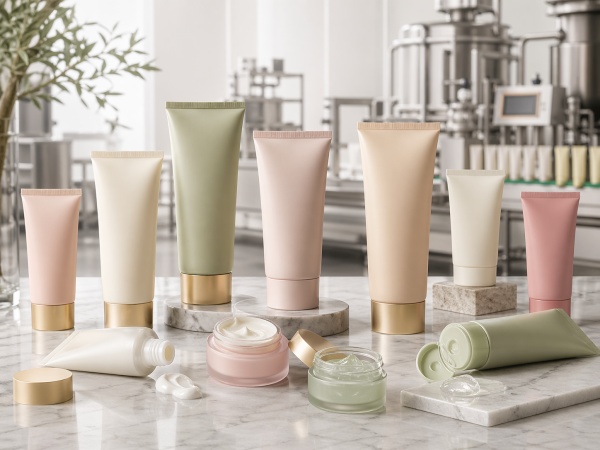
Cream & Gel Tube Filling
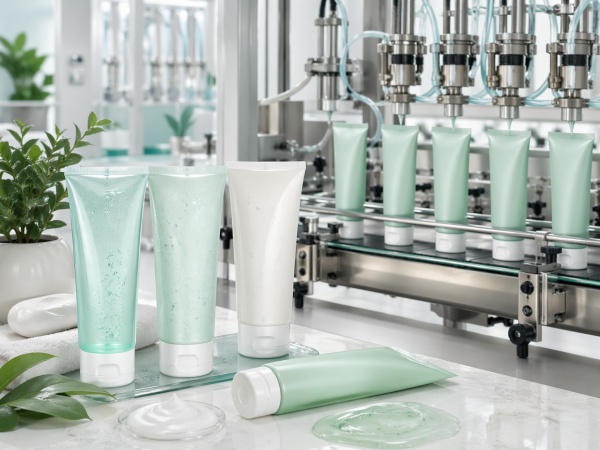
Facial Cleanser Tube Filling
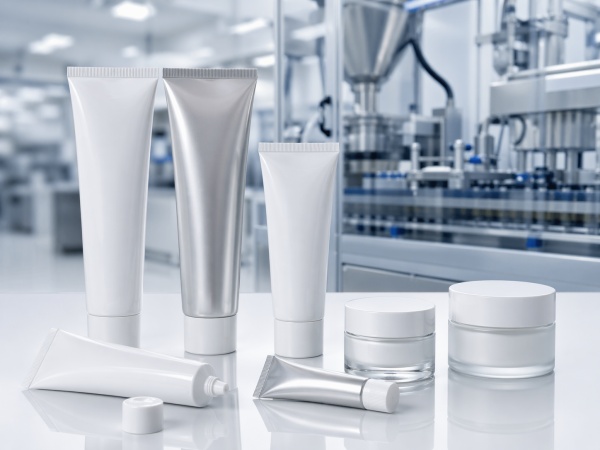
Ointment & Topical Cream Tubes
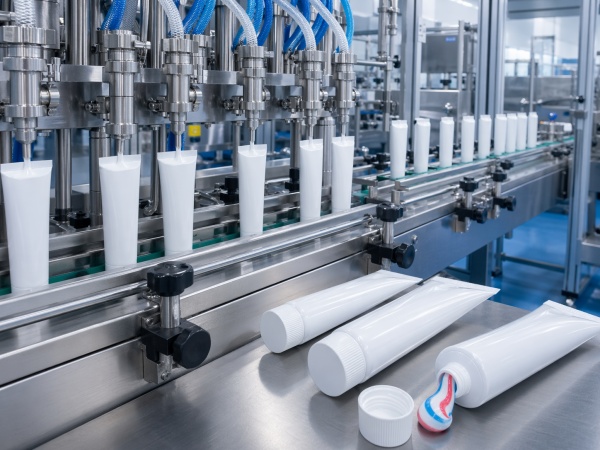
Toothpaste Tube Filling
Commonly used for cosmetic cream, cleanser, gel and personal care products. Plastic tubes usually require hot air or ultrasonic sealing.
Commonly used for toothpaste, cream and products requiring better barrier performance. The sealing method should match tube material and tube structure.
Commonly used for ointment, pharmaceutical paste and selected specialty products. Aluminum tube sealing usually requires folding and crimping rather than hot air sealing.
Suitable for stable commercial production. It can complete tube feeding, orientation, filling, sealing, coding, trimming and discharge automatically.
Suitable for plastic or laminated tubes where clean sealing, compact structure and lower heat influence are preferred.
Suitable for flexible production, easier maintenance and factories that need a more accessible working layout.
Suitable for larger output requirements where higher production speed and continuous operation are important.
Suitable for small batch production, start-up brands, testing or lower investment projects.
Plastic, laminated and aluminum tubes require different sealing structures. This is the most important selection factor.
Tube size affects mold design, tube holder, filling nozzle and sealing station.
Different filling ranges require different pump or piston systems.
Cream, gel, ointment and toothpaste need suitable material hoppers, filling pumps and anti-drip nozzles.
Hot air sealing, ultrasonic sealing and aluminum tube folding are selected according to tube material.
Batch number, production date or expiry date can be added depending on packaging requirements.
Small batch production may use semi-automatic or linear machines. Larger production may require rotary automatic or high-speed models.
Suitable for plastic, laminated and aluminum tubes
Tube feeding, filling, sealing and discharge options
Optional hot air, ultrasonic or folding sealing
Optional date coding and tail trimming
Anti-drip filling nozzle available
Suitable for cream, gel, ointment and toothpaste
Custom tube holder according to tube size
Optional automatic tube orientation
Can connect with cartoning or packing machines
A tube filling and sealing machine fills products into soft tubes and completes sealing, coding, trimming and finished tube discharge. It is commonly used for cream, gel, toothpaste, ointment, lotion, paste and cosmetic tube packaging.
A bottle filling machine mainly fills products into bottles or jars. A tube filling machine fills product into tubes and also seals, codes, trims and discharges the finished tubes.
Yes, but tube holders and some adjustment parts may need to be changed. The available range depends on tube diameter, tube length and machine design.
Plastic and laminated tubes can use hot air or ultrasonic sealing. Aluminum tubes usually need folding and crimping. The correct method depends on tube material.
Yes. Toothpaste usually requires stable paste filling, good tube positioning and strong sealing quality. The machine should be selected according to toothpaste viscosity, tube size and output target.
Yes. Automatic tube filling machines can be connected with cartoning machines or downstream packing systems for higher automation.
Request a Mixing Tank Configuration
Tell us your tube material, tube diameter, fill volume, product viscosity, and target output. We will recommend the right Tube Filling And Sealing Machine for your production line.


