
Prevent pilot emulsion failures. A lab vacuum emulsifier mixer ensures scale-up success with precise shear, deaeration, and thermal control.

Industrial mixer selection guide. Avoid phase separation with viscosity, shear control, and sanitary tank design.

Stabilize cosmetics with high-shear emulsifiers. Learn how to prevent creaming, coalescence, and aeration for perfect shelf-ready products.

Avoid production risks from mis-specifying mixers. Learn emulsifying vs standard tank differences for optimal shear and thermal control.

Struggling with emulsion stability at scale? Learn how the right emulsifying mixer with vacuum and GMP compliance ensures reliable production.

Bridge the gap between benchtop and production. Discover how precision lab emulsifying mixers ensure linear scale-up and stable emulsions.

Bridge the gap from beaker to production. Our guide reveals key factors—tip speed, vacuum, GMP compliance—for choosing a lab emulsifying mixer that scales successfully.
Prevent cosmetic emulsion break during scale-up. Learn to match lab mixer tech to cream, gel, lotion rheology for seamless production.

In liquid packaging, the stakes are incredibly high. Every decision directly impacts throughput, product integrity, and profitability. Choosing the right equipment involves a crucial shift in mindset: moving beyond the simple "price-per-unit" of a machine to the more strategic "cost-per-filled-container." A poorly matched filler can lead to product giveaway, excessive downtime, and quality control nightmares, eroding margins with every cycle. This technical guide provides a robust framework for your evaluation process. We will help you analyze your product's unique characteristics, understand core filling technologies, and calculate the true total cost of ownership. The goal is to empower you to select a filling machine that aligns perfectly with your specific production realities, not just a vendor's spec sheet.

Learn how hydraulic lifting vacuum emulsifiers speed up cleaning and formula changeovers while improving GMP compliance in batch processing.

Learn how vacuum emulsifying mixers eliminate air, prevent oxidation, and ensure stable cosmetic emulsions using advanced high-shear technology.

Eliminate batch rejection with high shear vacuum mixers. Ensure perfect dispersion and stability for chemical, cosmetic, and food processing.

Optimize skincare production with our guide on selecting vacuum emulsifying mixers. Ensure product stability, quality, and operational efficiency.

Transitioning from lab-scale formulation to commercial manufacturing marks a critical milestone for growing cosmetic brands. You finally have a winning skincare formula. Scaling it up, however, frequently exposes hidden vulnerabilities in your production process. Emulsion failure, phase separation, and micro-bubble oxidation easily ruin entire batches. These common issues waste expensive raw materials. They ultimately compromise your brand reputation and erode customer trust in your products.

Scale production with our guide to industrial mixing tanks. Learn about 304/316L steel, thermal jackets, agitation, and sanitary design standards.

Expert guide to selecting vacuum emulsifying mixers. Evaluate viscosity, working volume, and automation to optimize production and ensure high ROI.

When you look for tube filling machines in 2026, you need to focus on features that match your production goals and help you prepare for the future. The market keeps growing, with global sales expected to rise from $4.7 billion in 2024 to $6.5 billion by 2030.

Selecting the right drive system for industrial mixing tanks is rarely a simple preference. It requires a precise calculation of long-term operational costs, safety compliance, and fluid dynamics. Plant engineers face a core dilemma every single day. They must balance the high energy efficiency and digital precision of electric motors against inherent explosion-proof safety. They also need the dynamic torque handling found natively in pneumatic systems. This specific choice directly impacts facility safety protocols and monthly utility bills. We designed this article to move past basic feature lists. We provide a total cost of ownership (TCO) and application-based framework instead. You will learn how to evaluate electric versus pneumatic mixing equipment thoroughly. We will explore safety thresholds, energy consumption, and viscosity handling step-by-step. By the end, you can confidently match the exact drive mechanism to your unique processing demands.

Industrial mixing is rarely just a basic mechanical step on the factory floor. It acts as a highly critical lever for yield optimization, rigorous cost control, and strict regulatory compliance. Smart manufacturers view this process as the vital heartbeat of their entire operation.Inconsistent batches, soaring energy consumption, and hidden contamination risks often drain your production profitability behind the scenes. Transitioning from outdated legacy equipment to highly specified industrial mixing systems directly solves these specific, stubborn bottlenecks. They eliminate wasted raw materials while aggressively protecting your brand reputation.

Process engineers and plant managers face a constant dilemma when scaling up production. You must carefully balance upfront capital expenditure against long-term process efficiency. Standard models look appealing on paper, but complex fluid dynamics often demand a more nuanced approach. We must frame the choice between standard and custom equipment as a Total Cost of Ownership (TCO) and risk mitigation decision, rather than a simple price comparison. Standard models solve for immediate scale and tight budgets. Custom designs solve for process bottlenecks, strict compliance, and complex rheology.
A mixing tank is often the first key machine in liquid product manufacturing. It can be used for blending raw materials, dissolving powders, heating liquids, cooling formulas, holding finished bulk products, or preparing materials before filling.
HONEMIX mixing tanks are suitable for flowable and semi-viscous products such as shampoo, body wash, liquid soap, detergent, sanitizer, toner, fragrance liquid, and cleaning products. Whether used as a shampoo mixing tank, liquid soap mixing tank, or lotion mixing tank for light to medium-viscosity formulas, the system can be customized according to different production processes. Compared with vacuum emulsifying mixers, this category focuses more on liquid preparation, tank structure, agitator selection, and process flexibility.
Mixing tanks help combine water, surfactants, fragrance, color, additives and other ingredients into a uniform liquid product.
For products that contain salt, thickener, active powder or cleaning ingredients, the mixing system can help improve dissolving efficiency.
Jacketed tanks can be designed for steam, electric heating, hot water or cooling water depending on process needs.
Some tanks can be used as buffer tanks before filling, helping production lines run more smoothly.
For products that need stronger dispersion, a bottom or inline homogenizer can be added to improve material uniformity.
This category is suitable for:
Shampoo
Body wash
Liquid soap
Hand sanitizer
Laundry detergent
Dishwashing liquid
Household cleaner
Perfume liquid
Toner
Essential oil blend
Low-to-medium viscosity liquid products

Lotion and Liquid Soap Mixing

Shampoo and Conditioner Production
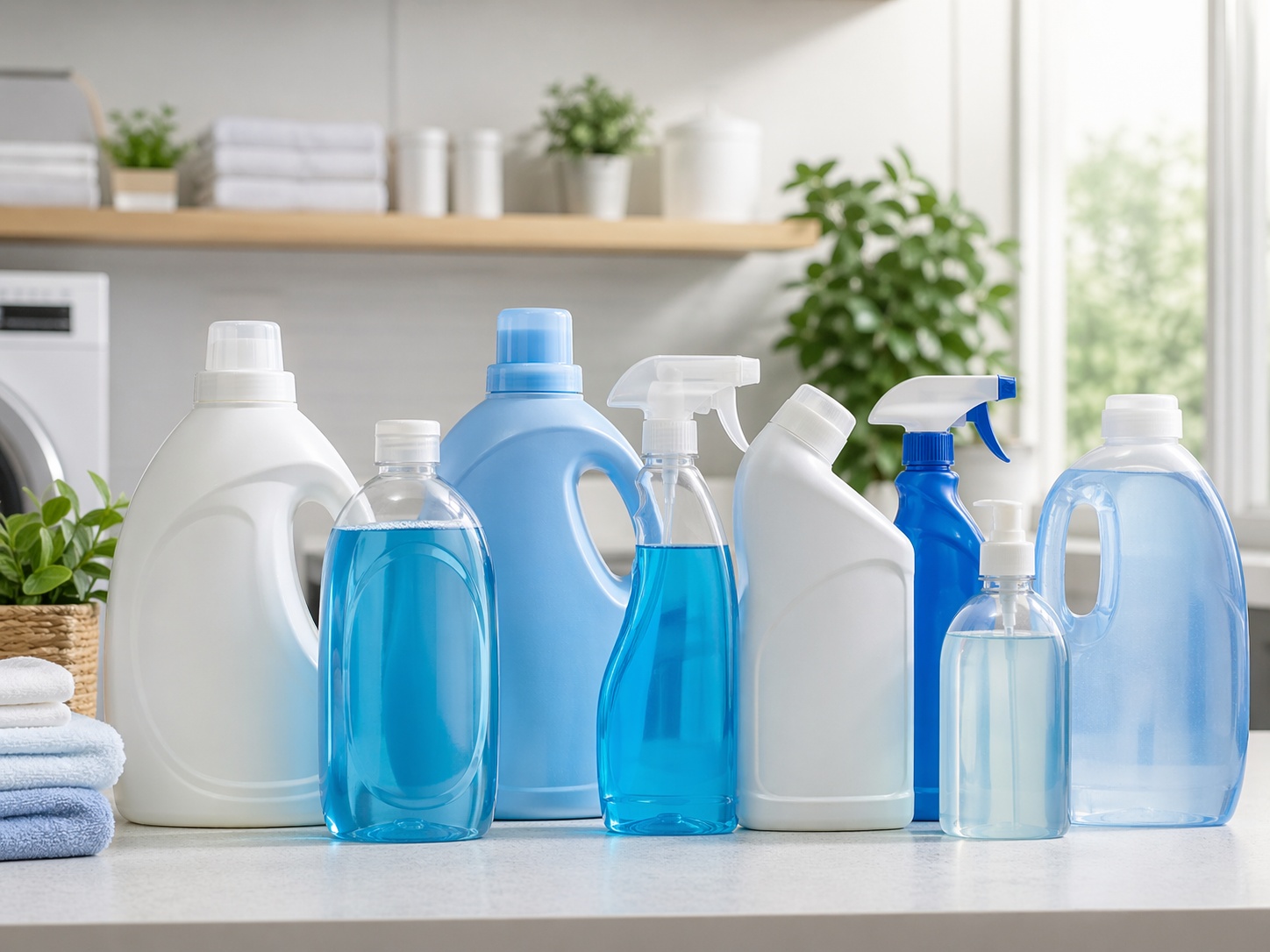
Hand Wash and Sanitizer Blending
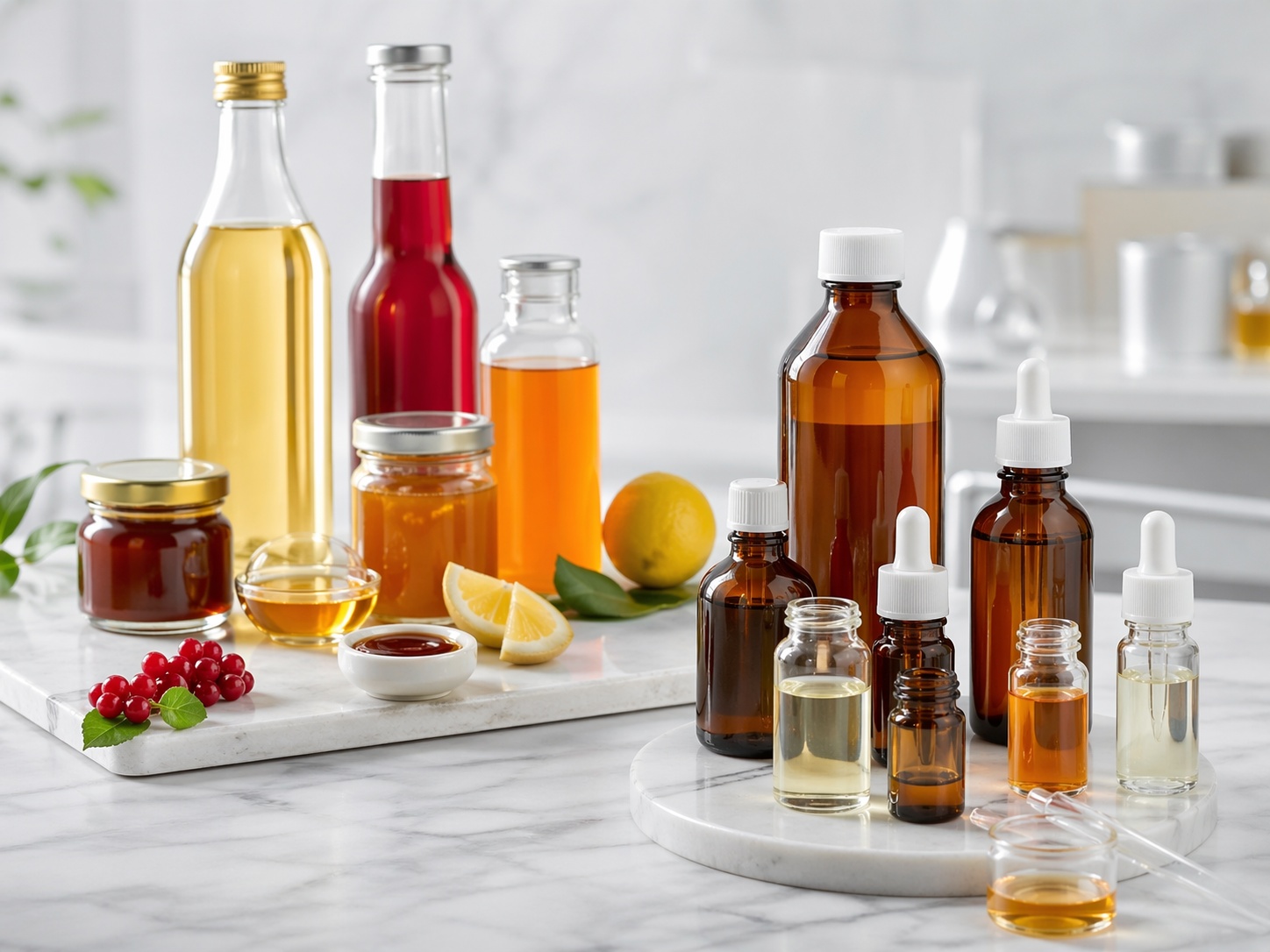
Food and Pharmaceutical Liquid Preparation
Suitable for simple liquid blending, easy material feeding and small to medium production. It is often used for products that do not require vacuum or sealed processing.
Suitable for products that need better dust control, odor control or more hygienic processing conditions.
Suitable for products requiring heating, melting, temperature holding or cooling during production.
Suitable for flexible production, pilot batches or factories that need to move material between different work areas.
Suitable for liquid products that need stronger dispersion, faster dissolving or improved consistency.
Suitable for holding raw materials, semi-finished products or finished bulk product before transfer or filling.
Thin liquid, foaming liquid and semi-viscous liquid need different agitator designs. The product behavior should be confirmed before choosing the tank.
Choose tank volume according to working batch size, not only maximum capacity. Enough headspace may be needed for foaming or powder feeding.
Different materials may need paddle mixing, frame mixing, dispersing, bottom homogenizing or combined agitation.
If raw materials need melting or temperature control, choose jacketed design and confirm heating medium.
Open tanks are easier for feeding and cleaning. Sealed tanks are better for hygiene, dust control or odor-sensitive products.
For frequent product changeover, polished surfaces, spray balls, sanitary valves and easy-disassembly structures can reduce cleaning time.
SUS304 or SUS316L contact parts available
Single-layer, jacketed or insulated tank structure
Custom agitator design according to product behavior
Optional heating, cooling or temperature control
Optional homogenizer for stronger dispersion
Optional load cell, platform or transfer pump
Optional sealed cover, manhole or CIP cleaning interface
Suitable for standalone use or connection with filling lines
A mixing tank is mainly used for blending, dissolving, heating, cooling or storing liquid products. An emulsifying mixer is used when the formula needs vacuum processing and high-shear emulsification, especially for cream, gel or paste.
Yes. Shampoo production usually requires liquid blending, thickener dissolving, fragrance addition and viscosity adjustment. A suitable agitator and tank structure should be selected according to formula viscosity and foaming behavior.
Yes. A jacketed mixing tank can be designed for electric heating, steam heating, hot water circulation or cooling water depending on the process.
SUS304 is suitable for many standard liquid products. SUS316L is often preferred for more demanding hygiene, corrosion resistance or pharmaceutical-related applications.
Yes. A mixing tank can discharge material to a filling machine through a transfer pump, pipeline, buffer tank or direct connection depending on factory layout.
Request a Mixing Tank Configuration
Send us your product type, viscosity, batch capacity, heating or cooling requirement, and material preference. We will recommend the right Stainless Steel Mixing Tank configuration for your factory.


