
English
Views: 0 Author: Site Editor Publish Time: 2026-04-14 Origin: Site


Procuring packaging equipment stands out as a critical, high-stakes capital expenditure (CapEx). You are not just buying metal and motors. You are investing in the heartbeat of your production floor. A mismatched machine triggers endless downstream bottlenecks. It multiplies material waste daily and forces crippling changeover downtimes. Over time, poorly selected equipment drains profitability and exhausts your workforce.
Choosing the right machinery demands careful alignment. You must balance current SKU requirements—speed, material, and format—with future operational scalability. A successful deployment typically achieves a realistic payback period under 24 months. Furthermore, it must align perfectly with your team’s existing maintenance capabilities. If you buy a highly complex system but lack skilled technicians, your efficiency will plummet.
In this guide, you will discover how to evaluate equipment architectures and dosing mechanisms. We will show you how to calculate realistic ROI and confidently vet suppliers. Armed with these insights, you can protect your investment and build a resilient, future-proof packaging line.
Match equipment types (VFFS, HFFS, Premade) directly to product fragility, packaging format, and required changeover frequency.
Dosing and feeding mechanisms must align with physical product properties (viscosity, granule size, volatility) to prevent fatal engineering flaws like continuous jamming.
Total Cost of Ownership (TCO) extends far beyond the sticker price; factor in energy consumption, ±0.5g accuracy material savings, and downtime costs.
Facility constraints—including workshop ceiling height, layout flexibility, and existing ERP/MES infrastructure—dictate the feasibility of your automation strategy.
Supplier vetting must prioritize post-sale technical documentation, local spare parts availability, and strict compliance certifications (e.g., FDA, ATEX).
Selecting a packing machine requires matching its core architecture to your product's specific format. You cannot force a highly fragile item into a high-drop vertical system. Likewise, you should not waste premium pouch budgets on low-margin bulk goods. We must evaluate three primary architectures.
VFFS systems dominate high-speed gravity-fed operations. They routinely hit speeds of 20 to 120+ packs per minute (PPM). These machines pull flat roll-film over a forming tube, seal the bottom, drop the product, and seal the top. They work perfectly for homogeneous dry goods, granules, and powders. However, this speed comes with trade-offs. You face a higher vertical footprint. You also remain dependent on continuous roll-film, making them less ideal for highly complex pouch shapes.
HFFS, or flow wrapping, moves products horizontally along a conveyor. Film wraps around the item from above or below, sealing longitudinally. We highly recommend this architecture for distinct, solid items. Think of plastic trays, medical devices, or baked goods. When evaluating HFFS, look through a specific lens: drop height reduction. Unlike VFFS, horizontal feeding minimizes impact. Upgrading to HFFS can reduce fragile item breakage by up to 18%.
Modern consumers demand premium shelf appeal. Premade pouch machines handle complex formats like stand-up pouches, zipper closures, and specialized spouts. They excel in high-mix, low-volume (HMLV) environments. The major ROI driver here is changeover speed. Operators can swap SKUs in under 5 minutes. Form-fill-seal systems often require much longer changeover times. Keep in mind, however, premade pouch materials carry a higher unit cost compared to flat roll-film.
Common Mistake: The "All-in-One" Trap
Buyers often seek a single machine to "do it all." They want one asset to pack tiny sample bags and bulk family packs. Highly versatile machines inevitably suffer from complex, lengthy changeovers. Every adjustment introduces mechanical variables. Frequent adjustments destroy your Overall Equipment Effectiveness (OEE). Instead of buying a unicorn machine, invest in right-sized equipment for distinct product families.
Machine Type | Ideal Products | Speed Potential | Primary Limitation |
|---|---|---|---|
VFFS | Granules, powders, liquids | High (20–120+ PPM) | Requires high ceiling clearance |
HFFS | Solid items, trays, baked goods | Medium to High | Consumes large floor space |
Premade Pouch | Premium snacks, liquids, HMLV | Medium | Higher packaging material cost |
Your product's physical state dictates the internal engineering of your equipment. Viscosity, granule size, and volatility define your dosing mechanism. Ignore these physical properties, and you will engineer continuous jamming into your daily operations.
Metering dry goods accurately requires precision. We strongly advise against basic volumetric cups for small granules like rice or sugar. Volumetric cups rely on volume rather than weight, which can yield up to 7% error margins due to product settling. Instead, recommend computer multi-head weighers. These systems guarantee ±0.5g accuracy. Over a year, this material savings pays for the weigher.
You must also account for extreme granule sizes. Spheres larger than 15mm or long items exceeding 50mm easily bridge together. They lock up inside standard funnels. You must require specific hopper modifications to prevent bridging. These include mechanical pushers, dimpled surfaces, or specialized welding protection to keep products flowing smoothly.
Handling difficult liquids introduces a distinct set of engineering challenges. Standard liquid piston fillers fail when dealing with high volatility or foaming. You must deploy specialized, integrated architectures for these items.
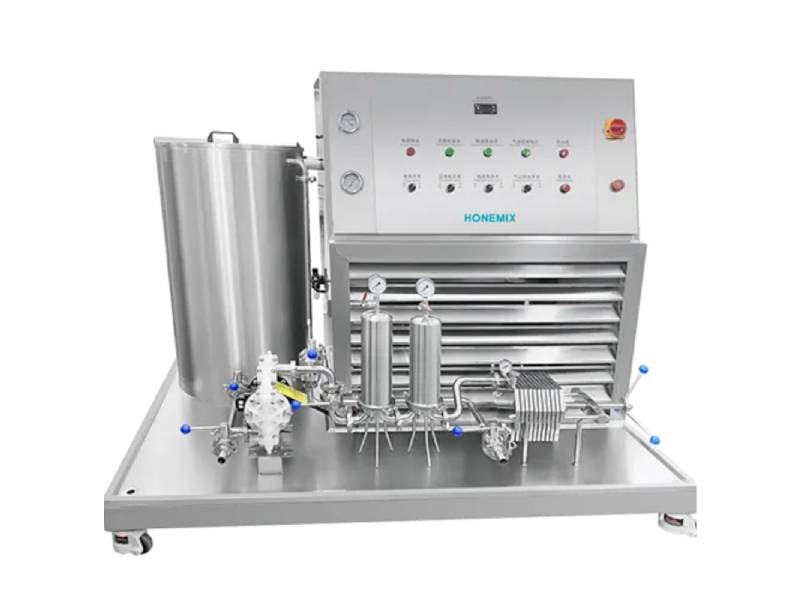
For example, deploying an automatic perfume vacuum filling & crimping Line ensures precise volumetric dosing for high-value fragrances. This specialized equipment uses negative pressure to prevent product evaporation and foaming. It also guarantees airtight, aesthetic crimping. A generic filler cannot achieve this level of cosmetic perfection and volatile fluid control.
Sealing holds your package together. You generally choose between two core technologies:
Heat Sealing: This remains the industry standard for food safety. Heated jaws melt the film layers together. It provides airtight, waterproof barriers essential for perishable goods.
Cold Sealing: Cold sealing relies on pressure-sensitive adhesives applied to the film during manufacturing. It requires no heat. We recommend this for heat-sensitive goods like chocolates or medical supplies. It offers lower energy consumption and facilitates incredibly fast line speeds.
Many buyers finalize equipment specifications without measuring their own factory. Physical constraints and end-of-line bottlenecks routinely derail automation projects. You must walk your floor before issuing a purchase order.
Space limits everything. VFFS equipment requires substantial vertical clearance. The dosing weighers sit high above the forming tube. Operators also need clearance above the weigher for cleaning. Older facilities often lack sufficient ceiling height. If your roof sits low, you may need customized low-profile models or specialized bucket conveyors to feed the system.
Standalone machines create islands of automation. If your primary filler outputs 100 pouches per minute, but your manual cartoning team can only handle 50, you create a massive bottleneck. The filler will constantly stop and start, causing wear and tear.
You must evaluate accumulation and buffer systems. Accumulation tables act as shock absorbers for your production line. They temporarily hold products, balancing high upstream speeds with slower downstream secondary or tertiary packaging stages like cartoning and palletizing. This balancing keeps the primary machine running steadily.
Manufacturing trends heavily favor agility. Rigid, bolted-down lines are becoming obsolete. Consider the shift toward "mobile production lines." Can you easily reconfigure the equipment on the shop floor? Look for heavy-duty locking casters and modular utility connections.
Furthermore, ensure the machine's Programmable Logic Controller (PLC) remains open. Proprietary software locks you out. An open PLC allows seamless integration with existing Manufacturing Execution Systems (MES) or Enterprise Resource Planning (ERP) networks. Real-time data tracking lets you monitor OEE and schedule predictive maintenance before catastrophic failures occur.
Sticker price represents only a fraction of a machine's actual cost. Focusing solely on the initial capital outlay blinds you to long-term operational expenses. You must calculate a realistic Total Cost of Ownership (TCO) to justify your investment.
Automation justifies itself through labor reallocation and increased throughput. Use a simple evaluation framework. Track the fully burdened cost of your manual packaging team. A fully automated system replacing four or more manual operators typically sees a return on investment within 18 to 24 months. Beyond labor savings, machines deliver absolute consistency. They do not take breaks, and they maintain exact throughput speeds across entire shifts.
Instruct your procurement team to calculate lifetime costs comprehensively. Evaluate these hidden factors:
Intellectual Property & Design: Cheaper machines often copy designs poorly, leading to patent disputes or inefficient geometry.
Energy Consumption: Analyze the drive mechanisms. Heavy reliance on compressed air (pneumatic cylinders) costs significantly more in electricity over ten years. Servo-driven motors cost more upfront but use a fraction of the energy.
Material Waste: Poor dosing accuracy bleeds money. A cheap machine overfilling by just 2 grams per bag costs tens of thousands of dollars annually in lost product.
You must tie machine complexity directly to your in-house team's technical maturity. Highly complex, multi-axis servo-driven machines require skilled, highly paid technicians to troubleshoot. If your current staff lacks programming experience, you face extended downtime during breakdowns.
If advanced technicians are unavailable, opt for simpler, mechanically driven systems. Alternatively, invest in cobot (collaborative robot) assisted semi-automation. Cobots work safely alongside your current manual workforce. They handle repetitive lifting tasks without requiring a dedicated automation engineer on staff.
A machine is only as reliable as the company standing behind it. Post-sale support separates world-class manufacturers from fly-by-night assemblers. You must aggressively vet suppliers before signing any contracts.
Ultra-low upfront pricing usually masks severe deficits. Manufacturers cut costs by slashing Research & Development budgets. They skip rigorous pre-shipment testing. They utilize inferior, no-name component quality. The money you save on day one will quickly evaporate through constant jams, broken sensors, and ruined packaging materials.
Never accept a machine without its full technical roadmap. Instruct your purchasing team to demand specific documentation before approving final payment. Make these mandatory deliverables:
Complete Circuit Diagrams: You need full electrical and pneumatic schematics. Without them, local electricians cannot safely troubleshoot faults.
Preventative Maintenance Schedules: Demand daily, weekly, and monthly lubrication and inspection checklists.
Non-Proprietary Components: Demand proof of non-proprietary, locally sourceable wear parts. If a sensor fails, you should be able to buy a replacement from a local industrial supplier, rather than waiting three weeks for an overseas shipment.
Ensure the supplier provides proper material certifications based on your specific vertical. Do not accept verbal assurances. If you pack food or pharmaceuticals, require documentation proving the use of 316L stainless steel and FDA/USDA compliant contact surfaces.
If you handle explosive powder environments—like flour, sugar, or chemical dust—you must verify ATEX-certified dust-proof electronics. Non-compliant electrical enclosures spark fires in dusty environments. Proper certification protects your facility and keeps you legally compliant.
Buying a packaging machine remains a profound exercise in risk mitigation and process alignment. It requires far more than just comparing spec sheets and choosing the lowest bid. You must match the physical mechanics to your product, respect your facility's spatial limits, and accurately project the total cost of ownership. Take a strategic, data-driven approach to ensure long-term profitability.
Next Actions to Take:
Audit your current floor space, documenting absolute limits for ceiling heights and aisle widths.
Map out exact dimensions, weights, and physical states for every SKU you intend to run on the new equipment.
Calculate your current manual packaging costs and material waste percentages to establish a baseline.
Draft a strict requirement checklist, including FDA/ATEX compliance, open PLC access, and non-proprietary parts availability.
Submit this detailed documentation as an RFQ to a shortlist of heavily vetted manufacturers.
A: Primary machines handle product-touching packaging, such as filling a bag with chips. Secondary machines group these individual items together, like placing multiple bags into a retail display carton. Tertiary machines prepare bulk goods for shipping, typically by palletizing boxes and wrapping them in stretch film for logistics transport.
A: Choose VFFS for maximum speed and lower roll-film costs, assuming your product drops well by gravity. Choose Premade Pouch machines if you require premium visual shelf appeal, complex pouch shapes (like zippers), and need ultra-fast changeovers for smaller, high-mix product runs.
A: Yes, but they require advanced upgrades. Sustainable, mono-material recyclable films have very narrow melting windows. Standard seal jaws will either melt through them or create weak seals. You must specify highly precise temperature controllers and specialized sealing profiles when ordering your machine.
A: Prepare detailed data on your product's state (powder, liquid, solid). Note your desired packs per minute (PPM), exact bag dimensions, and film material. Additionally, provide factory infrastructure details, including available voltage, compressed air capacity, and exact workshop ceiling height.