
English
Views: 0 Author: Site Editor Publish Time: 2026-04-16 Origin: Site


Selecting the wrong packaging orientation isn't just an equipment error; it leads to chronic product damage, excessive film waste, and inflated maintenance costs. Many manufacturers underestimate how profoundly mechanical axes impact daily throughput. You can easily cripple a high-speed production line by forcing a fragile item into a drop-fill system.
The optimal decision relies on matching a product's physical state with the correct mechanical handling process while balancing floor space and Total Cost of Ownership (TCO). You must evaluate whether your goods need gentle linear conveyance or gravity-assisted speed. Floor space limitations also heavily dictate your final equipment choice.
This guide breaks down the technical and commercial trade-offs between vertical and horizontal systems to help operations and procurement teams make an evidence-based capital equipment decision. We will explore mechanical differences, product compatibility rules, and hidden maintenance costs so you can specify exactly what your facility needs.
Physics Dictate the Machine: Gravity-assisted Vertical Form Fill Seal (VFFS) systems dominate bulk loose goods (powders, granules, liquids), while Horizontal Form Fill Seal (HFFS) systems are mandatory for solid, individual, or fragile items.
Space vs. Speed Trade-offs: Vertical machines maximize factory floor utilization (compact footprint), whereas horizontal machines require significant linear space but excel in premium, complex packaging formats.
TCO Realities: Vertical systems generally present a lower barrier to entry and reduced annual maintenance costs due to fewer moving parts.
Advanced Operations: Modern high-volume facilities often don't choose just one; they utilize a hybrid setup, combining both for primary and secondary packaging stages.
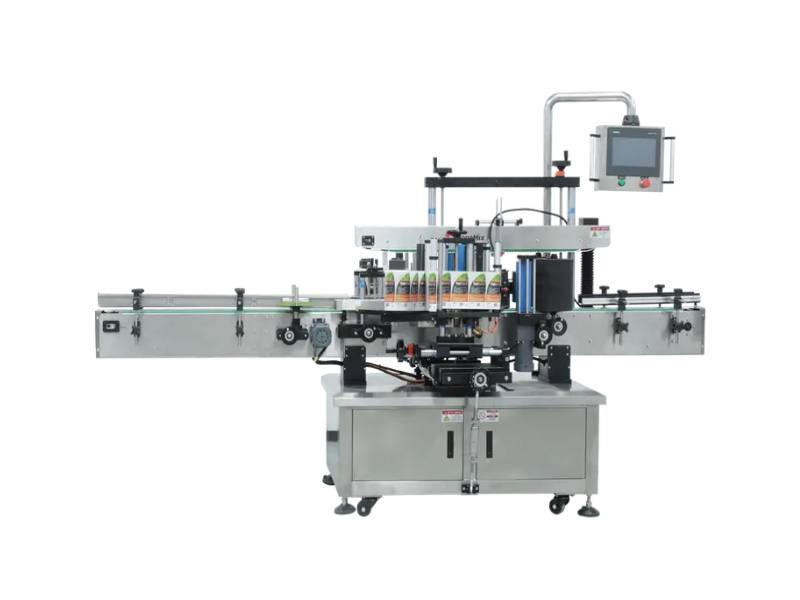
Understanding the fundamental engineering behind flow wrapping systems is the first step in avoiding costly procurement mistakes. The mechanical axis determines everything from factory layout to daily operator tasks. You cannot separate the physical motion of the equipment from the physical nature of your product.
Vertical systems operate on a top-down axis. Rollstock film is pulled over a forming collar and down a forming tube. The machine seals the film vertically to create a continuous tube. The bottom seal is then applied, and the product drops in using gravity. Once filled, the system seals the top.
This vertical action creates a highly efficient sealing process. The sealing jaws perform a dual function—sealing the top of the current bag while simultaneously creating the bottom seal of the next. This single, rapid motion minimizes cycle times. Gravity does the heavy lifting for product transport, reducing the need for internal conveyance mechanisms. Operators appreciate this simplicity because fewer moving parts mean fewer points of failure.
Horizontal machines operate on a linear horizontal plane. Products are fed manually or automatically onto a long conveyor belt. The conveyor pushes items into a continuously formed film tube. Rotary or box-motion jaws then seal the film laterally between each item.
This mechanical design focuses strictly on handling stability. HFFS minimizes drop impact, offering stable, gentle transportation for items that cannot survive a vertical plunge. By keeping the product flat and supported throughout the entire journey, horizontal wrappers protect delicate edges, prevent ingredient separation, and maintain strict cosmetic integrity. They require highly synchronized servo motors to match conveyor speed with film speed precisely.
You must let the physical state of your product dictate your equipment choice. Forcing a product into the wrong orientation guarantees high scrap rates. Industry standards dictate rigid rules regarding what goes into a vertical versus a horizontal system.
Vertical wrappers are best for free-flowing bulk goods, granules, snacks, and powders. If a product naturally conforms to the shape of the bag it falls into, a VFFS system handles it perfectly. Think of roasted coffee beans, loose hardware, or granulated sugar. Gravity ensures these items pack tightly into the bottom of the formed pouch.
These systems also handle liquid integration remarkably well. They are capable of packing liquids into flexible pouches via specialized pump integrations. However, there are strict limitations. Note for procurement: If your end-product requires rigid bottles rather than flexible pouches, a continuous flexible packing machine is the wrong category entirely; you would need a specialized volumetric or continuous system like an automatic perfume filling machine or inline rotary filler.
Horizontal systems are mandatory for defined discrete solids. If you are packing chocolate bars, baked goods, hardware trays, or medical syringes, you must use an HFFS. These items possess fixed dimensions. They cannot safely drop down a tube without jamming or breaking.
Furthermore, HFFS is crucial for fragile items where gravity drops would cause breakage or unacceptable cosmetic damage. Frosted cookies or delicate electronics require smooth, linear transit.
Common Mistakes in Material Handling
Attempting to run loose powder on an HFFS: Powders will spill over the flat conveyor and contaminate the lateral seal zones, causing seal failure.
Dropping heavy, sharp components down a VFFS: Sharp hardware will puncture the film upon impact.
Marketing departments often dictate pouch styles to maximize shelf appeal. Unfortunately, complex bag designs severely test mechanical limitations. You must align brand expectations with machine capabilities.
Vertical setups are highly efficient for standard pillows, gusseted bags, and multi-lane sachets (stick packs). The top-down gravity fill creates beautifully tight pillow packs favored by the snack industry.
However, you face a significant implementation risk if marketing demands premium stand-up pouches. While some modern vertical machines attempt complex stand-up pouches (Doypacks), seal alignment remains a technical bottleneck. Gravity creates uneven film tension during the sealing phase. This often results in wrinkling that impacts premium brand perception. A wrinkled seal on an expensive organic snack ruins consumer trust.
Horizontal machines excel at premium, highly customized pouch formats. Because the film and product move horizontally across flat plates, the machine maintains perfect web tension. This tension control allows for precise gusset folding and flawless seal aesthetics.
HFFS easily integrates advanced closures like zippers, spouts, and rigid stand-up features due to stable horizontal vacuum-suction opening and filling stations. When a brand requires a high-end Doypack with a re-sealable zipper and a euro-hole punch for pegboard display, horizontal technology handles the complexity without wrinkling.
Format Capability Comparison
Packaging Format Feature | Vertical (VFFS) Capability | Horizontal (HFFS) Capability |
|---|---|---|
Standard Pillow Pouch | Excellent / High Speed | Excellent / High Speed |
Stick Packs (Multi-lane) | Industry Standard | Not Recommended |
Stand-up Pouch (Doypack) | High Risk (Prone to wrinkling) | Excellent (Flawless seals) |
Zipper Integration | Difficult / Slows production | Standard Integration |
Fragile Item Handling | Poor (Gravity drops cause damage) | Excellent (Flat linear transit) |
Evaluating initial capital expenditure (CapEx) against long-term maintenance costs determines your true Return on Investment (ROI). Decision-makers must look past the sticker price and calculate factory footprint costs, energy usage, and mechanical wear.
Space represents money. Vertical machines require vertical clearance but take up minimal floor space. A standard unit demands roughly 3x5 ft of real estate. You can fit multiple VFFS units side-by-side in a cramped facility. Conversely, horizontal machines require substantial linear floor space. A basic HFFS takes up roughly 6x8 ft. When you add complex feeding stations, auto-splicers, and outfeed conveyors, horizontal lines can stretch across massive sections of your factory.
Your finance team will notice sharp differences in initial costs and ongoing upkeep.
VFFS CapEx: Typically requires lower initial capital. Systems historically start around $25,000.
VFFS Maintenance: Boasts lower annual maintenance (approx. $1,000/year). The simplified, single-station drive mechanics limit wear and tear.
HFFS CapEx: Requires a higher initial investment. Premium horizontal systems start around $35,000 and scale upward quickly based on conveyor complexity.
HFFS Maintenance: Incurs higher maintenance costs (approx. $2,500/year). Multiple forming/sealing stations, long drive belts, and complex servo systems require constant tuning and replacement.
Despite these cost differences, both systems generally achieve a 12-to-18-month payback period. They accomplish this impressive ROI by eliminating expensive pre-made pouch costs. Form-fill-seal technology uses flat rollstock film, which costs significantly less than buying pre-formed bags. Additionally, automating the packaging process drastically reduces manual handling labor, yielding immediate payroll savings.
Operating machinery daily introduces human elements. You must consider the skill level of your operators and how easily the new equipment communicates with existing factory automation.
VFFS offers high user-friendliness. Many systems feature toolless mold changes. An operator simply swaps out the forming tube collar to run a different bag width. This makes vertical machines ideal for high-mix, low-volume (small batch multi-variety) facilities where line changeovers happen several times a shift.
HFFS is mechanically complex. Aligning film tracking, setting rotary jaw timing, and adjusting feeding mechanisms requires skilled operators. A minor misalignment on a horizontal wrapper causes catastrophic film jams. Fortunately, premium servo-driven models now offer zero-downtime dual-station changeovers, though these machines command top-tier pricing.
Equipment rarely operates in isolation. Vertical systems pair primarily with multi-head weighers, auger fillers, and liquid pumps. They sit beneath elevated platforms, waiting for precision scales to drop exact product weights.
Horizontal systems pair seamlessly with robotic pick-and-place arms. Vision-guided robots grab chocolates or medical devices from a chaotic belt and place them perfectly onto the HFFS infeed conveyor. Afterward, the wrapped items travel directly into automated cartoning equipment.
Avoid the "either/or" trap. Enterprise-level lines often use VFFS for primary loose packaging, then feed those finished bags into an HFFS or horizontal cartoner for secondary retail multipacks. For example, a factory might pack individual gummy candies into small pillow pouches using a vertical packing machine setup. Those small bags then travel down a belt into a large horizontal wrapper to be bundled into a 20-count family pack. This hybrid approach leverages the specific mechanical strengths of both systems.
Purchasing packaging equipment demands a clear understanding of physics, facility layout, and commercial goals. Relying on assumptions about machine capabilities will lead to expensive integration failures. By shortlisting correctly, you protect your capital investment.
Choose Vertical if your product conforms to the shape of the bag (bulk/loose), budget is strict, and floor space is limited.
Choose Horizontal if your product has a fixed shape, is highly fragile, or requires a premium, complex bag structure (zipper/Doypack) for high-margin retail positioning.
Next Steps: Conduct a material flow test with your OEM. Request video validation of your specific product running at your target speeds (BPM) before signing a PO. Never buy a machine based purely on a brochure.
A: No. This is a common industry misconception. When paired with multi-head weighers, VFFS easily exceeds 100 bags per minute for bulk goods like coffee beans or snacks. For those specific loose product types, vertical systems actually outperform horizontal machines in both speed and efficiency.
A: Generally, no. The mechanics prohibit this cross-functionality. Powders require a gravity drop into a closed tube to prevent dust contamination of the seal zone. Solid items need flat linear conveyance to avoid breakage. Attempting to run both on a single system leads to excessive scrap and equipment damage.
A: Not at all. While horizontal wrapping is ubiquitous in bakeries and confectioneries, it is extensively used in other sectors. Medical devices (like syringes and bandages), hardware tools, and cosmetics rely heavily on HFFS because they require individual, discrete wrapping with high seal integrity and flat transport.