
English
Views: 0 Author: Site Editor Publish Time: 2026-04-07 Origin: Site


Industrial mixing is rarely just a basic mechanical step on the factory floor. It acts as a highly critical lever for yield optimization, rigorous cost control, and strict regulatory compliance. Smart manufacturers view this process as the vital heartbeat of their entire operation.Inconsistent batches, soaring energy consumption, and hidden contamination risks often drain your production profitability behind the scenes. Transitioning from outdated legacy equipment to highly specified industrial mixing systems directly solves these specific, stubborn bottlenecks. They eliminate wasted raw materials while aggressively protecting your brand reputation.
This comprehensive guide unpacks the tangible business benefits of fully upgrading your mixing infrastructure. We will evaluate crucial technical trade-offs and carefully define the exact criteria needed for a high-ROI equipment investment. You will discover how modern technological configurations transform simple ingredients into flawless final products.
Modernizing mixing equipment directly impacts the bottom line by reducing batch times and lowering energy consumption through variable frequency drives (VFDs) and optimized fluid dynamics.
Material selection, particularly specifying an anti-corrosion mixing tank, is non-negotiable for zero-contamination industries (pharma, cosmetics, food & beverage).
Mounting configurations (top, side, bottom) dictate operational efficiency, maintenance downtime, and spatial utility.
Long-term ROI relies on implementation realities: incorporating Clean-in-Place (CIP) systems, predictive maintenance, and proper safety mechanisms.
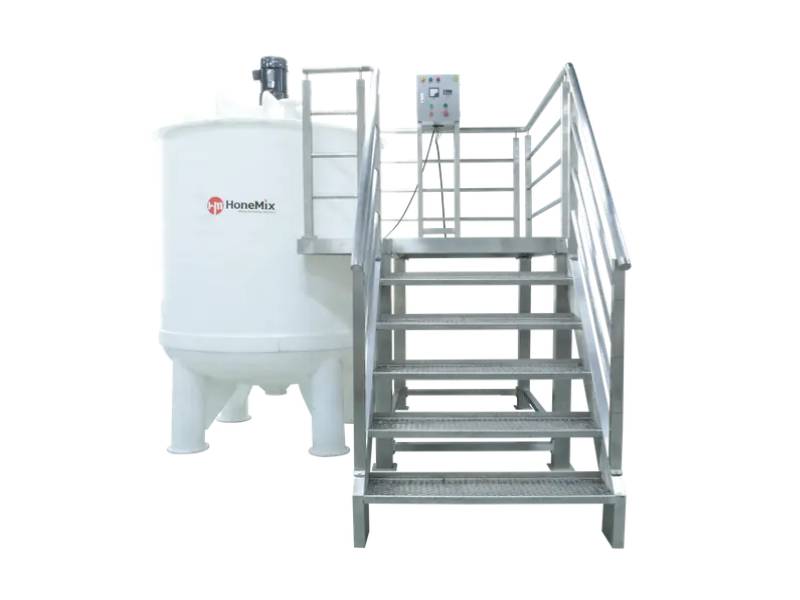
Time is a massive cost driver in modern manufacturing. Outdated agitators often struggle to move viscous materials efficiently. Modernizing your facility with precision-engineered mixing tanks changes this dynamic completely. Engineers now deploy advanced hydrofoil impeller designs to maximize fluid turnover. These specialized blades create optimal flow patterns without requiring excessive motor power. By utilizing these aerodynamic principles, facilities routinely reduce overall mixing times by up to 30% compared to standard legacy systems. Faster processing translates directly into higher daily throughput.
Motors driving massive agitator shafts consume significant electricity. Running a mixer at full speed regardless of the fluid's current state wastes power. Modern setups solve this by integrating Variable Frequency Drives (VFDs) and Programmable Logic Controller (PLC) automation. A VFD allows the motor to adjust its speed dynamically. As batch viscosity changes, the system lowers or raises the RPMs accordingly. Matching mixing speeds precisely to batch requirements prevents severe energy waste. You can potentially reduce power draw by 30% to 50% simply by automating these speed adjustments.
Many procurement teams focus heavily on initial capital expenditure. However, you must evaluate the long-term total cost of ownership (TCO) to measure real value. Custom stainless steel vessels require a larger upfront investment than off-the-shelf plastic or glass-lined alternatives. Yet, they offer unparalleled durability. Stainless steel provides excellent shatter resistance and minimal maintenance needs over decades. The extended lifecycle drastically lowers your TCO. You avoid costly mid-cycle replacements and bypass the recurring expenses associated with cheaper, fragile materials.
Chart: TCO Comparison (Over 10 Years)
Equipment Type | Initial Capital Expenditure | Maintenance Costs | Estimated Lifespan | 10-Year TCO Rating |
|---|---|---|---|---|
Standard Plastic Tank | Low | High (Frequent cracks/leaks) | 3 - 5 Years | Poor (Multiple replacements) |
Glass-Lined Tank | Medium | High (Shatter risk, recoating) | 5 - 8 Years | Moderate |
Custom Stainless Steel | High | Very Low (Routine seals only) | 15 - 25+ Years | Excellent (Highest ROI) |
Product quality heavily depends on how fluids move inside the vessel. Specific impeller choices drive precise fluid dynamics. You must match the impeller type to your intended outcome.
Axial Flow: This design pushes liquid parallel to the impeller shaft. It creates top-to-bottom circulation. We use axial flow primarily for blending miscible liquids and keeping solids suspended.
Radial Flow: This design pushes liquid outward toward the vessel walls. It generates high shear forces. Radial flow is essential for emulsification, dispersion, and breaking down tough agglomerates.
Selecting the wrong flow pattern ruins product texture. Mastering these dynamics ensures absolute uniformity across every batch you produce.
Fluids naturally want to swirl in a circular motion alongside the rotating shaft. This swirling creates a vortex but does little actual mixing. It traps unmixed "hot spots" and allows heavy materials to settle at the bottom. Internal baffles are the engineering solution. Baffles are long metal plates welded vertically along the inner walls. They deliberately alter rotational flow paths. By disrupting the circular momentum, baffles force the liquid into a vertical top-to-bottom turnover. This aggressive disruption prevents material settlement and guarantees a perfectly homogeneous blend.
Formulating a new product requires extensive testing in small pilot batches. The transition from a 50-liter pilot unit to a 5,000-liter production vessel is notoriously difficult. Physical dynamics change radically at scale. Variable speed controls in small pilot tanks allow engineers to perfectly dial in formulations. You can test various RPMs and shear rates to find the optimal window. Recording these precise metrics ensures you can seamlessly scale to large-capacity production runs. Proper scaling preserves the exact texture, stability, and potency of the original pilot batch.
Industries like food, beverage, and pharmaceuticals operate under zero-tolerance contamination policies. Regulatory bodies like the FDA require strict cGMP compliance for all wetted surfaces. Non-reactive surfaces are mandatory. If you use inferior metals, the chemical makeup of your product can leach metal ions from the walls. This reaction creates severe risks. You might experience off-flavors, such as metallic-tasting beverages. Worse, it can alter active pharmaceutical ingredients, rendering life-saving medications dangerous or ineffective. Investing in high-purity metal eliminates these critical compliance risks.
Standard 304-grade stainless steel performs well for general applications. However, harsh chemical processing demands a structural upgrade. High-acidity environments, heavy chlorides, and wastewater neutralization processes aggressively attack standard metals. In these scenarios, you must specify an anti-corrosion mixing tank built from 316-grade stainless steel. The 316 alloy contains molybdenum. This addition dramatically increases resistance to pitting and structural degradation. Deploying this upgraded material prevents microscopic cracks where bacteria and rust typically hide.
Cleaning manual equipment consumes hours of labor and introduces human error. Modern vessels feature integrated Clean-in-Place (CIP) systems. CIP provides an immense operational benefit for busy facilities. It utilizes built-in spray balls to execute automated high-temperature flushing. Operators circulate powerful detergents and sanitizers without dismantling any equipment. This closed-loop sanitation process significantly reduces changeover downtime between different product runs. More importantly, it systematically mitigates cross-contamination risks by ensuring every internal surface receives uniform chemical coverage.
Agitator mounting configurations dictate how efficiently your facility operates. The physical layout impacts spatial utility, energy consumption, and maintenance protocols. Here are the three main approaches:
Top-Entry Mixers (The Versatile Standard): Top-entry designs represent the industry workhorse. We consider them best for general-purpose food, beverage, and chemical blending. They sit above the liquid level, preventing shaft seals from facing constant fluid pressure. You benefit from highly customizable impeller setups. This flexibility makes top-entry units incredibly easy to scale as your production grows.
Side-Entry Mixers (High Volume Efficiency): You will find side-entry units on massive storage tanks where top access is restricted. Facilities processing petroleum or large-scale water treatment rely on them. Crucial trade-off: They offer lower energy consumption compared to massive top-mounted shafts. Furthermore, special shut-off mechanisms provide the ability to perform routine maintenance on the mechanical seal without fully draining the tank contents.
Bottom-Entry Mixers (High-Viscosity Precision): Bottom-entry units are the go-to configuration for cosmetics (creams) and pharma. They handle high-solids content exceptionally well. Placing the agitator at the lowest point ensures maximum heat transfer at the tank base. This setup is perfect for gentle handling and actively prevents heavy ingredients from settling into unreachable corners.
Table: Configuration Trade-offs
Mounting Style | Ideal Industry Application | Primary Advantage | Potential Drawback |
|---|---|---|---|
Top-Entry | Food, Beverage, Light Chemicals | Highly versatile and easy to customize impellers. | Requires significant vertical overhead clearance. |
Side-Entry | Petroleum, Water Treatment | Energy efficient; maintenance without draining. | Can leave unmixed pockets on the opposite wall. |
Bottom-Entry | Cosmetics, Pharmaceuticals | Excellent for high viscosity and heat transfer. | Seals are submerged; requires strict leak monitoring. |
Even premium equipment encounters operational hiccups. Providing operators with troubleshooting foresight prevents minor issues from escalating. Clogging is a frequent headache. It usually occurs due to inadequate raw material pre-processing. If you dump large, dry solids into the liquid too quickly, they form stubborn clumps. Operators must feed powders gradually. Uneven mixtures are another common failure. This issue typically requires paddle adjustments or modifying the RPMs. Ensure your team understands how to tweak shear rates dynamically when viscosity spikes.
Heavy machinery handling volatile substances presents inherent workplace dangers. You must prioritize non-negotiable safety features during the procurement phase. Processing flammable solvents or fine dust requires explosion-proof motor housings. These specialized enclosures contain internal sparks, preventing catastrophic factory fires. Heavy-duty ventilation systems are equally necessary to draw toxic fumes away from the operator zone. Furthermore, you must install automated emergency shut-off switches. These relays detect severe torque spikes and kill the power instantly to prevent catastrophic motor failure.
A reactive approach to repairs guarantees unplanned downtime. You must focus on the primary mechanical wear points before they break. Emphasize routine inspections of internal seals and specialized gaskets. These rubber or silicone components degrade naturally under chemical stress and high temperatures. Forward-thinking manufacturers are now leveraging modern sensor networks. You can attach IoT sensors to the motor bearing and gearbox. These devices detect minute vibration anomalies and temperature spikes. Catching these early warning signs allows you to schedule repairs during off-hours, entirely avoiding unplanned production halts.
Investing in highly specialized industrial mixing equipment is a profound strategic decision. It requires balancing complex physical mechanics with long-term cost, quality, and rigorous safety outcomes. You cannot treat these vessels as simple holding containers.
Standardized, off-the-shelf equipment rarely maximizes your true ROI. True efficiency demands customization. Tailoring the internal volume, selecting the correct material grade (such as 304 vs. 316), and matching the specific agitation style to the exact fluid dynamics of your product is absolutely essential for success.
We encourage you to audit your current batch times and energy usage today. Identify where legacy motors waste electricity or where manual cleaning delays production. Consult with an engineering specialist to define the exact technical specifications needed for your next equipment upgrade, ensuring your facility remains competitive and fully compliant.
A: 304 is suitable for general food and mild chemical use. 316 contains molybdenum, making it highly resistant to chlorides and harsh acids, acting as a true anti-corrosion mixing tank for pharma and heavy industrial applications.
A: Baffles disrupt the circular flow of the liquid, converting swirling motion into vertical turnover. This eliminates unmixed pockets and drastically reduces overall blend time.
A: VFDs allow operators to dynamically adjust motor speed based on fluid viscosity changes during the batch cycle. This prevents motor strain and can reduce electrical consumption by up to 50% compared to fixed-speed legacy motors.
A: While CIP handles daily sanitation, mechanical maintenance (checking seals, gaskets, and impeller alignment) should occur quarterly, or more frequently in high-shear, continuous-run environments to prevent sudden failure.