
English
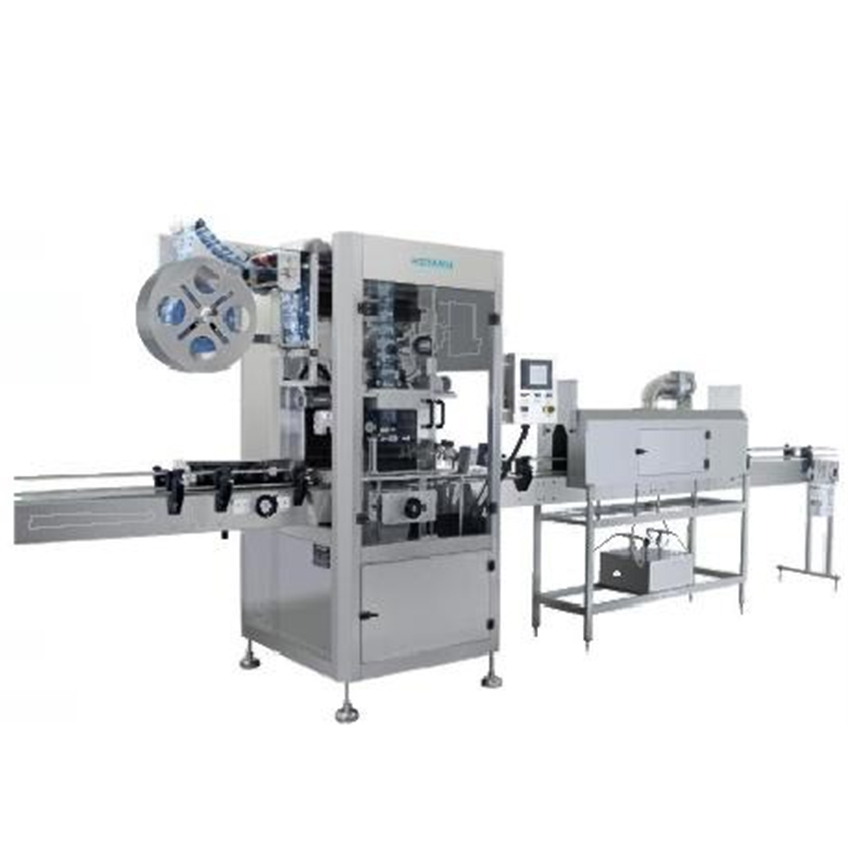 |


MAIN MACHINE
Speed: 100bpm
Power supply: φAC220V50/60Hz
Power consumption: 3Kw
Outside size: 2400(L)×9500(W)×2500(H)
Quantity of air consumed: 50kg/hr
Container range: 30-85mm(Dia.)
Label range: 40-240mm(L)
0.035—0.082mm(Thickness)
STEAM SHRINKING TUNNEL
Power supply: φAC220V 50/60Hz
Power consumption: 0.75Kw
Outside size: 2000(L)×400(W)×2100(H)
Quantity of air consumed: 35kg/hr
Pressure of steam: 5kg/cm²
| Quantity: | |
|---|---|
HY-TBM
HONEMIX
The Auto Sleeve Insertor for Cans is a specialized automated device for inserting protective or decorative sleeves onto cans, streamlining the can packaging process (replacing 2-3 manual workers per line) . It replaces manual sleeve placement with high-precision mechanical feeding (equipped with a servo-driven feeding belt) , ensuring consistent sleeve alignment (±0.5mm) and tight fit—sleeve insertion success rate reaches 99.9%, reducing material waste caused by misinsertion. Suitable for food, beverage, and chemical can production lines, this machine reduces labor costs by 80% while improving packaging consistency, and it integrates seamlessly with can filling and sealing equipment.
High-Speed Insertion: Achieves 300 cans per minute with ±0.5mm positioning accuracy for sleeve alignment . The feeding module uses a vacuum suction system to separate sleeves one by one, avoiding overlapping and jamming—sleeve storage capacity is 500 pieces, reducing frequent refilling.
Versatile Can Compatibility: Adjusts to can diameters (52-108mm) and heights (80-200mm) , supporting tinplate and aluminum cans (thickness 0.15-0.3mm). It also adapts to can tops (e.g., pull-tab tops, screw tops) by replacing the top guide (2 sets included), ensuring no damage to can seals.
Servo-Driven System: 3 sets of servo motors (power: 0.75KW each) control feeding, insertion, and pressing—motor speed adjustment range (500-1500rpm) to match different production line speeds (100-300 cans/min). The system operates with low noise (≤65dB), meeting industrial workshop noise standards.
Smart Detection: Sensors (photoelectric and pressure sensors) detect missing sleeves (triggers feeding alert), misaligned cans (stops conveyor), and loose sleeves (triggers pressing rework) , triggering automatic rejection of defective products (rejection rate <0.1%) to maintain quality. A touchscreen displays real-time defect counts for production tracking.
Food Industry: Canned meat (e.g., luncheon meat, canned beef), fish (e.g., canned tuna, sardines), and vegetable (e.g., canned corn, green beans) sleeve labeling and protection—sleeves prevent can rust and display nutritional information.
Beverage Sector: Beer cans (e.g., 330ml, 500ml), energy drink cans (e.g., functional energy drinks), and coffee cans (e.g., instant coffee powder cans) decorative sleeves—enhancing brand recognition and shelf appeal.
Chemicals: Paint cans (e.g., water-based interior paint), adhesive cans (e.g., industrial glue), and solvent cans (e.g., alcohol-based solvents) protective sleeves—resistant to chemical corrosion and preventing label smudging.
Pet Food: Dry pet food cans (e.g., dog food cans) and wet pet food cans (e.g., cat food cans) branding sleeves—displaying feeding guidelines and ingredient lists for pet owners.
Q: What sleeve materials are compatible?
A: Works with paper (150-300g/m²), plastic (PET, PP, thickness 0.05-0.1mm), and composite sleeves (paper-plastic composite, aluminum-plastic composite) , with thickness ranging from 0.1mm to 0.5mm . For high-moisture environments (e.g., beverage factories), plastic or composite sleeves are recommended for water resistance.
Q: How long is the setup time for a new can size?
A: Typically 15 minutes with tool-less adjustment of guide rails (width and height adjusted via hand knobs) and insertion heads (quick-change clips) . The machine includes a size adjustment template (marked with common can dimensions) to simplify setup for new operators.
Q: Does it integrate with existing can lines?
A: Yes, it has a standard conveyor interface (width 200-400mm, height 750-850mm) and can sync with upstream filling and sealing equipment via a signal cable—start/stop commands are linked to ensure production line synchronization.
Q: What’s the noise level during operation?
A: The noise level is ≤65dB (measured 1m from the machine), which meets the national industrial workshop noise standard (GB/T 50087-2013, ≤85dB) . This creates a comfortable working environment and reduces operator fatigue.
The Auto Sleeve Insertor for Cans is a specialized automated device for inserting protective or decorative sleeves onto cans, streamlining the can packaging process (replacing 2-3 manual workers per line) . It replaces manual sleeve placement with high-precision mechanical feeding (equipped with a servo-driven feeding belt) , ensuring consistent sleeve alignment (±0.5mm) and tight fit—sleeve insertion success rate reaches 99.9%, reducing material waste caused by misinsertion. Suitable for food, beverage, and chemical can production lines, this machine reduces labor costs by 80% while improving packaging consistency, and it integrates seamlessly with can filling and sealing equipment.
High-Speed Insertion: Achieves 300 cans per minute with ±0.5mm positioning accuracy for sleeve alignment . The feeding module uses a vacuum suction system to separate sleeves one by one, avoiding overlapping and jamming—sleeve storage capacity is 500 pieces, reducing frequent refilling.
Versatile Can Compatibility: Adjusts to can diameters (52-108mm) and heights (80-200mm) , supporting tinplate and aluminum cans (thickness 0.15-0.3mm). It also adapts to can tops (e.g., pull-tab tops, screw tops) by replacing the top guide (2 sets included), ensuring no damage to can seals.
Servo-Driven System: 3 sets of servo motors (power: 0.75KW each) control feeding, insertion, and pressing—motor speed adjustment range (500-1500rpm) to match different production line speeds (100-300 cans/min). The system operates with low noise (≤65dB), meeting industrial workshop noise standards.
Smart Detection: Sensors (photoelectric and pressure sensors) detect missing sleeves (triggers feeding alert), misaligned cans (stops conveyor), and loose sleeves (triggers pressing rework) , triggering automatic rejection of defective products (rejection rate <0.1%) to maintain quality. A touchscreen displays real-time defect counts for production tracking.
Food Industry: Canned meat (e.g., luncheon meat, canned beef), fish (e.g., canned tuna, sardines), and vegetable (e.g., canned corn, green beans) sleeve labeling and protection—sleeves prevent can rust and display nutritional information.
Beverage Sector: Beer cans (e.g., 330ml, 500ml), energy drink cans (e.g., functional energy drinks), and coffee cans (e.g., instant coffee powder cans) decorative sleeves—enhancing brand recognition and shelf appeal.
Chemicals: Paint cans (e.g., water-based interior paint), adhesive cans (e.g., industrial glue), and solvent cans (e.g., alcohol-based solvents) protective sleeves—resistant to chemical corrosion and preventing label smudging.
Pet Food: Dry pet food cans (e.g., dog food cans) and wet pet food cans (e.g., cat food cans) branding sleeves—displaying feeding guidelines and ingredient lists for pet owners.
Q: What sleeve materials are compatible?
A: Works with paper (150-300g/m²), plastic (PET, PP, thickness 0.05-0.1mm), and composite sleeves (paper-plastic composite, aluminum-plastic composite) , with thickness ranging from 0.1mm to 0.5mm . For high-moisture environments (e.g., beverage factories), plastic or composite sleeves are recommended for water resistance.
Q: How long is the setup time for a new can size?
A: Typically 15 minutes with tool-less adjustment of guide rails (width and height adjusted via hand knobs) and insertion heads (quick-change clips) . The machine includes a size adjustment template (marked with common can dimensions) to simplify setup for new operators.
Q: Does it integrate with existing can lines?
A: Yes, it has a standard conveyor interface (width 200-400mm, height 750-850mm) and can sync with upstream filling and sealing equipment via a signal cable—start/stop commands are linked to ensure production line synchronization.
Q: What’s the noise level during operation?
A: The noise level is ≤65dB (measured 1m from the machine), which meets the national industrial workshop noise standard (GB/T 50087-2013, ≤85dB) . This creates a comfortable working environment and reduces operator fatigue.


