

Sauce And Paste Manufacturing Equipment Solution For Mixing, Heating And Filling | HONEMIX
What Equipment Is Needed For Sauce And Paste Production?
Sauce And Paste production requires stable mixing, heating, texture control, particle handling and accurate filling. If the process is not controlled, finished products may show burning, uneven particles, unstable viscosity or filling dripping.
HONEMIX provides customized sauce and paste manufacturing equipment solutions for global manufacturers. From mixing and preparation to storage, filling, sealing, labeling and complete production line planning, we help customers choose suitable equipment according to formula behavior, viscosity, packaging type and output target.
Sauce And Paste Manufacturing Equipment At A Glance
For sauce and paste products, equipment should be selected according to formula behavior, viscosity, process requirements, filling volume, packaging format and production capacity.
| Product Type | Recommended Process & Equipment |
| Jam | Jacketed Mixing Tank + Heating + Piston Filling |
| Sauce | Mixing Tank + Homogenizing / Scraper + Filling Line |
| Paste | High-Viscosity Mixing + Transfer Pump + Piston Filling |
| Pouched Food | Mixing / Cooking Tank + Pouch Filling System |
What Is Sauce And Paste Manufacturing?
Sauce And Paste manufacturing is the process of preparing raw materials, mixing or processing the formula, controlling texture or clarity, storing the bulk product and filling it into the final packaging. The equipment configuration depends on viscosity, process requirements, hygiene standard and packaging format.
What Products Does This Solution Cover?
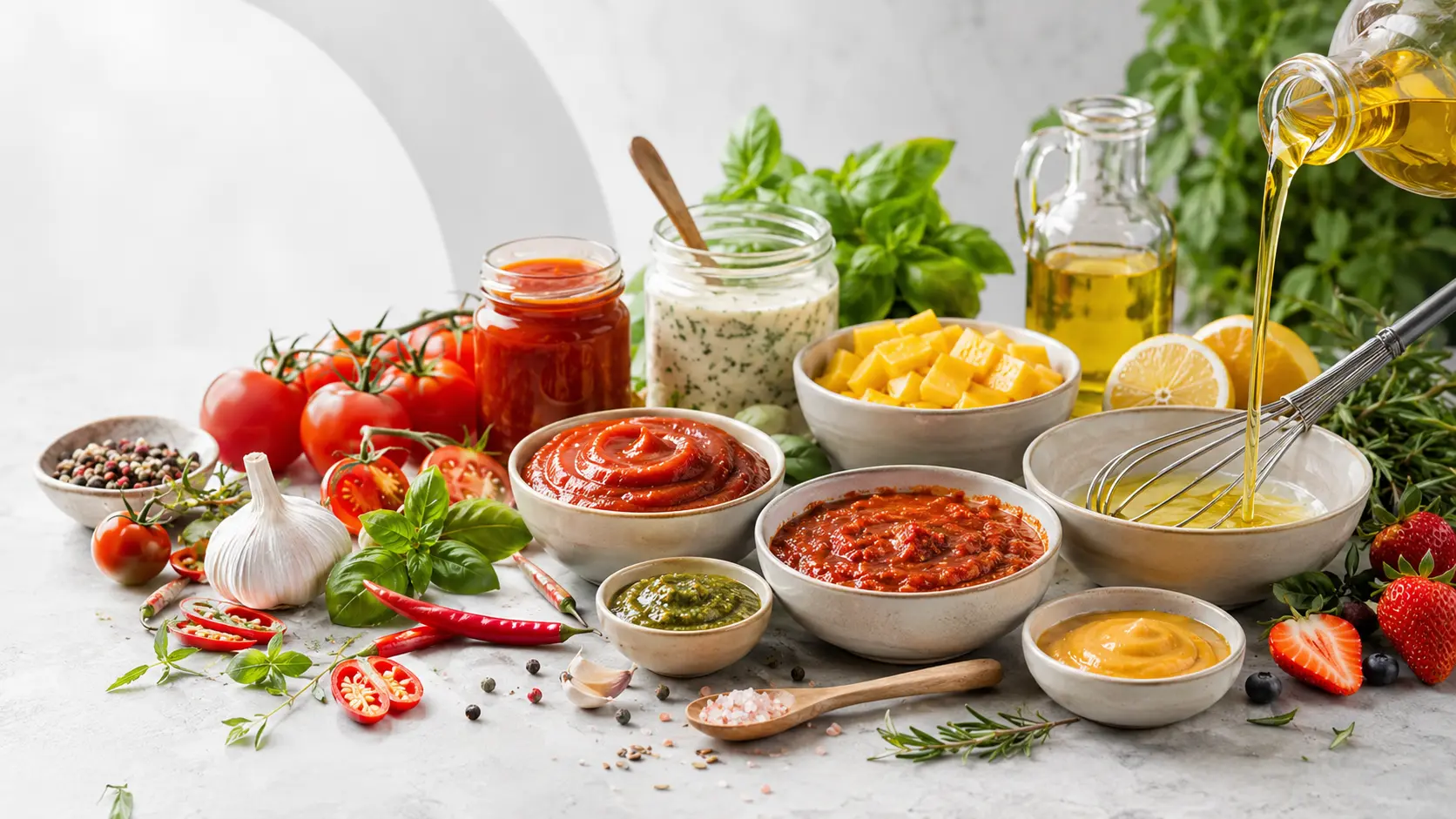
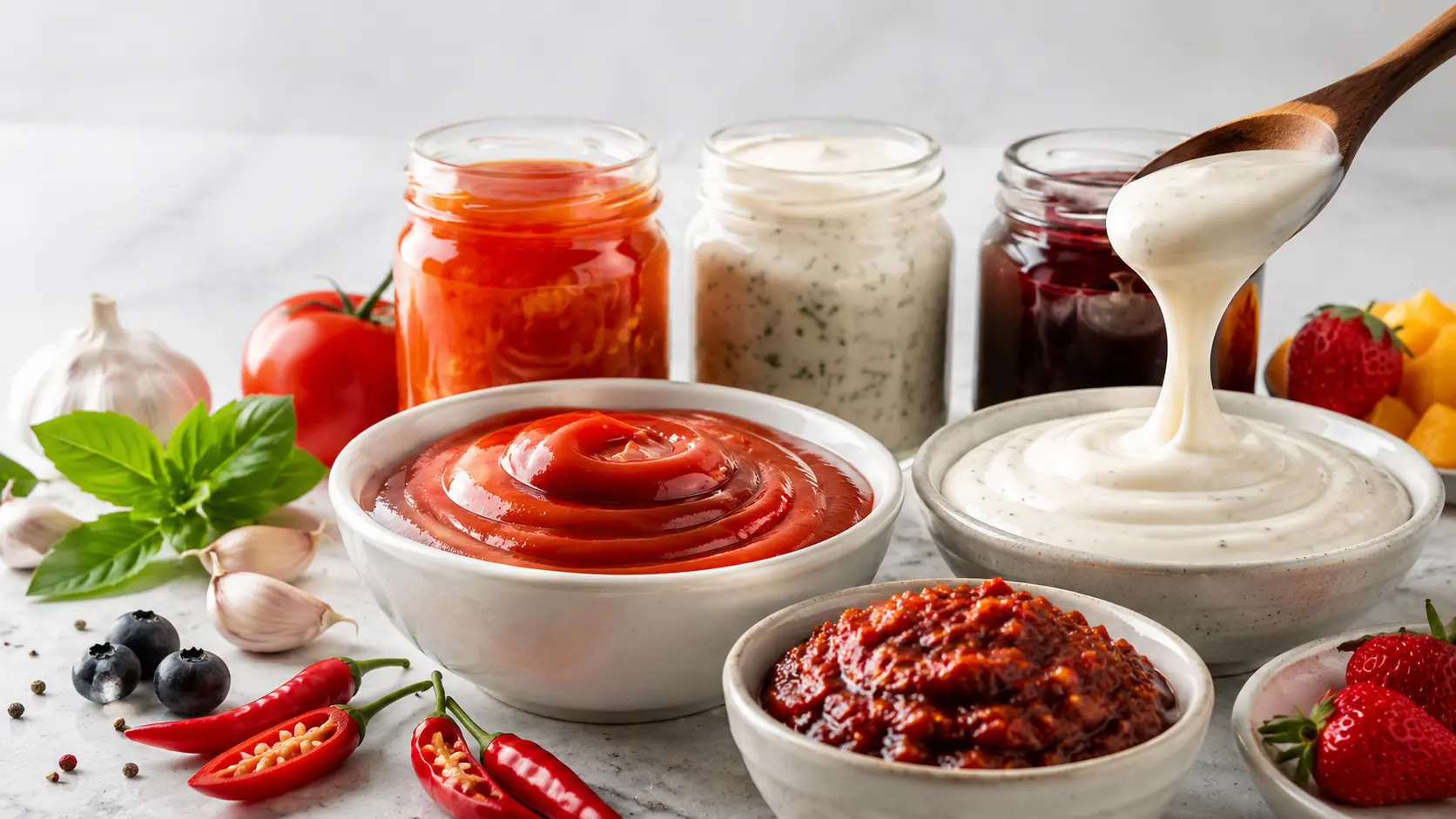
Jam, fruit sauce, chili sauce, salad dressing, mayonnaise, ketchup, syrup, seasoning sauce, paste food, condiment products and other viscous food formulas.
Sauce And Paste Manufacturing Process Overview
1. Product and food-safety confirmation
Confirm whether the product is jam, sauce, dressing, paste, condiment or syrup, then check viscosity, particle size, heating requirement, hot-fill temperature and packaging format.
2. Raw material preparation
Prepare fruit pulp, sauce base, oils, water, sugar, spices, powders or functional ingredients. Some materials may need chopping, pre-mixing or dissolving.
3. Heating/cooking and mixing
Heat and mix the product in a jacketed tank or cooking mixer. Scraper mixing may be required to reduce sticking and burning.
4. Homogenizing or emulsifying when required
Some sauces, dressings or pastes need homogenizing to improve texture, reduce separation or create a smoother mouthfeel.
5. Deaeration or foam reduction
Remove trapped air if appearance, oxidation or filling stability is affected.
6. Holding and transfer
Hold the product at the required temperature and transfer with pumps suitable for viscosity and particles.
7. Filling and sealing
Fill into jars, bottles, pouches or containers. Filling method should match viscosity, particles and hot/cold filling conditions.
8. Capping, labeling and packaging
Complete capping or sealing, coding, labeling and final packing according to food production requirements.
Sauce And Paste Process And Equipment Comparison
| Food Product Type | Formula Characteristics | Key Production Process | Recommended Equipment |
| Jam | High Viscosity, May Contain Fruit Particles | Heating, Scraper Mixing, Holding, Hot Filling | Jacketed Mixing Tank + Piston Filling Machine |
| Sauce / Paste | Medium To High Viscosity, Sometimes Particulate | Mixing, Homogenizing, Deaeration, Filling | Mixing / Emulsifying Tank + Viscous Filling System |
| Dressing / Emulsified Sauce | Oil-Water Emulsion | Emulsifying, Homogenizing, Controlled Filling | Vacuum Emulsifying Mixer + Filling Line |
| Syrup / Liquid Condiment | Low To Medium Viscosity | Mixing, Filtration, Bottle | Stainless Steel Mixing Tank + Gear Pump Filling / Capping Line |
Sauce And Paste Common Problems And Equipment Solutions
| Production Challenge | Possible Cause | Recommended Solution |
| Burning Or Sticking On Tank Wall | Heating Is Uneven Or Scraper Mixing Is Insufficient | Use Jacketed Heating And Scraper Agitation For Viscous Products. |
| Separation Or Oil-Water Instability | Emulsification Or Homogenizing Is Not Enough | Use Suitable Homogenizing / Emulsifying Process. |
| Particle Damage | Pump Or Mixing Shear Is Too Strong For Fruit / Vegetable Particles | Select Gentle Mixing And Suitable Transfer Pump. |
| Air Bubbles In Paste | Product Traps Air During Mixing Or Transfer | Use Vacuum Deaeration Or Controlled Low-Air Transfer. |
| Viscosity Changes During Filling | Temperature Drops Or Product Structure Changes | Use Holding Tank, Temperature Control And Suitable Filling System. |
| Nozzle Blockage | Particles Are Too Large For The Filling Path | Confirm Particle Size And Choose Suitable Nozzle / Pump. |
| Inaccurate Filling Weight | Filling System Does Not Match Viscosity Or Particles | Use Piston Filling Or Suitable Viscous Filling Technology. |
| Difficult Cleaning | Sticky Or Oily Product Remains In Equipment | Use Sanitary Design, Scraper Discharge And Cleanable Pipelines. |
Recommended Machines For Sauce And Paste Production

Complete Production Line Configuration
Typical line:
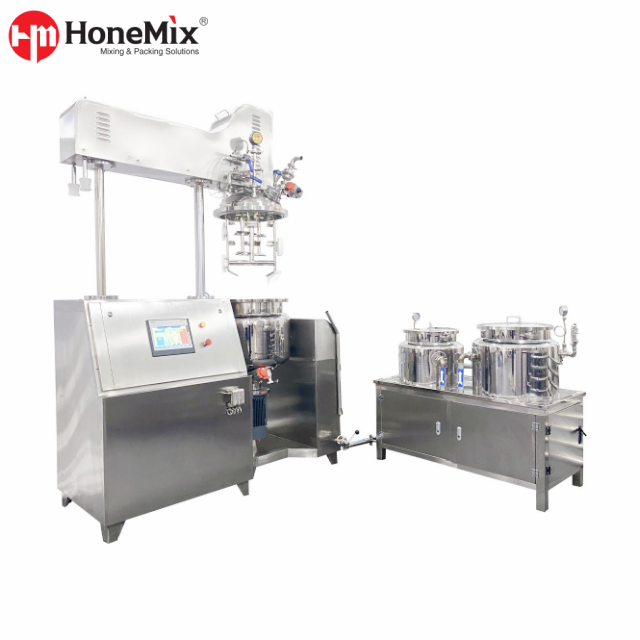
Rraw material preparation → jacketed cooking/mixing tank with scraper → optional homogenizer/emulsifying system → holding tank with temperature control → piston filling machine for paste/particles → capping or sealing → coding/labeling → final packaging.
How To Choose Sauce And Paste Manufacturing Equipment
1. Confirm the food product type.
Sauce, paste, jam, dressing, syrup and condiment products have different viscosity, particle content, heating needs and filling behavior.
2. Evaluate viscosity and particle size.
Smooth sauce may use mixing and homogenizing, while chunky sauce or jam with fruit pieces needs gentle mixing, suitable pump selection and larger filling passages.
3. Check heating, cooking and temperature holding requirements.
Some products require jacketed heating, temperature control, mixing during heating and hot filling to maintain food safety and texture.
4. Select mixing structure according to texture.
High-viscosity paste may need scraper mixing and bottom discharge, while low-viscosity sauce may need sanitary liquid mixing and transfer.
5. Match filling equipment with container and product flow.
Bottles, jars, pouches and buckets may require piston filling, pump filling, hot filling, capping, sealing or pouch filling.
6. Plan hygiene and food-grade design.
Material contact parts, sanitary pipelines, cleaning access, residue control and food-grade seals should be reviewed before purchase.
7. Consider particles, seeds or fibers during transfer and filling.
Equipment should avoid damaging product texture while preventing blockage, dripping and inaccurate filling.
8. Choose automation based on output and packaging format.
Small food workshops may use semi-automatic heating mixing and filling, while industrial factories may need cooking tank, storage tank, filling/capping, labeling and packing line.
Buyer Information Checklist
To recommend a suitable sauce and paste manufacturing solution, HONEMIX usually needs the following information:
Product type: sauce, paste, jam, dressing, syrup, condiment or pouched food.
Viscosity, particle size, particle percentage and whether the product contains seeds, fibers or chunks.
Batch capacity, cooking/heating temperature and holding time.
Hot filling requirement, cooling requirement and shelf-life process if applicable.
Container type: bottle, jar, pouch, bucket or other package.
Filling volume, target accuracy, capping/sealing method and container sample.
Required food-grade material, sanitary design and cleaning method.
Pump/transfer requirement and whether particles must remain intact.
Target output per hour/day and operator number.
Automation level, factory layout, utilities and future packaging expansion.
Why Choose HONEMIX For Sauce And Paste Manufacturing Equipment?
HONEMIX is a cosmetic, food and pharmaceutical machinery manufacturer providing customized mixing, emulsifying, filling and complete production line solutions.
With nearly 20 years of industry experience, HONEMIX helps global manufacturers select suitable equipment for skincare, personal care, home care, food and pharmaceutical production. Our solutions are designed around real production needs, including product viscosity, formula characteristics, packaging format, output target and factory layout.
Customized Equipment Solutions
Every skincare formula is different. HONEMIX can recommend machine configuration according to product type, viscosity, batch size and packaging format.
Complete Production Line Support
We can provide single machines or complete production line solutions, including mixers, emulsifying systems, filling machines, capping machines, labeling machines and packaging equipment.
Practical Engineering Experience
HONEMIX focuses on practical production problems such as emulsification stability, bubble control, filling accuracy, cleaning convenience and line integration.
Factory Testing And Service Support
Before delivery, equipment can be tested and checked according to customer requirements. HONEMIX also provides technical communication, online support and after-sales service for global customers.
Sauce And Paste Manufacturing Equipment FAQ
1. What equipment is used for sauce and jam production?
Sauce and jam production may require jacketed mixing or cooking tanks, scraper mixers, homogenizers, transfer pumps, storage tanks, hot filling machines, capping, labeling and packaging equipment.
2. How do I choose a filling machine for sauce or paste?
Choose according to viscosity, particle content, filling temperature, container type and filling volume. High-viscosity or particle-containing products often need piston filling or specially configured pump filling.
3. What is important for chunky sauce or fruit jam filling?
The filling passage, valve design and pump selection should allow particles to pass without blockage or damage. Gentle mixing and transfer help maintain texture.
4. Is hot filling needed for sauce production?
Some sauces, jams and condiments require hot filling depending on formula, safety process and packaging. Temperature control should be planned together with mixing, holding and filling.
5. What information is needed for a sauce production line solution?
Provide product type, viscosity, particle size, batch size, heating temperature, container sample, filling volume, target output and hygiene requirement.
Need A Customized Sauce And Paste Production Solution?
Every sauce formula behaves differently. Product viscosity, particles, heating temperature, filling volume and packaging format all affect equipment selection. Send us your product sample information or production plan, and HONEMIX will help you choose a practical solution.
Contact Honemix for a complete equipment solution.