Mascara looks simple when it reaches a retail shelf: a small bottle, a wiper, a brush and a cap. In production, however, it is one of the more demanding cosmetic products to package consistently. The formula is usually thick, pigmented and sensitive to temperature. It can trap air, form strings at the nozzle and leave residue around a narrow bottle neck. At the same time, the package contains several components that must be assembled in the correct order. A mascara filling machine is designed to control this complete process rather than merely dispense product into an empty container.
Depending on the level of automation, the machine may fill the bulk mascara, insert the wiper, place the brush and cap assembly, tighten the cap and discharge the finished unit. Understanding how these stages work helps cosmetic manufacturers evaluate equipment, diagnose filling defects and plan a production line that matches their formula and package.
The Role of a Mascara Filling Machine in Production
The main purpose of a mascara filling machine is to transfer a repeatable quantity of bulk product into each bottle while keeping the bottle neck clean enough for the remaining assembly steps. That definition sounds straightforward, but the machine must manage several variables at once. Mascara viscosity can change as the batch cools. Pigments and waxes may increase resistance inside hoses and valves. Small bottles leave little room for dosing error, and an excessive fill can interfere with wiper insertion or cause product to rise when the brush enters the container.
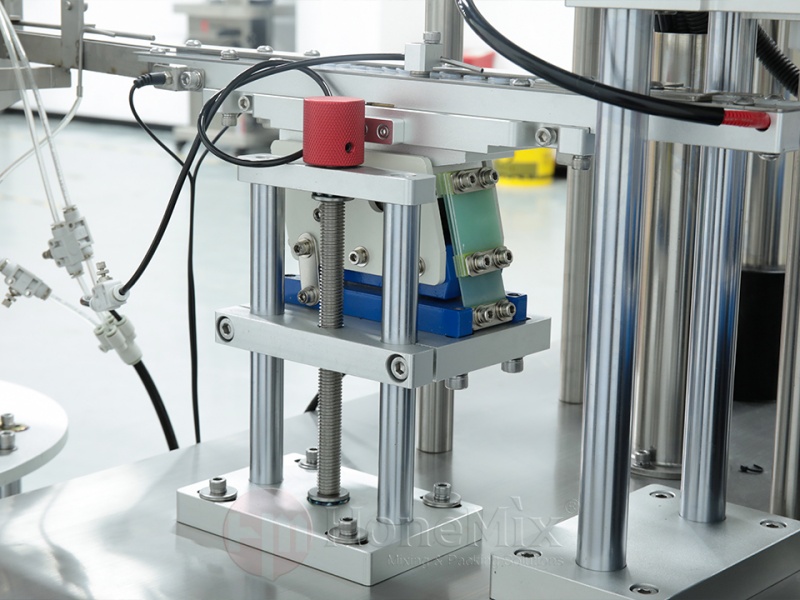
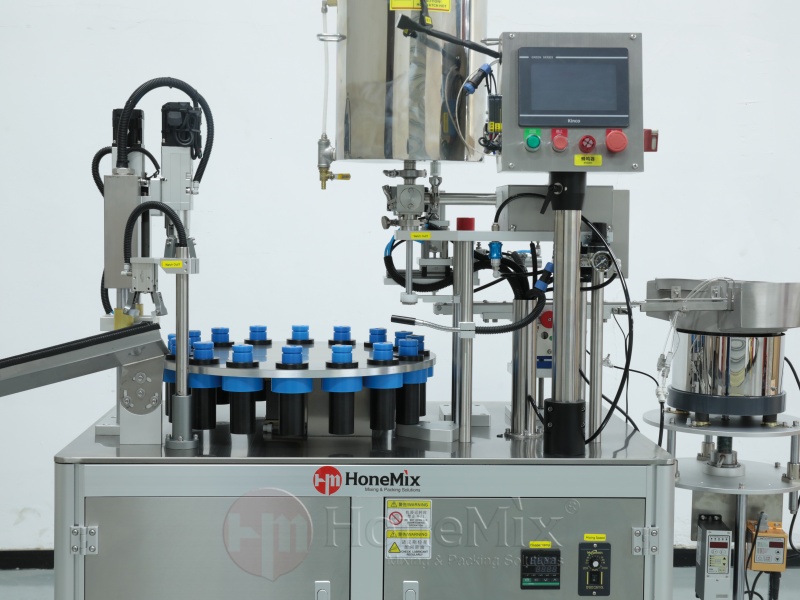
A suitable machine therefore combines controlled product supply, accurate dosing, coordinated container handling and stable motion. In an integrated system, each station waits for confirmation that the previous operation has been completed. Sensors detect bottle presence, the filling nozzle moves to the programmed position, the dose is delivered, and the bottle advances only after the machine has completed the cycle.
From Bulk Mascara to the Filling Hopper
Before filling starts, the prepared mascara is transferred from the manufacturing vessel or a mobile holding tank to the filling machine. The product path should be as short and smooth as practical because unnecessary bends, narrow passages and dead zones increase pressure loss and make cleaning more difficult. Some processes use a pressure-assisted hopper or tank to maintain a stable feed to the dosing system. Where the formula is highly temperature-sensitive, the hopper or product-contact path may need controlled warming so that viscosity remains within the validated operating range.
The objective is not to make mascara thin. It is to keep the material condition consistent from the beginning to the end of the batch. If the first containers are filled with warm product and the final containers receive cooler, thicker product, fill speed and cutoff behavior may change even when the machine settings remain the same.
How the Filling Dose Is Measured
Many mascara applications use a piston-based dosing principle because a piston can move a defined volume of thick product with good repeatability. During the suction stroke, the piston draws mascara into the measuring chamber. During the discharge stroke, it pushes that measured amount through the valve and nozzle into the bottle. Servo control can improve adjustment by allowing the stroke, speed and acceleration profile to be set through the control interface instead of relying only on manual mechanical adjustment.
What Happens at the Filling Station
At the filling station, bottles are positioned under one or more nozzles. The machine confirms bottle presence before dispensing, which prevents product from being discharged when a container is missing. The nozzle may remain above the neck or descend into the bottle, depending on the container opening and the behavior of the formula. A bottom-up or staged filling movement can help reduce trapped air and control product buildup along the inner wall.
The machine does not simply open a valve at maximum speed. A well-developed recipe often uses more than one speed phase. Product may flow quickly during the main part of the stroke, then slow near the end to improve cutoff. A suck-back or reverse movement can draw the product tail back into the nozzle and reduce dripping. The ideal settings are established through production trials with the actual formula, bottle and target fill weight.
Why Nozzle Design Matters
Nozzle diameter, outlet shape, shutoff mechanism and insertion depth all affect the result. A narrow nozzle may fit the bottle easily but can create high back pressure with a thick formula. A large nozzle reduces resistance but may not suit the bottle neck. Positive shutoff designs help stop flow close to the outlet, while a properly tuned suck-back function reduces the long thread that may otherwise form as the nozzle separates from the product.
Nozzle selection must also consider cleaning. Internal corners or small cavities can retain pigment and wax. A design that can be removed, inspected and cleaned without complicated tools is usually more practical for frequent color or formula changes.
Wiper Insertion, Brush Placement and Capping
After filling, the bottle normally receives a wiper, sometimes called an inner plug or reducer. This component controls how much mascara remains on the brush when the consumer withdraws the wand. It must be pressed to the correct depth and seated evenly. If it is too high, the package may leak or the cap may not close correctly. If it is forced too low, the wiper can deform, the bottle neck can be damaged, or the internal volume can be disturbed.
The brush and cap assembly is then placed into the bottle. As the wand enters, it displaces some product, so the original fill quantity must leave enough headspace. The cap is tightened with controlled torque. Too little torque can create leakage or loosening during transport, while too much torque may damage the thread, deform the cap or make the package difficult to open.
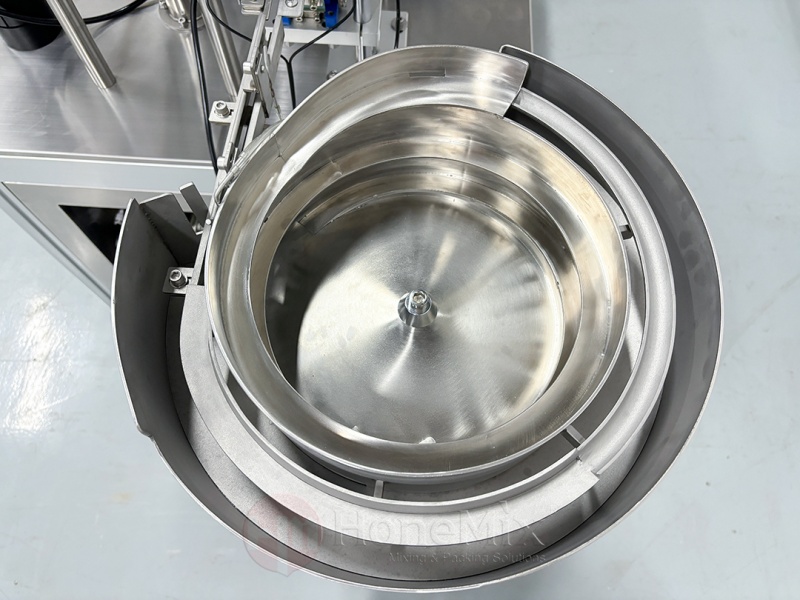
An automatic mascara filling machine can coordinate these operations in one indexed workflow. Integration reduces manual handling between stages and makes it easier to link quality checks to a specific machine cycle. It also means that package components must be supplied consistently; unstable caps, wipers or bottles can interrupt an otherwise well-tuned filling process.
The Control System Behind the Mechanical Process
Modern machines use a programmable controller and operator interface to manage recipes, station timing, alarms and interlocks. Operators can store settings for different products or package formats, including dose, piston speed, nozzle movement, wiper insertion position and capping parameters. Recipe storage shortens changeover time, but stored values should still be verified after a product or component change because raw-material and packaging tolerances can shift.
Sensors are used throughout the line. They may confirm bottle presence, detect components, verify cylinder position or stop the machine when a guard is opened. Good alarm messages are important because they help operators identify whether a stoppage comes from a missing bottle, a component jam, low product supply or an incomplete motion. The objective is not only automation; it is controlled, diagnosable automation.
Why Mascara Is More Difficult Than a Typical Liquid
Mascara is commonly a structured, non-Newtonian product. Its apparent viscosity may decrease while it is being pumped or sheared and recover when it rests. This behavior affects how the product travels through the machine and how it cuts off at the nozzle. Temperature, pigment loading, wax structure and time after manufacture can all influence the filling response.
Air is another concern. Air introduced during mixing or transfer can appear as bubbles, interrupted flow or inconsistent weights. Degassing, gentle transfer and a stable product supply reduce this risk. The bottle geometry also matters. Narrow openings, deep containers and complex internal shapes can trap air or make it difficult to place the nozzle at an effective filling depth.
Typical Start-Up and Production Sequence
A controlled run begins with line clearance and confirmation that the correct components, formula and recipe are available. Product-contact parts are assembled after cleaning, guards and sensors are checked, and the machine is run slowly or in manual mode to confirm motion. The dosing system is then primed until air is removed and product flow is continuous.
Operators usually fill and weigh a small group of samples before normal production. The dose is adjusted to the approved target, and the team checks bottle cleanliness, wiper position, cap alignment, torque and leakage. Once results are acceptable, the line is released for production. During the batch, checks are repeated at defined intervals rather than waiting until the end.
At shutdown, remaining product is recovered according to the site procedure, and the machine is cleaned before residue hardens. Mascara left in small passages can become difficult to remove, so cleaning should begin promptly and include visual inspection of valves, seals and nozzles.
A mascara filling machine should be evaluated by more than nominal containers per minute. Important measures include fill-weight variation, reject rate, product loss, unplanned stops, changeover time and the percentage of containers that pass assembly checks without rework. A slightly slower machine that runs steadily may produce more acceptable units per shift than a faster system that frequently stops for component jams or nozzle cleaning.
Connecting the Machine to a Complete Mascara Process
The filling machine is only one part of the process. Consistent results depend on the upstream batch, transfer method, packaging quality and downstream inspection. Formula preparation should deliver a homogeneous, deaerated product at the correct temperature. Packaging suppliers should control bottle neck dimensions, wiper fit and cap threads. Quality procedures should define fill targets, torque limits and sampling frequency.
When these elements are developed together, the machine becomes a repeatable production platform rather than a stand-alone dispenser. For manufacturers planning new mascara capacity or upgrading a manual process, HONEMIX provides cosmetic processing and packaging equipment that can be configured around the actual formula, bottle components and required level of automation. A representative product and package trial remains the most reliable way to confirm the final solution.