
Poland Skincare Cream Production Line: Solving Air Bubbles, Uneven 2000L Batches and Inconsistent Jar Packaging
Why Does A Good Skincare Formula Still Look Unprofessional In The Jar?
Producing skincare cream at commercial scale is not simply a matter of using a larger mixing tank.
As batch volume increases, manufacturers often face three connected problems: trapped air and uneven texture inside high-viscosity cream, difficult product transfer from the mixing vessel, and inconsistent filling, inner-disc placement and capping at the packaging stage.
A skincare manufacturer in Poland needed a production solution that could manage these issues as one process rather than as two unrelated machine purchases.
The selected system combined:
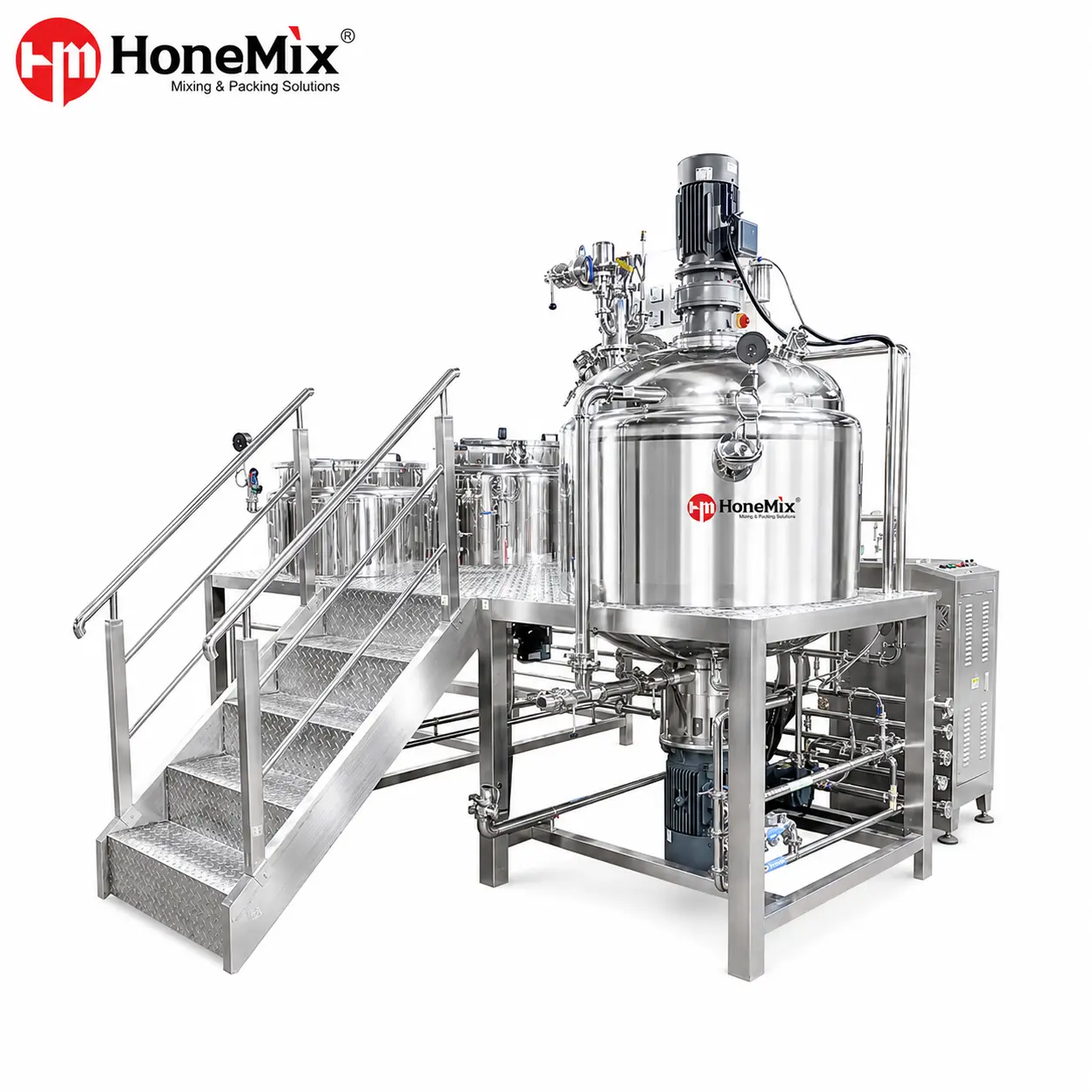
Stage 1: A 2000L HVE-F fixed-type vacuum homogenizer emulsifier mixer for cream manufacturing.
The project focused on controlling cream quality before filling and maintaining packaging consistency after the product reached the jar.
Project Information: Poland Skincare Cream Production Line Project
| Project Information | Details |
| Project Location | Poland |
| Application | Skincare cream and cosmetic paste manufacturing |
| Supplied Equipment | 2000L HVE-F fixed-type vacuum emulsifying mixer + AFM-CR automatic cream jar filling and capping machine |
| Project Packaging Speed | 20–30 jars per minute |
| Filling Accuracy | ≤±1% |
| Main Production Challenge | Large-batch cream uniformity, air removal and reliable jar packaging |
| Main process | Heating, vacuum mixing, homogenizing, cooling, discharge, filling, inner-disc placement and capping |
The Customer’s Main Production Bottlenecks
1. Air bubbles and uneven texture in a large cream batch
The client had previously encountered issues with air bubbles and uneven texture in their skincare creams—problems that often arise when air becomes entrapped during the ingredient addition and mixing stages of high-viscosity formulations. Visible surface voids or textural inconsistencies after packaging can negatively impact consumer perception of product quality. Consequently, the client required a comprehensive processing solution that integrates vacuum degassing, controlled circulation, and high-shear homogenization.
2. Manual jar packaging created too many variables
Manual or semi-automatic filling introduces several separate control points:
Filling volume
Jar positioning
Inner plastic disc placement
Cap orientation
Cap tightening
Rejection of incomplete jars
When these operations depend heavily on individual operators, finished jars can vary in fill level, cleanliness and closure quality.
The Selected Solution: HONEMIX Project Solution
Stage 1: 2000L HVE-F Fixed Vacuum Homogenizer Emulsifier Mixer
The HVE system uses a rotor-stator homogenizing structure to subject the material to high-frequency shear, impact, circulation and dispersion under vacuum. Its main system includes the oil and water phase vessels, emulsifying vessel, vacuum system, control system and operating platform.
Vacuum deaeration
The process vacuum range is -0.06 to -0.08 MPa. Removing air during processing helps reduce air bubbles and results in a flatter, smoother surface for the final canned product.
Bottom high-shear homogenization
The fixed HVE configuration uses a bottom homogenizer with a rotor-stator structure. This supports rapid dispersion of the oil phase, water phase, emulsifier and functional ingredients while promoting circulation through the lower area of the vessel.
Wall-scraping and fixed-paddle mixing
The mixing structure combines wall-scraping movement with fixed paddles. This is important for thick cream because material close to the vessel wall must be returned to the main circulation zone instead of remaining in a low-movement area.
Heating and cooling control
The jacket supports electric or steam heating and subsequent cooling. This allows the operator to manage ingredient melting, emulsification temperature, viscosity development and cooling within the same vessel. Before heating, the jacket must contain sufficient water or thermal oil and the connections must be checked for leakage.
Vacuum ingredient transfer
At approximately -0.05MPa negative pressure, prepared materials can be drawn from the oil and water phase vessels into the main mixing vessel through the suction system. This reduces open handling and helps organize the ingredient-transfer process.
Positive-pressure discharge for thick cream
The vessel includes a positive-pressure discharge option for materials that do not flow easily by gravity. The documentation specifies that the sealed vessel can use positive pressure of up to 0.2MPa for discharge.
Cleaning and daily maintenance
The mixer includes a spray-ball cleaning port, while the operating instructions recommend hot-water cleaning after each finished batch. The vacuum suction filter, homogenizer cooling water, vacuum-pump circulation water, seals, blades and valves must be checked regularly.
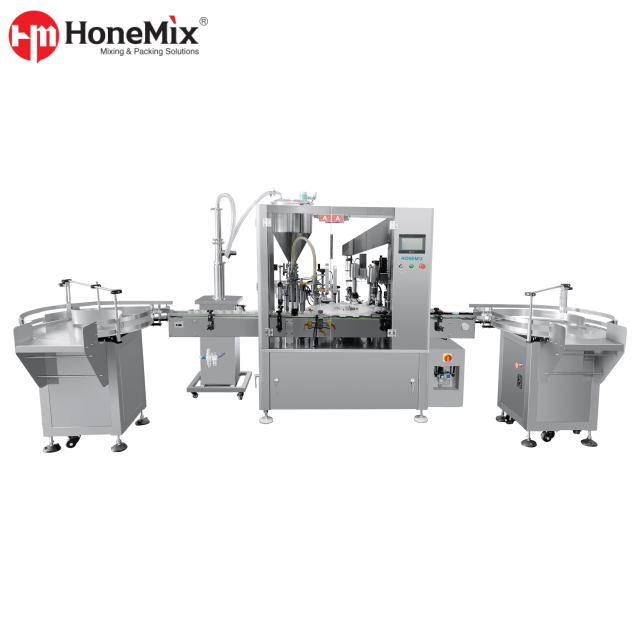
Stage 2: AFM-CR Automatic Cream Jar Filling and Capping Machine
After mixing and cooling, the finished cream moves to the AFM-CR rotary packaging system.
The project machine integrates jar detection, servo piston filling, automatic plastic inner-disc placement, disc detection, cap feeding, pre-capping, cap detection, final capping, rejection and discharge.
Servo piston filling
The servo piston system provides controlled dosing for cream and paste products. Stable jar positioning on the rotary star wheel helps keep the nozzle aligned with the jar opening and reduces variation caused by inconsistent container placement.
No jar, no filling
Sensors check whether a jar is present before the filling cycle begins. This prevents product from being discharged when no container is correctly positioned, reducing waste and helping keep the machine area cleaner.
Automatic inner-disc placement
For cosmetic jars that use a plastic sealing disc under the outer cap, the machine automatically feeds, places and detects the disc. This removes one of the most repetitive manual operations in cream packaging.
Automatic cap feeding and tightening
After disc placement, the machine supplies the cap, positions it and tightens it by a pneumatic cylinder. Cap detection and rejection functions help prevent incomplete jars from moving into finished-product collection.
How the Solution Addressed Each Production Risk
| Customer concern | Production risk | Equipment response |
| Air bubbles in cream | Poor surface appearance and filling cavities | Vacuum deaeration |
| Uneven high-viscosity mixing | Local viscosity differences and unmixed material | Bottom homogenizer and wall scraper |
| Inconsistent heating or cooling | Texture changes between batches | Jacketed temperature control |
| Difficult thick-cream discharge | High residual product and slow transfer | Positive-pressure discharge |
| Unstable filling volume | Product loss or inconsistent jar weight | Servo piston filling |
| Filling without a correctly positioned jar | Waste and machine contamination | No-jar-no-fill detection |
| Missing inner disc | Incomplete consumer packaging | Automatic disc placement and detection |
| Loose or missing cap | Leakage and poor finished appearance | Automatic cap feeding, detection and capping |
| Unqualified jars entering finished collection | Additional manual inspection | Automatic rejection |
Installation and Commissioning Priorities
The main checks include:
Mixer preparation
Confirm three-phase electrical connections and grounding.
Confirm cooling-water circulation for the homogenizer mechanical seal.
Fill and check the vacuum-pump circulating-water system.
Confirm the rotation direction of the vacuum pump.
Check vessel seals and valves before pulling vacuum.
Fill the jacket with the correct heating medium before energizing the heater.
Confirm that the suction hose is not bent or blocked.
Test the vacuum, mixing, homogenizing, heating, cooling and discharge functions before production.
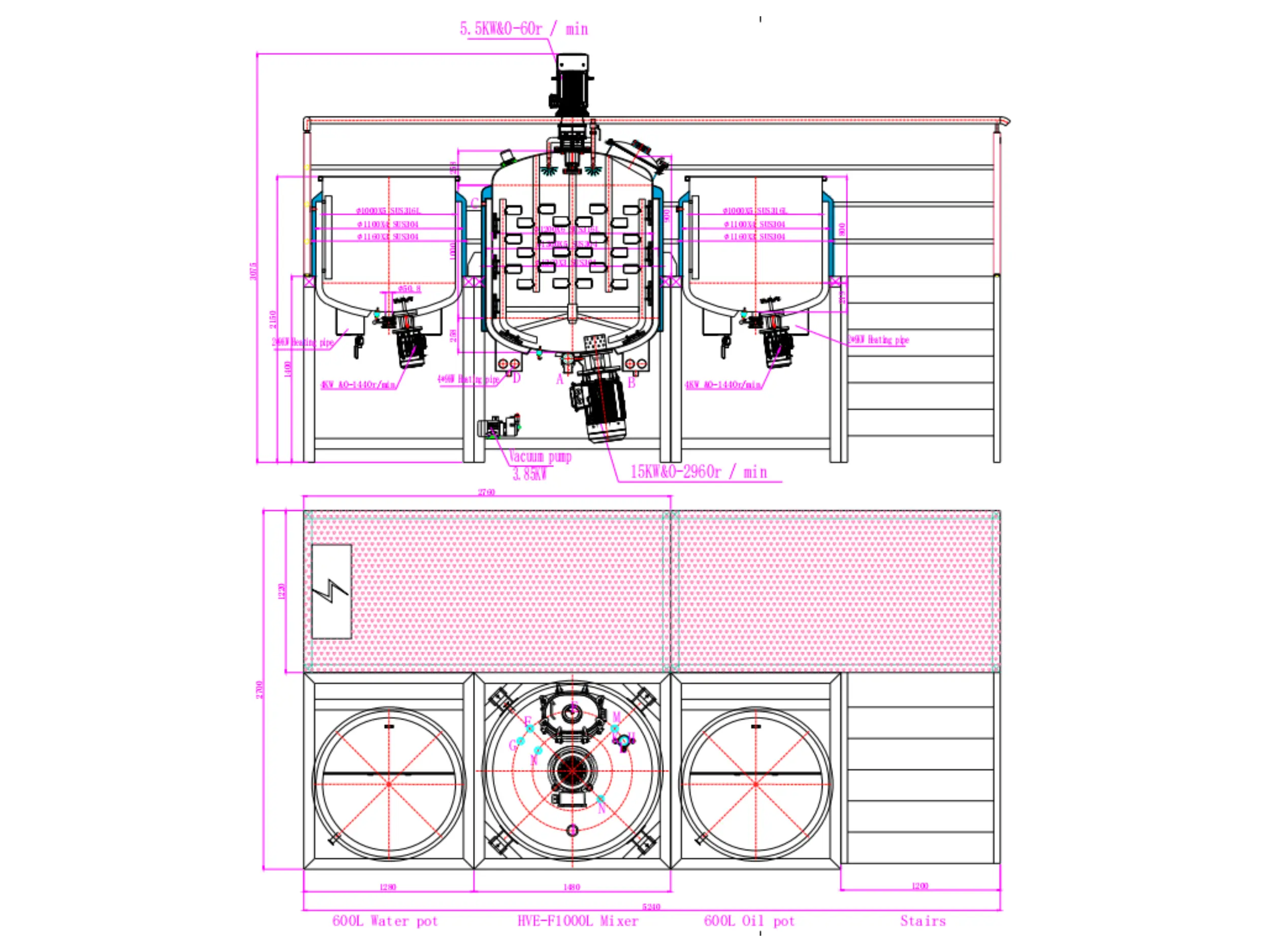
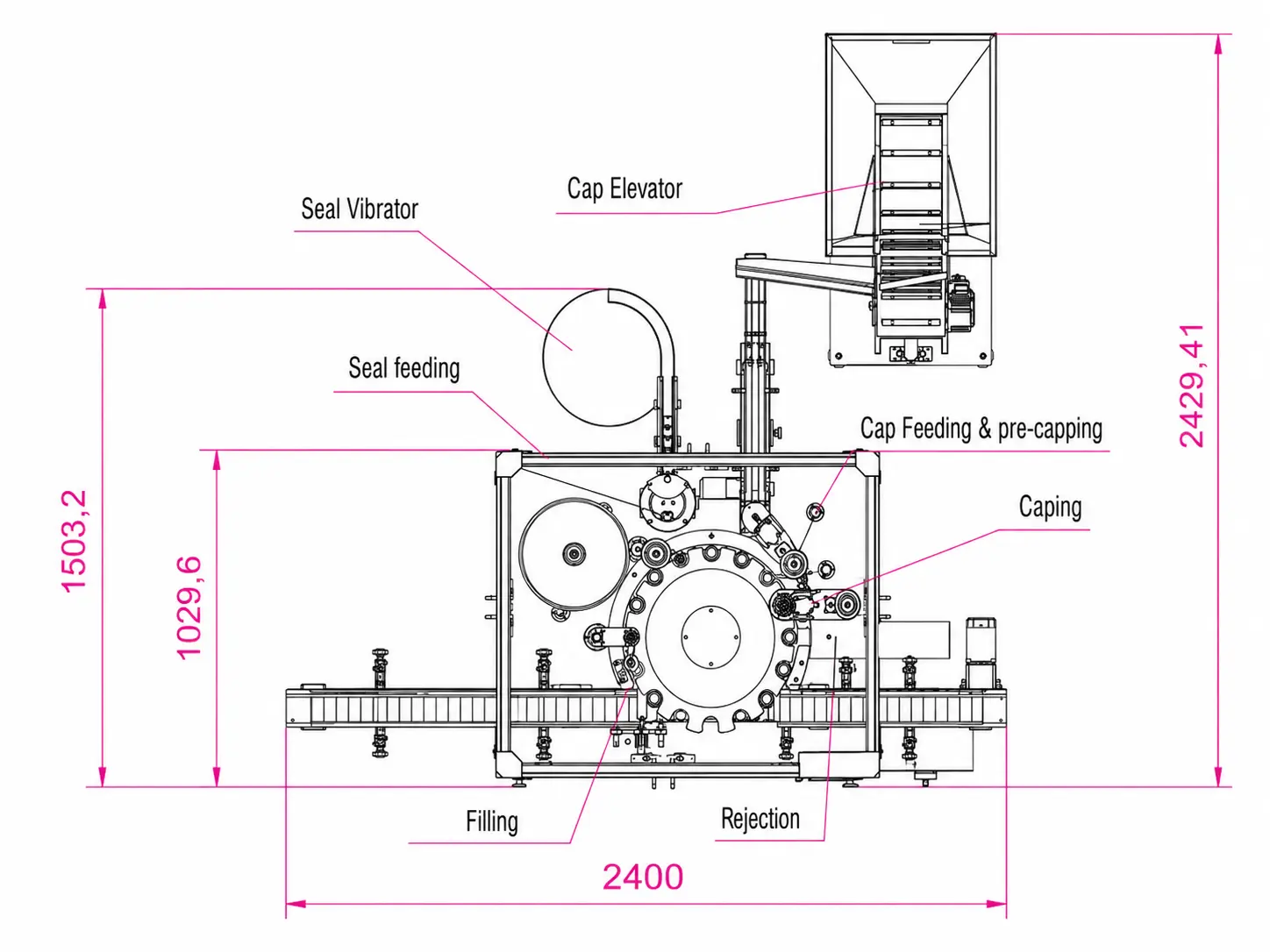
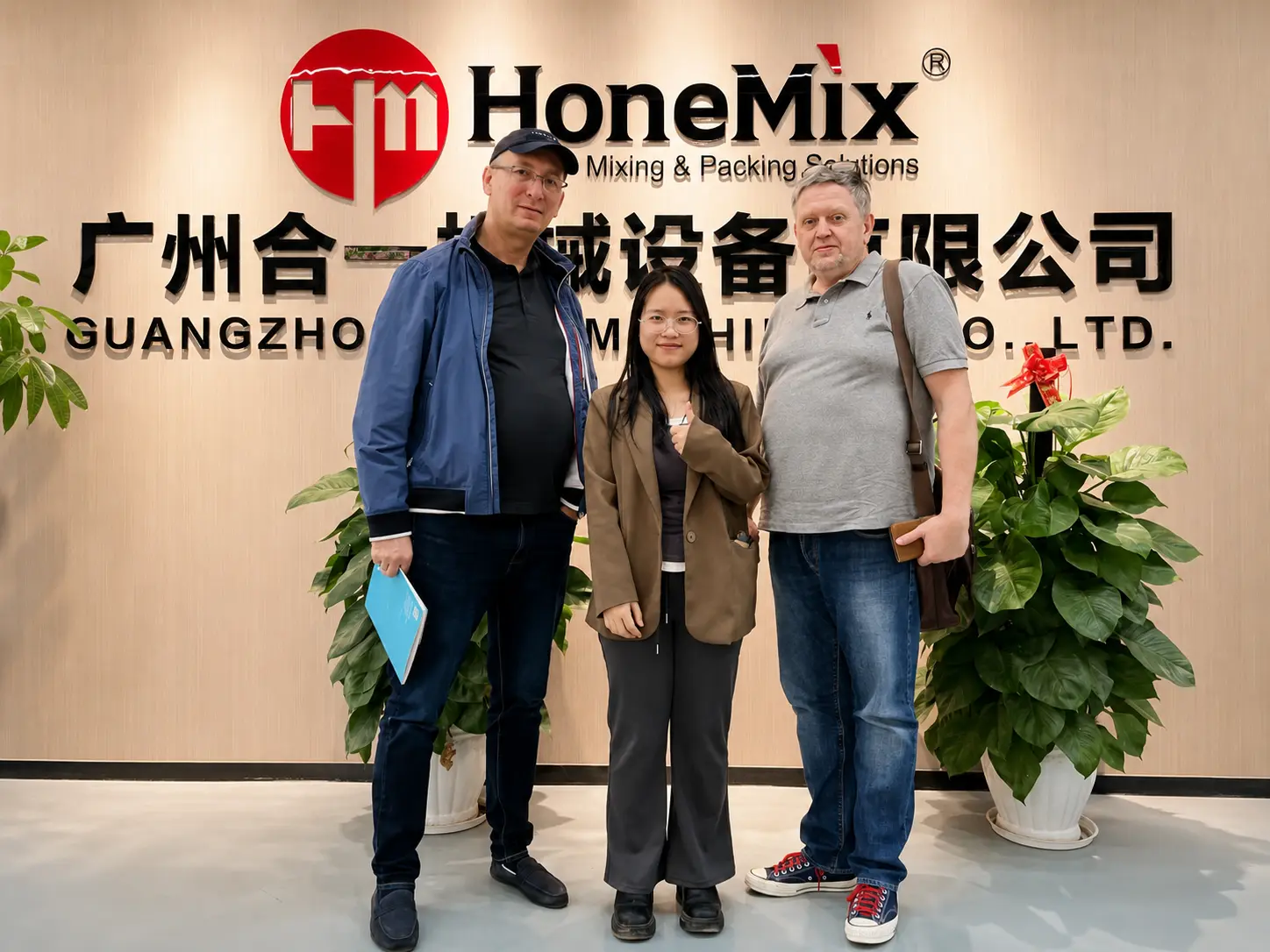
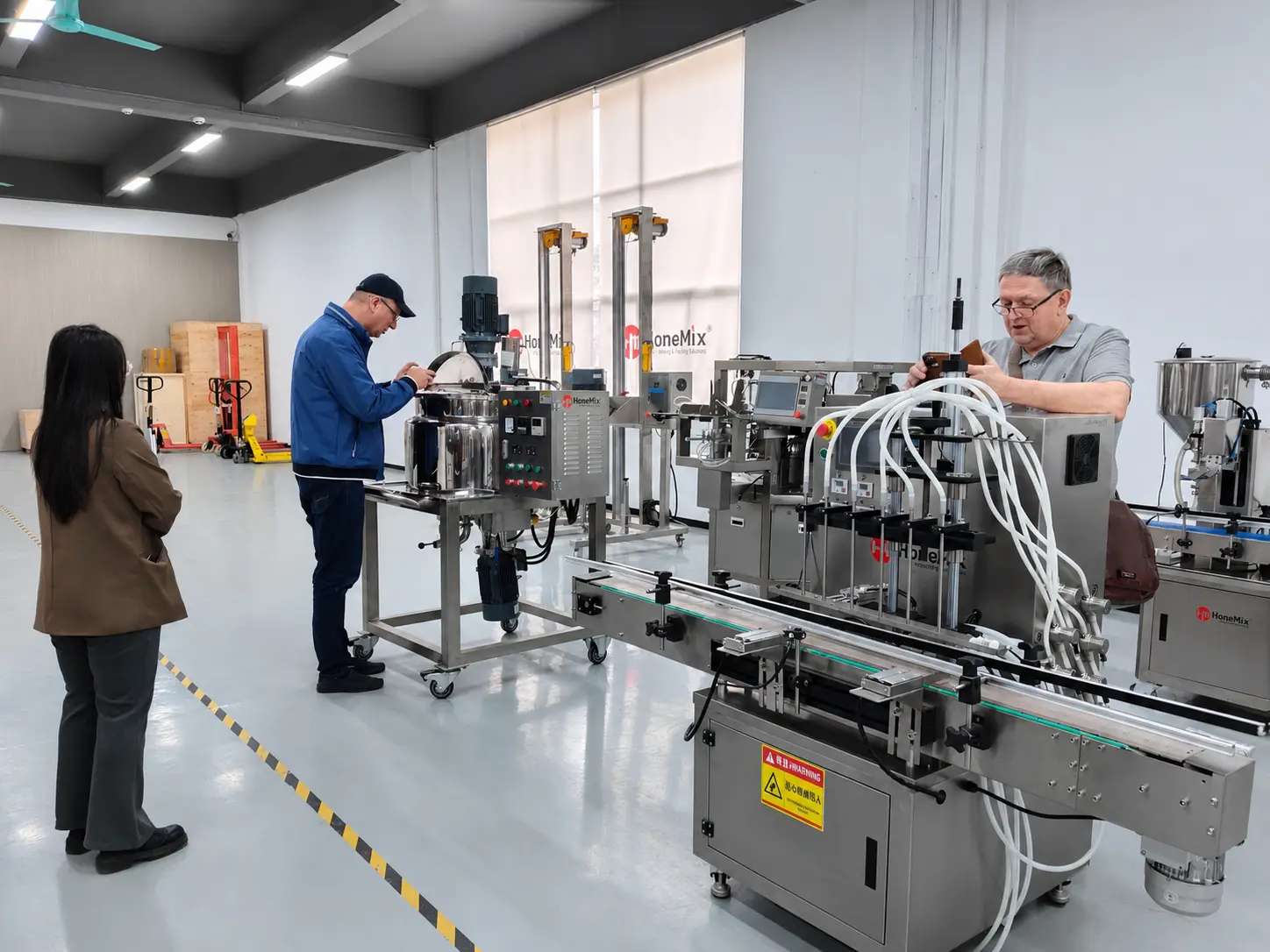
Before manufacturing, HONEMIX provided detailed layout drawings for the emulsifying mixer and automatic rotary filling capping machine, helping the Poland customer confirm equipment dimensions, working space, installation layout, and production flow in advance.
Filling and capping preparation
Confirm the production jar diameter, height and opening.
Install the matching star wheel.
Set the servo filling volume.
Test the filling nozzle position with the actual jar.
Adjust the inner-disc feeder with the customer’s packaging components.
Adjust cap feeding, pre-capping and tightening.
Test missing-jar, missing-disc and missing-cap detection.
Confirm the rejection station before continuous production.
A More Controlled Process from Bulk Cream to Finished Jar
The practical value of this project is the connection between upstream product quality and downstream packaging quality.
The 2000L mixer controls the cream before filling by combining vacuum deaeration, wall movement, high-shear homogenization and temperature management. The rotary packaging machine then controls the jar process through repeatable positioning, servo filling, inner-disc detection, cap detection and rejection.
This gives the customer one defined workflow:
Ingredient preparation → vacuum transfer → emulsification → homogenization → cooling → thick-cream discharge → jar feeding → filling → inner-disc placement → cap feeding → capping → rejection → finished-jar collection
Instead of relying on operators to correct each step manually, the process creates clear control points that can be trained, inspected and maintained.
Customer Feedback: Poland Skincare Cream Production Line Solution
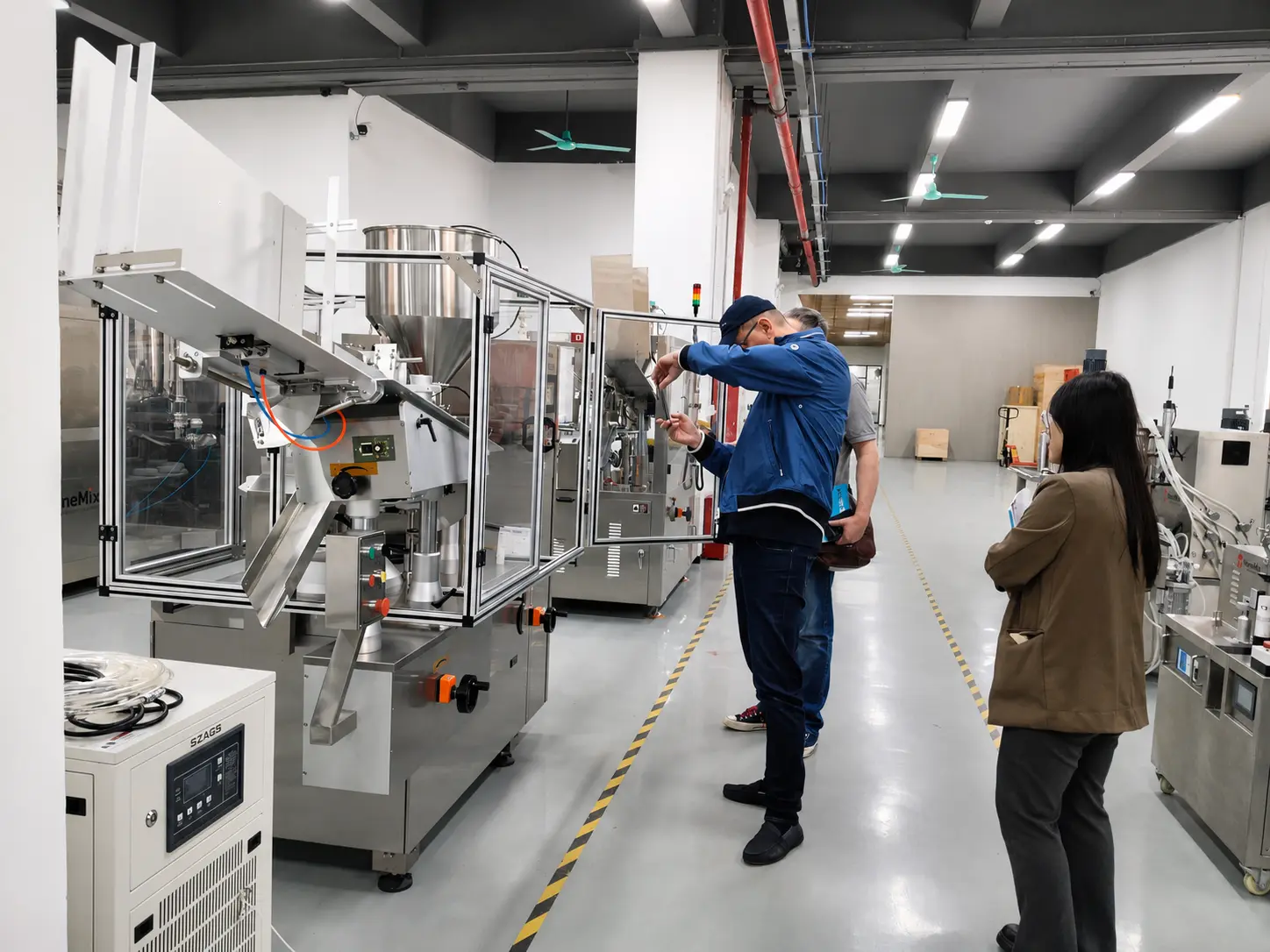
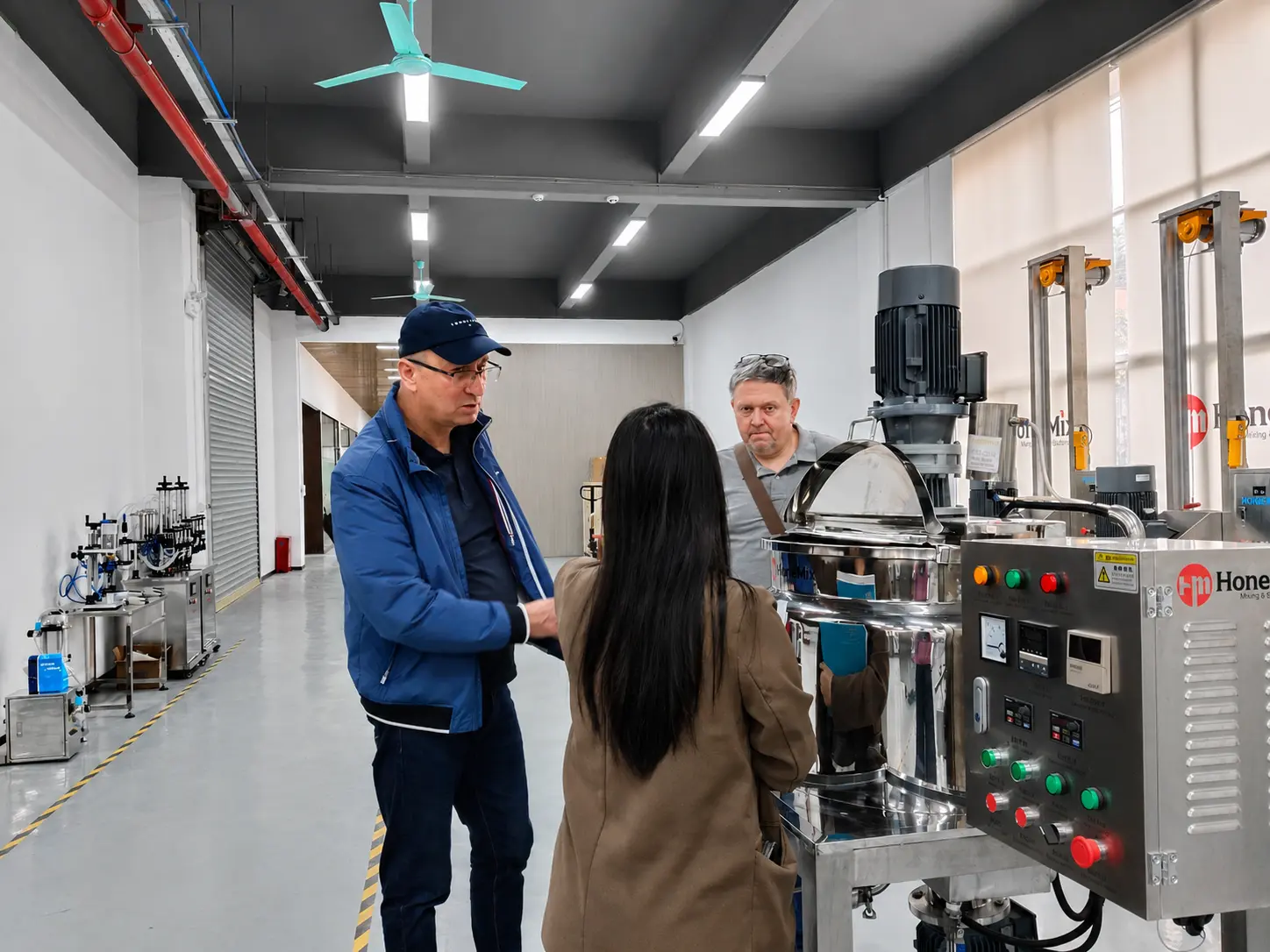
For the Spain customer, the biggest value was not only the equipment itself, but the smoother project experience behind it. From drawing confirmation and factory inspection to installation guidance and first trial production, each step helped make the project easier to understand and easier to manage.
HONEMIX will continue improving project planning, engineering communication, installation support, and after-sales service, so skincare manufacturers can feel more confident when building or upgrading their cream production lines.
Project Applications: Suitable Products For This Production Line
This configuration is suitable for medium- and high-viscosity products packed in cosmetic jars, including:
Face cream · Body cream · Moisturizing cream · Repair cream · Hand cream · Eye cream · Gel cream · Hair mask · Balm · Cosmetic paste · Ointment
What Other Skincare Manufacturers Can Learn from This Project
A cream-production project should not be evaluated only by tank capacity or packaging speed.
Before selecting equipment, buyers should confirm:
- Actual working batch size, not only nominal vessel volume
- Formula viscosity before and after cooling
- Required vacuum level and bubble-control target
- Heating source and available cooling water
- Discharge method for the finished cream
- Jar diameter, height and opening
- Inner-disc and cap structure
- Filling volume and required accuracy
- Number of jar formats used each week
- Cleaning access and product-change frequency
- Electrical supply and compressed-air capacity
- Available installation and maintenance space
These details determine whether the equipment will operate as a connected production process rather than as two isolated machines.
Frequently Asked Questions
1.Can a 2000L vacuum emulsifying mixer handle high-viscosity skincare cream?
Yes. The combination of wall-scraping agitation, high-shear homogenization, vacuum processing and positive-pressure discharge is intended for products such as cream, paste, balm and ointment. Final suitability should still be confirmed through viscosity data and product testing.
2.How does the mixer reduce bubbles in cosmetic cream?
The vessel processes the product under negative pressure while mixing and homogenizing. This helps remove entrapped air and limits the formation of visible bubbles before filling.
3.What filling range was supplied for this Polish project?
The filling range of 5–300ml with filling accuracy of no more than ±1%.
4.What was the production speed of the filling and capping machine?
20–30 jars per minute.
5.Can the AFM-CR run several jar sizes?
It can be configured for different jar diameters, but a matching star wheel is required. A production plan using one principal jar format is usually more efficient than frequent star-wheel changes.
6.Does the machine automatically place the plastic inner disc?
Yes. The project configuration includes automatic disc feeding, placement and detection before cap feeding and final capping.
7.What should be prepared before installation?
The buyer should confirm electrical supply, compressed air, cooling water, heating utilities, machine positioning, drainage, operator access and actual packaging samples before shipment.
Ready To Improve Your Skincare Cream Production Line?
Send us your cream type, jar size, filling volume, and factory layout. HONEMIX will help you review the mixing, filling, capping, and installation plan before production starts.
Contact HONEMIX to get a practical solution for your skincare production project.
Mob:+86-18688638225
E-mail:info@honemachine.com