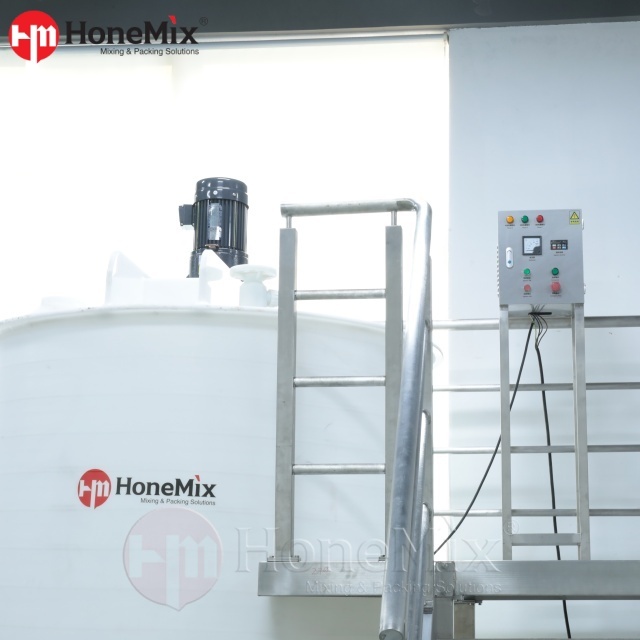
The commercial production of laundry detergents and household cleaners demands exact chemical formulations. Equipment reliability directly dictates facility profitability. Plant managers frequently face batch inconsistencies during large-scale operations. Rapid equipment degradation from aggressive chemicals causes unexpected downtime on the floor. Inefficient temperature control and hazardous cross-contamination lead to immediate product rejection. These processing failures inflate operational costs and disrupt supply chains. Selecting the correct mixing equipment requires a rigorous technical evaluation of your specific process. You must assess material compatibility, agitation mechanics, and thermal control capabilities before installation. This guide outlines the engineering criteria for specifying a Detergent Mixing Tank. We cover vessel geometry, shear rates, and heating configurations. Implementing these specifications ensures scalable, compliant, and efficient production for your manufacturing facility.
Material Compatibility is Non-Negotiable: Aggressive surfactants and pH extremes require specific stainless steel grades (304 or 316L) or specialized anti-corrosion linings to prevent tank degradation.
Thermal Control Dictates Emulsification: Formulations requiring precise temperature profiles benefit significantly from integrated heating systems, reducing batch times and improving chemical bonding.
Agitation Design Drives Yield: Matching the agitator type (e.g., anchor, paddle, or high-shear homogenizer) to the product’s viscosity is essential for preventing separation in liquid detergents and ensuring smooth powder induction.
Total Cost of Ownership (TCO) Exceeds CapEx: Evaluating clean-in-place (CIP) efficiency, energy consumption, and maintenance intervals is more critical than the initial purchase price of the vessel.
Success Criteria for Commercial Detergent Production
Defining Baseline Requirements
Establishing specific production volumes is the first engineering step before procuring any hardware. You must calculate daily throughput targets and individual batch cycle times to determine the necessary vessel capacity. Facility constraints dictate the physical dimensions of the equipment. Measure available floor space, ceiling clearance for agitator shaft removal, and doorway widths. Operators must account for fluid expansion during vigorous agitation and heating cycles. A standard engineering rule requires leaving 20 to 30 percent headspace above the working volume. This prevents overflow, accommodates foaming, and provides room for powder induction without clogging top ports.
Calculate maximum daily volume requirements based on peak seasonal demand.
Determine the longest batch cycle time among all your product formulations.
Measure the exact height from the factory floor to the lowest ceiling obstruction.
Verify the load-bearing capacity of the concrete slab where the vessel will sit.
Multi-Product Formulation Flexibility
Modern facilities rarely produce a single chemical formula continuously. Designing a system capable of transitioning between various products maximizes equipment utilization. You might mix dishwashing liquids in the morning and heavy-duty laundry gels in the afternoon. All-purpose kitchen cleaners require different shear rates than thick fabric softeners. The equipment must handle these transitions without compromising batch integrity. Washdown procedures between incompatible formulas must be rapid and verifiable. Flexible systems utilize variable speed drives and multi-stage agitation to accommodate diverse recipes. Dedicated dosing lines for different active ingredients prevent cross-contamination before the chemicals even enter the main vessel.
Viscosity and Powder-to-Liquid Induction Challenges
Varying viscosities drastically impact fluid dynamics inside the vessel. Thin window cleaners behave as Newtonian fluids, moving easily with minimal agitation. Thick laundry gels exhibit non-Newtonian characteristics, requiring higher torque to initiate movement and maintain flow. Introducing solid alkalis presents a major processing hurdle on the production floor. Washing soda and thick surfactant bases often clump upon contact with water. This creates "fish eyes," which are unhydrated powder lumps surrounded by a wet, impenetrable outer layer. Overcoming this requires optimized powder induction systems. High-shear stators pull powders directly into the fluid stream, forcing immediate hydration and breaking apart agglomerates mechanically.
Common Household Cleaner Viscosity Profiles
Product Type
Typical Viscosity Range (cps)
Flow Characteristic
Glass & Surface Cleaners
1 - 10
Water-like, highly flowable
Standard Laundry Detergent
300 - 800
Medium flow, easily pumpable
Concentrated Dish Soap
1,000 - 3,000
Thick liquid, requires moderate shear
Heavy-Duty Stain Gels
5,000 - 15,000+
Viscous paste, requires wall scrapers
Batch Consistency and Scalability
Defining acceptable tolerances for phase separation is mandatory for quality control. Active ingredient distribution must remain uniform across different batch sizes. A 500-liter pilot batch must replicate perfectly in a 5,000-liter production vessel. Scaling up requires maintaining consistent tip speeds and shear rates across different agitator diameters. Engineers calculate the Reynolds number to ensure turbulent flow throughout the entire batch, avoiding laminar flow which leads to poor mixing. Proper fluid turnover prevents heavy solids from settling at the bottom of the tank. Consistent homogenization guarantees every bottled product performs identically for the end user, maintaining brand reputation.
Core Components of a Detergent Mixing Tank
Vessel Architecture and Geometry
Tank shape directly impacts discharge rates and mixing efficiency. Flat-bottom tanks are easier to manufacture but retain residual product, making them unsuitable for thick gels. Conical-bottom tanks ensure complete drainage, pulling all material toward the center discharge port. Dished bottoms offer a balance between structural integrity under pressure and efficient fluid turnover. The geometry dictates the presence of dead zones where fluid remains stagnant during the mixing cycle. Baffles welded to the inner walls disrupt circular flow patterns. This forces the liquid toward the center of the vessel, enhancing top-to-bottom turnover and preventing the entire batch from simply spinning as a solid mass.
Agitator Design and Shear Rates
Evaluating the mechanics of a standard liquid mixing tank requires understanding applied shear forces. Low-speed anchor agitators feature Teflon wall scrapers attached to the outer blades. These scrapers prevent thick gels from burning on heated tank walls and continuously push material back into the center flow. They excel at moving high-viscosity materials but provide minimal shear for emulsification. Complex emulsions require high-shear bottom homogenizers. These devices utilize a rapidly spinning rotor inside a stationary stator. The mechanical tearing action breaks down particles and forces immiscible liquids to blend. Many industrial tanks combine both a slow anchor and a fast homogenizer for dual-action mixing.
Variable Frequency Drives (VFDs)
Adaptable shear rates are mandatory for multi-product facilities. Variable Frequency Drives control the electrical frequency supplied to the motor. This allows operators to adjust the agitator RPM precisely based on the current batch phase. Delicate natural soap bases require gentle folding to prevent excessive foaming during the final cooldown. Heavy-duty industrial formulas demand aggressive, high-speed shearing during powder induction. VFDs provide this operational flexibility. They also act as soft starters, reducing the initial power spike when activating large motors. This protects the mechanical components, such as gearboxes and shafts, from sudden torque shocks that cause premature wear.
Material Selection: 304 vs. 316L Stainless Steel
Corrosion resistance dictates the lifespan of your processing equipment. Standard 304 stainless steel handles mild household cleaners perfectly. It resists oxidation from neutral pH aqueous solutions and standard surfactants. However, high-chloride formulas or highly acidic cleaners attack 304 stainless aggressively. They cause pitting and microscopic stress fractures that harbor bacteria. Formulations containing harsh alkalis require 316L stainless steel. The "L" denotes low carbon content, which improves weldability and prevents carbide precipitation at the seams. More importantly, 316L contains molybdenum. This element drastically increases resistance to chloride-induced corrosion, protecting the structural integrity of the vessel.
Specialized Tank Configurations for Household Cleaners
The Role of the Anti Corrosion Mixing Tank
Certain chemical profiles destroy even the highest grades of stainless steel within months. Industrial degreasers, hydrochloric acid toilet bowl cleaners, and bleach-based products require a specialized anti corrosion mixing tank. These vessels utilize carbon steel or fiberglass composite shells lined with inert polymers. Polytetrafluoroethylene (PTFE), Polypropylene (PP), and Polyvinyl Chloride (PVC) are common lining materials. The lining acts as an impenetrable barrier between the aggressive chemical and the structural shell. Spark testing validates the integrity of these linings before commissioning, ensuring no microscopic pinholes exist where acid could reach the steel.
Preventing dangerous cross-reactions is a primary safety mandate in chemical manufacturing. Dedicating specific lined tanks to reactive chemicals is non-negotiable. Bleach-based products and ammonia-based cleaners must remain strictly separated. Accidental mixing of these two chemicals generates toxic chloramine gas, forcing immediate facility evacuation. Plant design must physically isolate these production lines, including separate drainage and ventilation systems. Lined carbon steel offers superior longevity for harsh acids compared to high-grade stainless steel. However, linings require careful inspection protocols to prevent scratches from dropped tools or abrasive raw materials during routine maintenance.
Electric Heating Mixing Storage Tank Systems
Temperature manipulation accelerates chemical bonding and surfactant dissolution. An electric heating mixing storage tank utilizes a double-wall jacket construction. Electric heating elements submerge into a thermal fluid circulating within this jacket. Water serves as the thermal fluid for temperatures up to 90°C. Thermal oil achieves temperatures exceeding 150°C without generating high internal pressure. This configuration provides exceptional thermal transfer directly to the product through the inner tank wall, ensuring uniform heating without localized hot spots.
Electric heating systems offer distinct advantages for specific manufacturing environments. They eliminate the need for centralized steam boilers, extensive insulated piping, and complex steam traps. This drastically reduces infrastructure requirements and simplifies installation. Precise temperature control is vital for dissolving solid surfactants, natural waxes, and heavy polymers. PID controllers regulate the electric elements, pulsing the power to prevent temperature overshoots. Maintaining a consistent temperature during storage prevents active ingredients from crystallizing or separating before the filling process begins.
Evaluating Features vs. Production Outcomes
Heating Methods: Steam vs. Electric Heating
Selecting a heating method depends entirely on available plant utilities and batch speed requirements. Steam jackets provide rapid heat transfer and massive thermal capacity. They bring large volumes of liquid to temperature quickly, minimizing cycle times. However, steam requires a dedicated boiler system, water treatment chemicals, and rigorous pressure vessel maintenance. Electric heating offers localized control and lower infrastructure demands. It operates independently of central utilities, requiring only a robust 3-phase electrical connection. Electric systems take slightly longer to heat large batches but provide highly accurate, programmable temperature profiles for sensitive emulsions.
Heating Method Comparison
Feature
Steam Heating Jacket
Electric Heating Jacket
Heat-Up Speed
Very Fast
Moderate
Infrastructure Needed
Boiler, steam lines, traps, water treatment
High-capacity 3-phase electrical supply
Temperature Precision
Good (requires precise valve control)
Excellent (PID controller integration)
Maintenance Burden
High (pressure vessel inspections, leaks)
Low (element replacement, fluid checks)
Homogenization and Blending Efficiency
Complete homogenization prevents product separation on retail shelves. Engineers map specific agitator RPMs and motor power ratings to target product viscosities. High-speed blending can introduce unwanted air into the product, especially in high-surfactant formulas. Excessive aeration creates foam, which disrupts volumetric filling machines and causes bottle overflow. Operating the homogenizer under a vacuum eliminates this issue entirely. The vacuum pulls entrained air bubbles out of the liquid during the mixing cycle. This results in a dense, visually clear, and highly stable final product ready for immediate packaging.
Discharge and CIP (Clean-in-Place) Capabilities
Minimizing downtime between batches increases daily throughput. Clean-in-Place (CIP) systems automate the internal washing of the vessel without requiring confined space entry. Effective CIP relies on strategically positioned 360-degree spray balls. These devices blast cleaning solutions across every internal surface at high pressure. Drainage slopes must direct all fluid toward the lowest point to prevent pooling. Surface finish plays a massive role in cleanability. A sanitary polish with an Ra value below 0.8 µm prevents microscopic chemical adhesion. Smooth surfaces allow wash water and sanitizers to sheet off completely.
Eliminating Chemical Residue
Preventing hazardous cross-contamination requires flawless equipment design. Incompatible formulations cannot share residue. Validated CIP cycles use specific concentrations of caustic and acid washes to neutralize previous batches. Zero-dead-leg valves are mandatory at the discharge port. Standard ball valves trap small amounts of liquid inside their housing, which contaminates the next batch. Flush-mounted diaphragm valves sit perfectly flush with the inner tank wall. This eliminates crevices where bacteria or reactive chemicals can hide, ensuring a completely sterile environment for the next production run.
CapEx and Operational Efficiency Trade-offs
Initial CapEx vs. Operational Efficiency
Balancing upfront equipment costs against long-term operational savings requires careful analysis. A fully automated, multi-jacketed vessel requires a higher initial capital expenditure. However, automation drastically reduces manual labor and batch inconsistency. Automated pneumatic valves and integrated load cells streamline recipe execution. This minimizes human error, prevents wasted batches, and ensures exact chemical dosing. The reduction in batch times translates directly to higher daily yields. Over a five-year production cycle, the labor savings and increased throughput easily justify the initial investment in advanced PLC controls.
Energy Consumption
Power draw directly impacts the daily cost of production. High-torque motors and large electric heating elements consume significant amperage. Analyzing the energy required per liter of finished product is essential for facility planning. Running a 45kW homogenizer continuously wastes energy if the emulsion stabilizes after ten minutes. Programmable logic controllers optimize energy usage. They shut down high-draw components the moment target parameters are met. Proper tank insulation also retains heat, reducing the workload on electric heating elements and keeping the factory floor cooler.
Batch Scheduling and Changeover Uptime
Equipment availability defines facility output. Optimizing cleaning schedules maximizes uptime. Production managers sequence batches from light to dark, or from mild to aggressive. This strategy minimizes the intensity of washdowns required between runs. Safely transitioning between different household cleaner product lines requires validated flush protocols. Quick-release tri-clamp fittings allow operators to inspect and clean transfer lines rapidly. Reducing changeover time from two hours to thirty minutes adds an entire production batch to the daily schedule, massively increasing plant efficiency.
Maintenance, Downtime, and Spare Parts
Routine servicing prevents catastrophic equipment failures. The accessibility of wear components dictates maintenance speed. Mechanical seals require periodic replacement to prevent leaks around the agitator shaft. Top-mounted agitators must allow enough overhead clearance for shaft removal without dismantling the entire platform. Gearboxes require regular oil changes and vibration monitoring to detect bearing wear. Standardizing components across your facility reduces spare parts inventory. Keeping spare heating elements, stator heads, and mechanical seals on-site eliminates shipping delays during unexpected breakdowns.
Implementation Risks and Mitigation Strategies
Facility Integration and Footprint Constraints
Installing large industrial equipment presents logistical challenges. Ceiling height limitations frequently complicate the installation of top-mounted agitators. If clearance is insufficient, bottom-entry homogenizers offer a viable alternative, keeping the motor accessible from the floor. Floor load capacities must support the immense weight of the equipment. A 5,000-liter liquid mixing tank filled with water weighs over five metric tons. Engineers must verify that concrete slabs and structural supports can handle this concentrated dynamic load during high-speed agitation to prevent foundation cracking.
Utility Requirements
Inadequate utilities will bottleneck production capabilities. High-capacity heating elements and heavy-duty motors require robust electrical infrastructure. Facilities must supply stable 3-phase power to prevent motor burnout and ensure consistent torque. Automated systems rely on pneumatic actuators to open and close valves rapidly. This requires a dedicated supply of clean, dry compressed air. Moisture in the air lines will destroy pneumatic cylinders and foul control valves. Mapping utility connections prior to equipment delivery prevents costly installation delays and retrofitting.
Regulatory Compliance and Safety Standards
Chemical manufacturing operates under strict safety regulations. Solvent-based cleaners, such as glass cleaners containing isopropyl alcohol, emit flammable vapors during the mixing process. Equipment in these zones must feature explosion-proof (Ex-proof) motors and intrinsically safe control panels. This complies with ATEX or Class 1 Division 1 standards. Jacketed tanks operating under pressure must carry ASME or CE pressure vessel certifications. Failing to meet these regulatory standards results in severe fines, halts production, and voids facility insurance policies.
Conclusion
To move forward with equipment specification, follow these next steps:
Audit your current formulation portfolio to determine the maximum viscosity and most aggressive pH levels your new equipment must handle.
Measure your facility's physical constraints, including doorway widths, ceiling clearance for agitator removal, and concrete floor load capacities.
Compile a utility availability report detailing your plant's 3-phase electrical capacity, compressed air volume, and steam boiler output.
Request pilot testing from equipment manufacturers using your most difficult-to-blend powder ingredients to verify shear rate effectiveness.
FAQ
Q: What is the best material for a detergent mixing tank?
A: For standard laundry detergents, 304 or 316L stainless steel is the industry standard. For highly corrosive household cleaners containing strong acids or sodium hypochlorite (bleach), a specialized anti corrosion mixing tank with a PP or PTFE lining is required.
Q: When should I specify an electric heating mixing storage tank?
A: This configuration is ideal when your facility lacks a centralized steam boiler, but your formulation requires precise heating to dissolve solid surfactants, washing alkalis, or thickeners efficiently.
Q: How does a high-shear liquid mixing tank differ from a standard agitator tank?
A: Standard agitators blend miscible liquids and maintain suspension, while high-shear tanks utilize a rotor-stator mechanism to break down particles, incorporate powders without clumping, and force immiscible liquids into a stable emulsion.
Q: What are the CIP (Clean-in-Place) requirements for household cleaner manufacturing?
A: Effective CIP requires strategically placed 360-degree spray balls, a sanitary surface finish (typically Ra < 0.8 µm), and a tank geometry (like a conical bottom) that ensures complete drainage to prevent dangerous cross-contamination between incompatible batches.
Q: How do I size a mixing tank for laundry detergent production?
A: Sizing should be based on your required daily throughput, batch cycle time (including filling, powder induction, heating, mixing, and discharge), and a 20-30% headspace allowance to accommodate fluid expansion and vigorous agitation without overflow.
Q: Can one tank be used to mix both laundry detergent and corrosive toilet bowl cleaners?
A: It is highly discouraged. Corrosive cleaners require an anti corrosion mixing tank, whereas standard detergents use stainless steel. Using one tank risks severe equipment degradation, hazardous chemical cross-reactions, and safety hazards.