Sunscreen is one of the more demanding skincare products to package in tubes. Depending on the formula, it may contain a high oil phase, mineral or organic UV filters, pigments, powders, film-forming materials, silicones, and rheology modifiers. These ingredients can create a dense cream that changes viscosity with temperature and shear. If the process is not controlled, the line may show inconsistent fill weights, air pockets, nozzle strings, contaminated seal areas, or deformed tube tails.
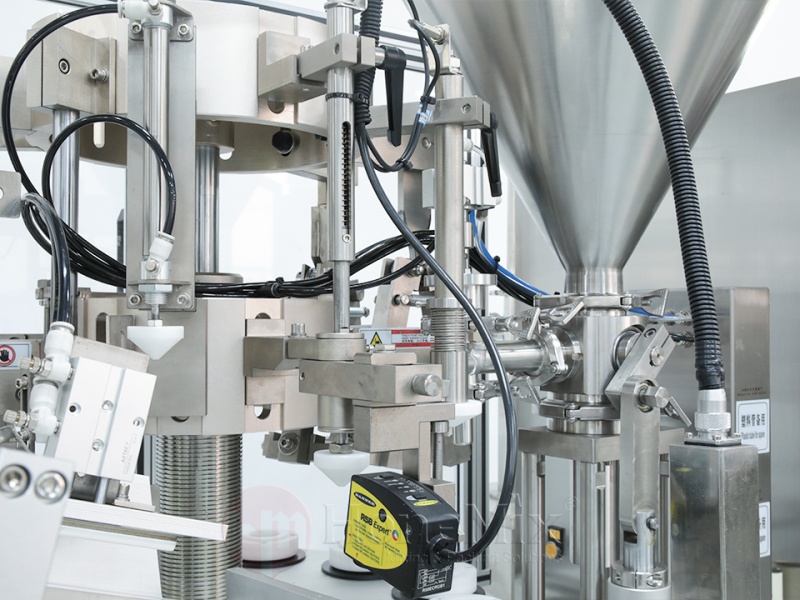
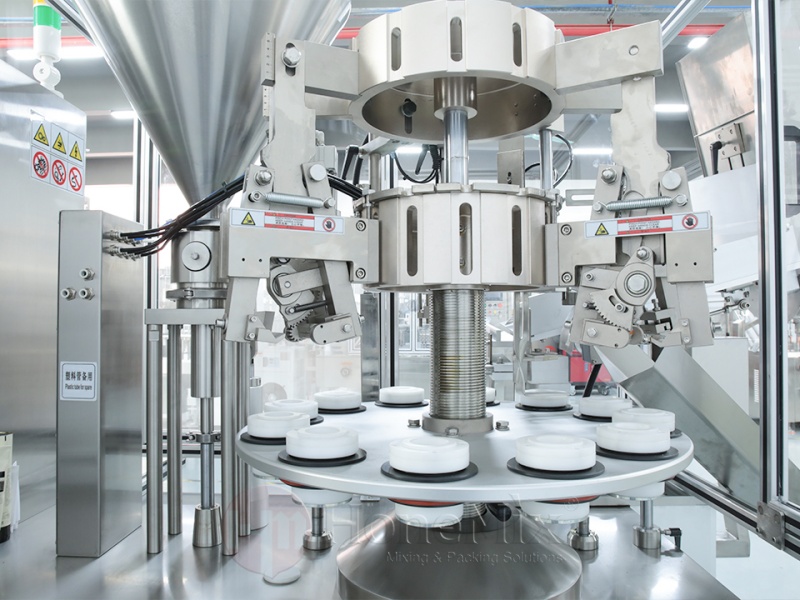
A sunscreen tube operation should therefore be planned around three connected quality objectives: maintain a uniform product condition, deliver the correct quantity, and create a strong clean seal. The tube system is a specialized Filling Machine because it must meter a viscous emulsion and then orient, seal, code, trim, and discharge the package without disturbing the product.
Why Sunscreen Is More Difficult to Fill Than an Ordinary Cream
Two sunscreens with a similar appearance can behave very differently inside equipment. One may be a smooth, shear-thinning lotion, while another is a dense mineral paste containing suspended zinc oxide or titanium dioxide. The formula may be white, tinted, water-resistant, or designed for sensitive skin. Each variation changes the way the product moves through pumps, hoses, valves, and nozzles.
High Solids Increase Flow Resistance
Mineral filters and pigments can increase viscosity and abrasion. They may settle if the bulk product is held for too long without appropriate movement, but aggressive agitation can introduce air or disturb the emulsion. The product path must be large enough to avoid excessive pressure, and seals or valves should be selected for the actual formula.
Temperature Changes Viscosity and Filling Behavior
Sunscreen viscosity often rises as the batch cools. If filling begins at one temperature and continues while the product becomes colder, cylinder refill time, pressure, nozzle cutoff, and dose consistency can change. Conversely, an overly warm product may flow too easily, drip, or affect tube material and seal conditions.
Production should establish a filling temperature window based on stability and packaging trials. This does not mean heating every sunscreen. Some formulas should be filled near ambient temperature. The important point is to prevent uncontrolled change during the run.
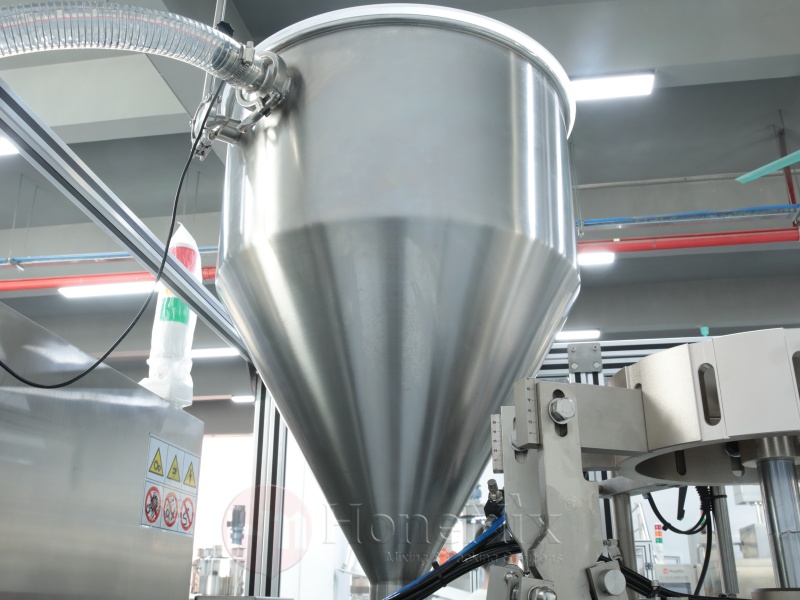
Maintain Uniformity From the Bulk Vessel to the Hopper
Packaging quality cannot be separated from manufacturing quality. A sunscreen batch should be emulsified, homogenized, cooled, and deaerated according to the approved process before release to filling. If the bulk product contains agglomerates, air, or separation, the filler will only distribute those defects into individual tubes.
Use Controlled Agitation Without Reintroducing Air
Some formulas require gentle hopper or holding-tank agitation to maintain uniformity. The agitator should move the product without creating a vortex. For tinted sunscreen, the team should confirm that color remains consistent from the first tube to the last. For mineral formulas, samples can be compared for density or solids distribution if settling is a known risk.
Transfer the Product Without Cavitation or Excessive Shear
The transfer pump and piping must suit the viscosity and batch size. Undersized lines increase pressure and transfer time. Air leaks on the suction side can create bubbles that later affect fill weight. Excessive recirculation may change the product structure. A short, controlled, drainable path is generally easier to clean and validate.
Accuracy testing should use production sunscreen because water or low-viscosity substitutes do not reproduce the actual mechanical load. The machine must refill the metering chamber completely, discharge the dose without excessive pressure, and cut off cleanly at the nozzle.
Understand Volume, Weight and Density
Many machines meter by volume, while quality control checks the filled tube by weight. The relationship depends on product density. If the sunscreen contains air or its temperature changes, density can shift and create an apparent disagreement between volume and weight.
Give the Metering System Enough Time to Refill
When speed is too high for a viscous formula, the piston chamber may not refill completely. This creates underfill or cycle-to-cycle variation. Slowing only the discharge stroke may not solve the problem; the suction profile, valve opening, feed pressure, and hopper level must be reviewed together.
A stable line often runs slightly below its mechanical maximum but produces more acceptable tubes per hour because it avoids stops, cleaning, and rejection. Effective output should be measured as good finished packs, not theoretical cycles.
Use Nozzle Motion to Keep the Tube and Seal Zone Clean
The filling nozzle should enter the tube and withdraw as the sunscreen level rises. This reduces air pockets and helps place the cream in a controlled column. The bottom position, withdrawal speed, and final cutoff must be optimized together.
Some sunscreen formulas form a thin strand when the nozzle lifts. A shutoff nozzle, suck-back control, slower final movement, or larger outlet may improve separation. However, excessive suck-back can pull air into the nozzle and create a void in the next dose. Trials should evaluate several consecutive cycles and not only one visually good tube.
Leave a Clean Empty Tail
The selected fill quantity must leave enough space for sealing and coding. Product on the inner tail surfaces can weaken the seal. Overfilling, nozzle drips, tube squeezing, and sudden movement between stations all increase contamination risk. The line should maintain tube support until the package has been sealed.
Match Seal Technology to the Sunscreen Tube
Sunscreen is commonly packed in plastic or laminated tubes. These may use hot-air or ultrasonic sealing depending on the material and equipment design. The correct process creates a strong bond without excessive distortion, wrinkling, discoloration, or damage to printed decoration.
Develop a Robust Sealing Window
A seal should not depend on one narrow setting. During trials, the team should identify a practical range of temperature or energy, pressure, and dwell time that produces acceptable strength and appearance. This provides tolerance for normal variation in tube wall thickness and ambient conditions.
Heat is applied mainly to the tail, but the complete pack can still be affected by prolonged exposure or poor process design. Sunscreen formulas containing volatile components or temperature-sensitive structures should not be held unnecessarily near hot stations. Printed and decorated tubes should be tested for discoloration, scuffing, and deformation.
Build Quality Checks Around the Main Failure Modes
A sunscreen tube quality plan should cover net content, appearance, air pockets, tube cleanliness, orientation, tail seal, leakage, code legibility, trim quality, and cap fit. Sampling should occur at startup, during steady operation, after stops, after hopper refilling, after adjustments, and near the end of the batch.
Use Leak and Seal Tests That Challenge the Package
Visual inspection is necessary but not sufficient. A tube can look acceptable and still contain a weak channel. Depending on the product and packaging system, manufacturers may use squeeze tests, pressure or vacuum tests, seal-strength evaluation, or controlled storage. The method should represent handling and distribution risks.
Inspect Product Appearance After Recovery
Some formulas recover their structure after filling. A tube inspected immediately may look different after several hours. Development trials should check whether air moves, product settles, the tube panel deforms, or oil appears near the seal. Stability and packaging observations provide a more realistic approval than a short machine demonstration.
Plan Changeovers for Seasonal and Multi-Market Sunscreen SKUs
Sunscreen ranges often include multiple SPF levels, tinted shades, travel sizes, family packs, and different market languages. The machine should support the necessary tube diameters, lengths, filling volumes, eye-mark positions, and coding formats. Change parts should be clearly identified, and approved recipes should record filling depth, piston settings, nozzle cutoff, sealing parameters, and trim position.
Cleaning is especially important when changing between tinted and white products or between fragranced and sensitive-skin formulas. The procedure should prevent residue from remaining in the hopper, cylinder, valves, hoses, and nozzle. A quick changeover that leaves cross-contamination is not efficient.
Choose the Machine Through Product and Packaging Trials
The equipment request should include viscosity at the intended filling temperature, density, presence of mineral filters or pigments, target volume, tube material, diameter, length, seal structure, required speed, cleaning expectations, and future formats. Representative product and tubes should be tested together.
An automatic Sunscreen Tube Filling Machine may integrate tube feeding, mark detection, filling, sealing, coding, trimming, and discharge. The final configuration should still be confirmed by trial because the formula and packaging combination determines the pump, nozzle, sealing method, tooling, and practical output.
Producing Better Sunscreen Tubes Consistently
Reliable sunscreen packaging is achieved when the emulsion remains uniform, the temperature and supply conditions stay controlled, the metering system fills completely, the nozzle leaves a clean seal zone, and the tube is closed within a validated process window. Inspection and trend monitoring then show whether the process remains stable throughout the batch.
HONEMIX supplies vacuum emulsifying, mixing, storage, transfer, filling, tube filling, sealing, and packaging solutions for sunscreen and other skincare products. By reviewing formula behavior, tube specifications, filling range, quality targets, output, cleaning, and layout together, manufacturers can obtain a configuration designed around their actual production conditions.