A well-designed cosmetic tube does more than hold a cream or gel. It protects the formula, supports convenient dispensing, communicates the brand image, and gives the buyer confidence before the product is even opened. When a tube arrives with an uneven tail, visible product around the seal, inconsistent fill weight, poor print alignment, or trapped air, the problem is immediately noticeable. Packaging quality therefore depends on much more than whether the machine can put product into a tube.
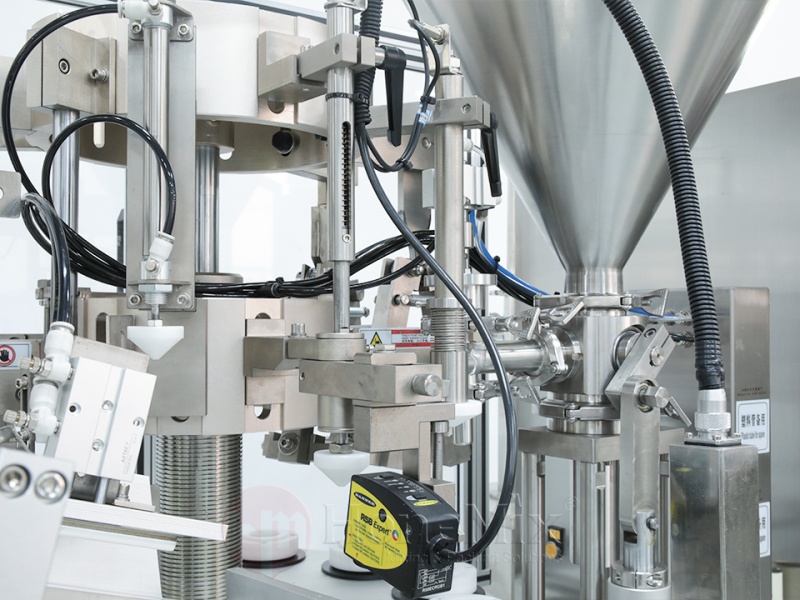
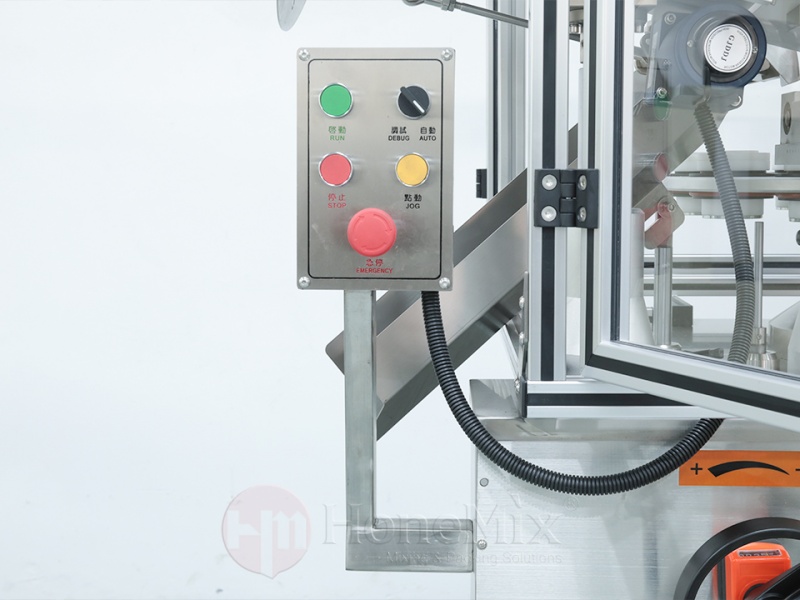
A cosmetic tube line must coordinate formula condition, tube dimensions, filling accuracy, nozzle movement, sealing energy, coding, trimming, and finished-product inspection. A standard bottle Filling Machine may focus mainly on dosing and container handling, while a tube system must also orient the package and create a dependable tail seal. Improving results requires manufacturers to treat the complete process as one connected system rather than a group of separate mechanical actions.
Packaging Quality Begins Before the Tube Reaches the Machine
Many packaging defects are blamed on the filler even though their root causes begin in bulk preparation or tube purchasing. Creams and gels must arrive at the filling hopper with a stable texture, controlled temperature, and low level of entrained air. Tubes must remain within agreed dimensional tolerances and use a material structure compatible with the selected sealing method. If either side is unstable, even a well-adjusted machine will struggle to produce uniform packs.
High-viscosity creams can continue changing after mixing. Cooling may increase viscosity, while residual air can expand or migrate during filling. Some gels become thinner under shear and recover after they enter the tube. Production teams should therefore define a filling temperature or temperature window, a maximum holding time, and an acceptable appearance before the batch is released to packaging.
Vacuum deaeration during manufacture can reduce bubbles that would otherwise create voids, inaccurate dosing, or an irregular product column inside the tube. Gentle agitation in the holding hopper may be useful for formulas that settle, but excessive mixing can reintroduce air. The objective is not simply to keep the material moving. It is to deliver a repeatable product condition to the metering system.
Control Tube Dimensions and Material Variation
Tube diameter, length, wall thickness, shoulder geometry, eye-mark position, and tail cut all influence machine performance. A small change in diameter can affect the holder fit. Variation in tube length changes the relationship between the fill nozzle and the tube bottom. An inconsistent eye mark may cause artwork to rotate away from the intended front position. For these reasons, brands should approve tube samples on the actual packaging machine rather than relying only on a drawing.
Stabilize the Filling Stage Before Increasing Speed
Factories often try to improve output by raising the cycle speed, but a faster setting magnifies small inconsistencies in product supply, tube loading, and nozzle cut-off. The more effective approach is to establish a stable filling window first. Once the machine can repeat the dose and maintain a clean tube wall, speed can be increased gradually while quality results are monitored.
Set Dosing Around the Real Product
Filling accuracy should be tested with production formula, not water. Water does not reproduce the flow resistance, stringing behavior, compressibility, or recovery time of a cream or gel. The chosen piston, pump, valve, hose diameter, and nozzle must suit the product viscosity and target volume. A stable supply pressure is equally important because a metering unit cannot remain consistent if the hopper level or feed pressure changes sharply during the run.
Quality teams should evaluate both average fill and variation. An acceptable average can hide individual underfilled or overfilled tubes. Weight checks taken at startup, after adjustments, during the middle of the batch, and near the end of the hopper help reveal drift. Where the formula density is stable, net weight is usually an efficient production control even when the machine is set volumetrically.
Prevent Nozzle Drips and Product on the Seal Area
Product contamination at the tube tail is one of the most damaging defects because it can weaken the seal and create an untidy appearance. The nozzle should enter the tube to a suitable depth and withdraw in coordination with the filling stroke. Anti-drip shutoff, suck-back adjustment, and an appropriate nozzle outlet can help separate the product cleanly at the end of each dose.
Different formulas need different settings. A thick cream may form a tail when the nozzle rises too quickly, while a soft gel may drip if the valve closes too slowly. Operators should adjust one parameter at a time and document the combination that produces a clean cutoff. Wiping the nozzle repeatedly without solving the underlying setting only hides the problem temporarily.
Keep Tube Positioning Repeatable
The tube holder must support the container without deforming it. The tube must be fully seated before orientation and filling. Sensors should confirm tube presence so the system does not discharge product into an empty station. For printed tubes, reliable eye-mark detection is essential to place the artwork consistently in relation to the seal.
Build Seal Quality Into the Process
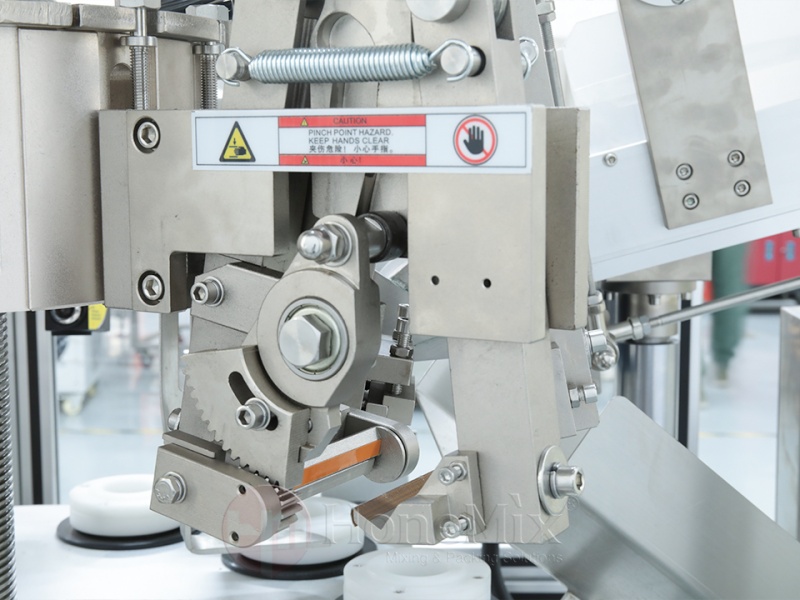
The seal is both a functional barrier and a visible quality feature. Consumers notice whether the tail is straight, centered, clean, and evenly trimmed. Manufacturers must control sealing temperature or ultrasonic energy, pressure, dwell time, cooling, and the amount of empty tail available above the product.
Match the Sealing Method to the Tube Structure
Hot-air sealing softens the inner layer of a plastic or laminated tube before the tail is pressed together. The temperature must be high enough to create fusion but not so high that the tube discolors, wrinkles, or distorts. Ultrasonic sealing generates localized energy at the tail and can be useful when a compact process or reduced external heating is preferred. Neither method is universally better; performance depends on tube material, laminate structure, tail design, and production conditions.
Before approving a tube supplier, packaging teams should test seal strength across the expected material tolerance. A setting that works on one sample may not remain robust if wall thickness or inner-layer composition changes. Supplier change control is therefore part of sealing quality, not only a purchasing issue.
Protect the Empty Seal Zone
The machine needs enough unfilled tube length to form the seal and apply coding. Overfilling reduces this zone and increases the chance that product will be squeezed into the sealing surfaces. Underfilling may create excessive headspace or an unacceptable pack feel. The correct fill volume must be considered together with the tube capacity and tail design.
Use In-Process Checks That Reflect Customer Experience
A quality plan should combine measurable controls with visual checks. Fill weight, seal strength, leakage, code legibility, and orientation can be measured or recorded. Tail appearance, tube cleanliness, deformation, and cap fit require trained visual assessment. The sampling frequency should reflect batch size, machine history, formula risk, and the impact of a defect.
Establish a Strong Startup Approval
The first approved tubes should represent stable operating conditions rather than the first containers that leave the machine. The line should be allowed to reach the intended product supply, temperature, and sealing condition. Startup samples should then be checked for net content, nozzle cleanliness, seal position, leak resistance, print registration, coding, trimming, and overall appearance.
Monitor Trends, Not Only Pass or Fail Results
Improve Changeovers Without Sacrificing Quality
A controlled changeover includes line clearance, product-contact cleaning, verification of parts, recipe selection, sensor alignment, trial filling, seal adjustment, and quality approval. Clearly identified format parts and documented machine recipes reduce setup errors. Where possible, teams should group compatible products to reduce unnecessary cleaning and temperature changes.
Select Equipment Around the Complete Packaging Requirement
A buyer should not choose a machine from speed alone. The purchase specification should include the actual cream and gel viscosities, fill volumes, tube materials, diameter and length range, artwork orientation, sealing method, coding needs, cleaning expectations, target output, and future SKU plans. The supplier should be able to test representative materials and explain which change parts are required.
For automatic applications that need tube feeding, mark detection, filling, sealing, coding, trimming, and discharge in one workflow, a suitable Cosmetic Tube Filling Machine should be evaluated with real tubes and product. Factory testing should reproduce normal production conditions and include quality checks rather than demonstrating only that the machine moves.
A Practical Route to Better Cream and Gel Tubes
Consistent cosmetic tube packaging comes from aligning formula preparation, tube quality, metering, nozzle behavior, positioning, sealing, and inspection. Manufacturers that control only one stage will continue chasing defects from another. A cross-functional approach involving formulation, packaging, production, quality, maintenance, and the equipment supplier produces more reliable results.
HONEMIX develops mixing, emulsifying, filling, tube filling, sealing, and packaging solutions for cosmetic and personal care manufacturers. By reviewing the formula, tube material, filling range, sealing method, output target, and factory layout together, the company can recommend a more suitable configuration and support practical testing before production.