Ointment packaging is a controlled production step, not simply the final movement of product into a tube. The formulation may be viscous, sensitive to contamination, difficult to deaerate, and intended for direct application to skin or another treatment area. The finished tube must deliver the declared quantity, remain clean, protect the contents, and stay sealed during storage, transport, and repeated use.
For this reason, an ointment line must be evaluated through three connected risk areas: GMP-oriented operation, hygiene of all product-contact surfaces, and integrity of the filled package. A general Filling Machine provides a useful dosing principle, but tube packaging adds orientation, tail formation, coding, and seal verification. Each stage can introduce contamination or leakage if the process is not designed and controlled properly.
Why Ointment Packaging Requires a Risk-Based Approach
Ointments and topical creams can contain oils, waxes, active ingredients, powders, botanical materials, or thickening systems. Their rheology changes with temperature, mixing history, and shear. Product that appears uniform in the manufacturing vessel may contain microscopic air pockets or develop a different consistency after transfer. At the same time, packaging components can introduce particles, microbial contamination, or dimensional variation.
A risk-based approach begins by identifying what could affect product quality or patient and consumer safety. Typical concerns include contamination during transfer, inaccurate net content, trapped air, product on the sealing surface, weak tail seals, tube damage, unreadable coding, and mix-ups between batches. The machine specification and the operating procedures should directly address these risks.
Separate Product Quality Risks From Mechanical Symptoms
Leakage is a visible symptom, but the cause may not be the sealing station. Overfilling can force ointment into the tail area. Air pockets can expand and increase internal pressure. A tube may be damaged in the holder before it reaches the seal. Cleaning residue can weaken the seal or contaminate the product. Effective investigation therefore follows the tube through the complete process instead of adjusting seal temperature repeatedly.
Define the Intended Product and Packaging System
The user requirement should describe the ointment viscosity range, filling temperature, dose range, acceptable accuracy, tube material, tube dimensions, cap style, coding requirement, production capacity, cleaning method, and environmental expectations. Plastic, laminated, and aluminum tubes require different tail-closing technologies. The intended combination must be confirmed before equipment selection.
Apply GMP Principles Through Equipment Design
GMP-oriented design aims to make consistent, clean production easier to achieve and easier to verify. It does not depend on a single material grade or a statement printed in a brochure. The machine should allow operators to identify product-contact parts, clean them effectively, prevent mix-ups, control settings, and maintain records appropriate to the manufacturer’s quality system.
Product-contact components should be compatible with the formulation and cleaning agents. Stainless steel is commonly used because it is durable and cleanable, but the selected grade, surface finish, gasket material, hose, valve, and lubricant must suit the actual product. Rough surfaces, dead pockets, damaged seals, and difficult-to-drain connections can retain ointment and make cleaning less reliable.
Design for Cleaning, Inspection and Drainability
Ointment residues can be persistent, especially after cooling. Hoppers, pistons, cylinders, valves, nozzles, hoses, and transfer connections should be accessible for cleaning or designed for an approved clean-in-place approach. Operators need a clear method to confirm that residue has been removed from difficult locations.
Drainability also matters. If rinse water or cleaning solution remains in the product path, it can dilute the next batch or support contamination. After cleaning, the line should be dried or held in a controlled condition. The cleaning procedure must define disassembly, detergent or solvent use, rinse acceptance, inspection, reassembly, and release.
Protect Hygiene During Product Transfer
The connection between manufacturing and filling is often overlooked. Open scooping or repeated manual transfer exposes the ointment to the environment and makes product supply inconsistent. A closed or well-controlled transfer route from the vessel or holding tank to the filler helps reduce contamination and air introduction.
Maintain a Stable, Low-Air Product Supply
Vacuum deaeration during manufacture can reduce bubbles before filling. The transfer pump should move the ointment without excessive shear or cavitation. Hopper agitation, if used, should be gentle and hygienic. Product temperature should remain within an established range so the dosing system receives material with predictable flow behavior.
A sudden fall in hopper level or inconsistent feed pressure can change metering performance. The line should prevent the filler from continuing when product supply is too low to deliver a stable dose. Where appropriate, level controls and transfer interlocks can reduce this risk.
Control Ointment Dosing and Air Entrapment
Accurate filling depends on more than the nominal piston volume. Ointment can compress slightly, retain air, cling to the product path, or change flow as temperature shifts. The equipment should be challenged with the actual formulation across the expected operating range.
Fill From a Consistent Position
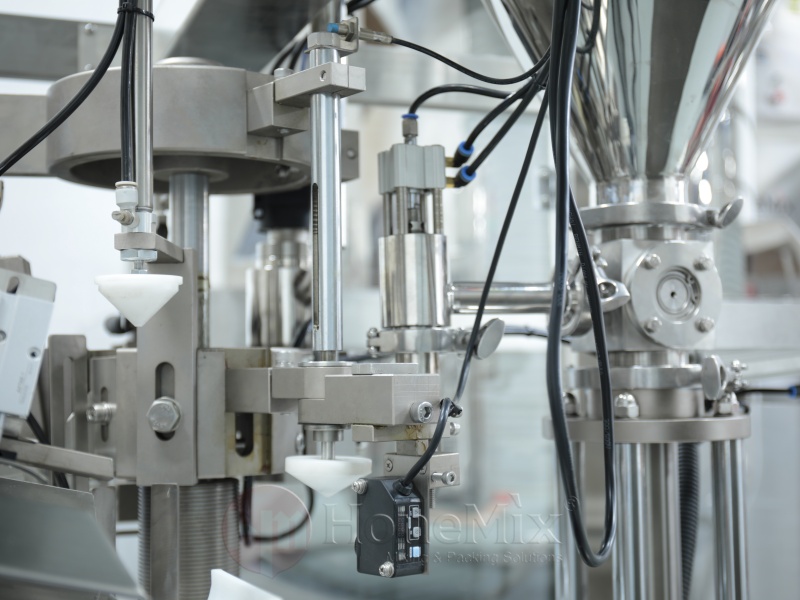
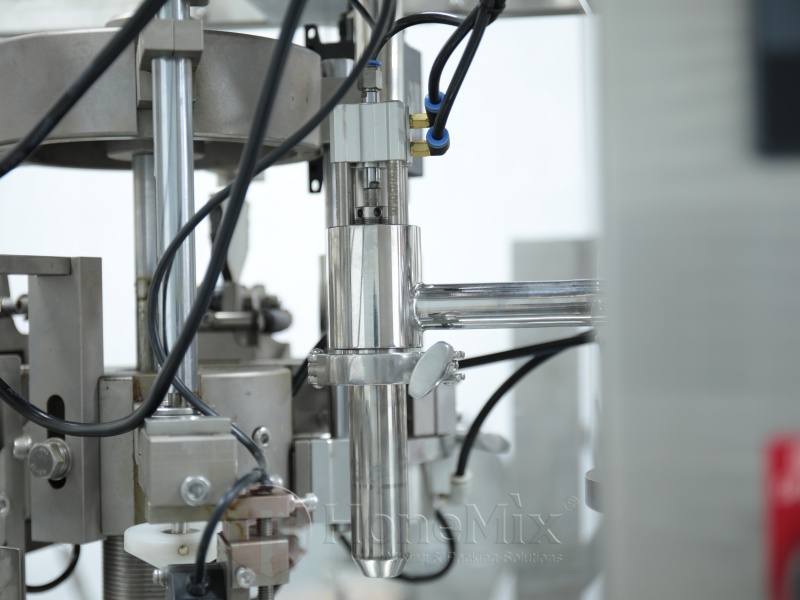
The nozzle should be centered in the tube and positioned to reduce air entrapment. Bottom-up or controlled rising-nozzle filling can help the product column build smoothly. If the nozzle remains too high, the ointment may fold over itself and trap voids. If it is too low or touches the tube, it can create pressure, smear the tube wall, or damage the nozzle.
Tube presence detection prevents dosing into an empty station. The holder must keep the tube vertical and stable. Misalignment at filling can later create product contamination in the sealing zone.
Verify Net Content With an Appropriate Sampling Plan
Startup samples should be weighed after the line reaches stable conditions. Checks should continue at defined intervals and after adjustments, stoppages, hopper refilling, or changeovers. Both individual results and process trends matter. Averages can appear correct while variation grows beyond the acceptable range.
Prevent Leakage by Controlling the Entire Seal System
A sealed tail must resist handling, pressure, temperature changes, and transport vibration. Leakage control starts with the correct tube and sealing technology, then depends on a clean seal zone and stable process parameters.
Choose the Correct Closing Method
Plastic and laminated tubes may be sealed by hot air or ultrasonic energy. Aluminum tubes are usually folded and crimped. Each system needs compatible tube construction and correctly designed tooling. A seal process developed on one tube supplier’s material may need reassessment when the laminate or wall thickness changes.
For heat sealing, the process window includes energy or temperature, pressure, dwell time, cooling, and tail position. Too little energy can leave an incomplete bond. Too much can distort or weaken the tube. For folding and crimping, alignment and mechanical pressure must create a secure closure without cutting or cracking the metal.
Keep Ointment Out of the Seal Area
Product on the inner tail surfaces is a common cause of weak seals. The fill volume must leave enough empty tube length. Nozzle cutoff should be clean, and the tube should not be shaken or squeezed during transfer to the sealing station. Anti-drip control and appropriate nozzle withdrawal are therefore part of leakage prevention.
Use More Than a Visual Leak Check
A visually neat seal can still be weak. Manufacturers may use squeeze checks, pressure or vacuum methods, dye penetration, seal-strength evaluation, or storage studies depending on the product and package. The chosen test should reproduce the relevant failure risk. Destructive checks should be performed at defined intervals and when tube material or sealing settings change.
Strengthen Routine Operation With Documentation
Reliable production depends on repeatable human actions. Setup instructions should identify the correct format parts and approved settings. Cleaning records should show what was cleaned, by whom, when, and how release was confirmed. Maintenance should focus on seals, valves, nozzles, holders, sensors, heaters or ultrasonic components, cutting tools, and coding units.
Qualify the Machine With Real Ointment and Tubes
Before purchase, the manufacturer should prepare a user requirement specification and send representative product and packaging materials for testing. Factory acceptance testing should confirm the main functions, safety controls, filling performance, seal quality, alarms, changeover, and cleaning access. Site installation and operational checks should then confirm the machine in its actual utilities and environment.
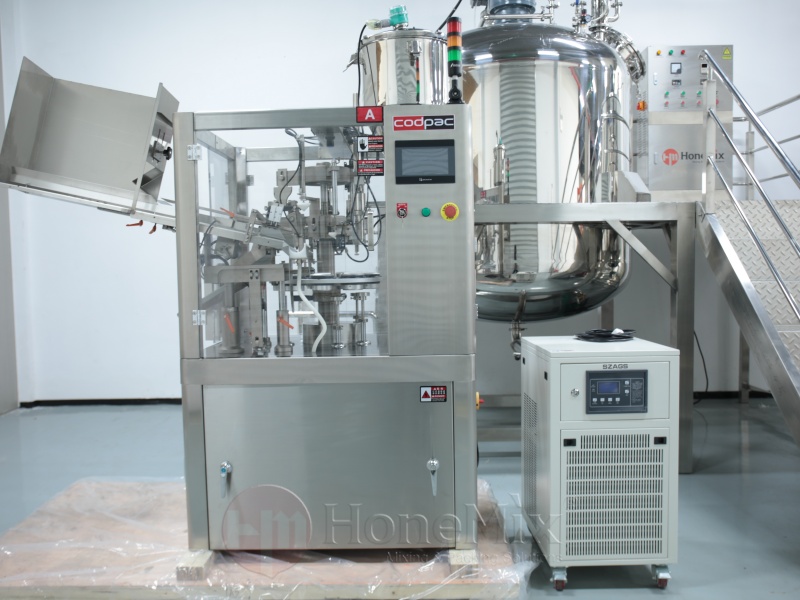
A suitable Ointment Tube Filling Machine should be assessed as part of a controlled process, not as an isolated piece of equipment. Tube material, ointment behavior, transfer method, inspection plan, operator practices, and maintenance all determine the final result.
Building a More Reliable Ointment Packaging Process
GMP, hygiene, and leakage control are interconnected. Clean equipment cannot compensate for an unstable seal, and a strong seal cannot protect product contaminated during transfer. Manufacturers achieve better results when they define risks clearly, specify cleanable equipment, control product condition, verify dose accuracy, protect the seal zone, test package integrity, and document routine operation.
HONEMIX supplies mixing, vacuum emulsifying, storage, transfer, filling, tube filling, sealing, and packaging equipment for cosmetic, personal care, and selected pharmaceutical applications. By reviewing the ointment formula, hygiene requirements, tube material, fill volume, sealing method, capacity, and factory layout together, the team can help manufacturers plan a more practical and controllable production solution.